


By Adem Kılıç, Political Scientist
Israel’s attack on the Abu Zuhur Military Air Base in northern Syria should not be viewed merely as a new link in the chain of conflict in Syria.
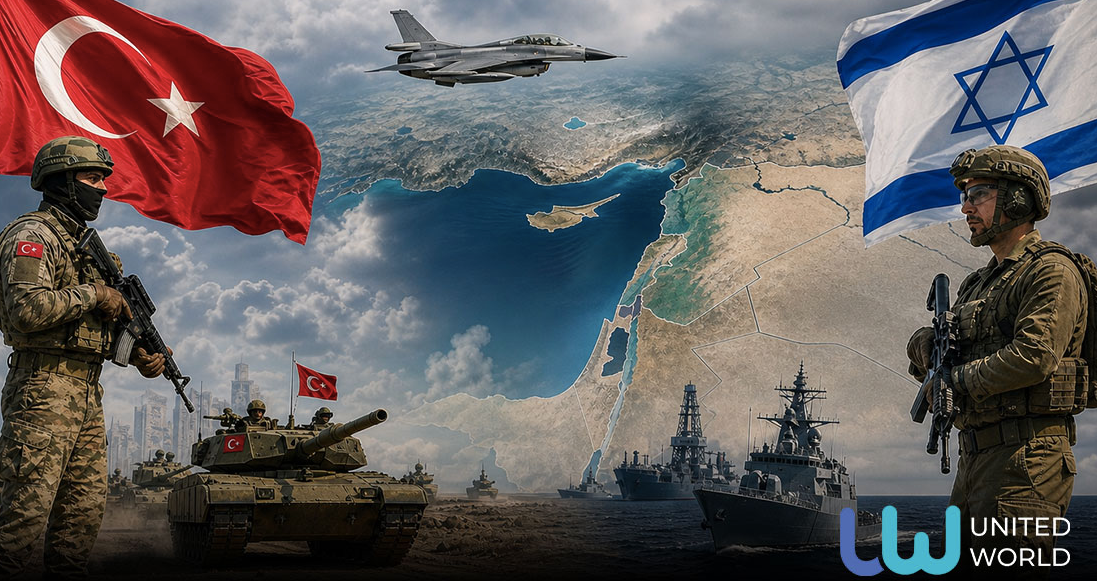
The real significance of the attack is that, for the first time, Israel has made Türkiye’s increasingly growing military, political, and strategic influence in Syria such an explicit subject of its own security doctrine.
Israel justified the attack by claiming that Syria was preparing to provide Türkiye with the opportunity for a military deployment and that this posed a threat to the existing security status quo from Israel’s perspective.
However, while statements by the Syrian administration revealed that there was no plan to establish a Turkish military base in Abu Zuhur, moreover, U.S. Special Representative for Syria Tom Barrack also condemned Israel’s unlawful attack, stating that the United States did not possess such intelligence.
Therefore, the Abu Zuhur attack should be read not merely as an airstrike, but as the beginning of a longer-term process of competition. The real issue now is Israel’s claim that, on the grounds that “it threatens my security,” it should itself decide what military activities can be carried out within Syria’s sovereign territory.
Why is Türkiye’s presence in Syria based on a legitimate foundation?
At the center of Türkiye’s Syria policy lies not merely a quest for military influence. For Türkiye, preserving Syria’s territorial integrity, strengthening central state authority, and ensuring border security are directly connected to Türkiye’s national security interests.
Here, an important distinction needs to be made from the perspective of international law. Article 2/4 of the UN Charter prohibits states from using force against the territorial integrity or political independence of other states. However, the same provision does not place the presence of foreign military forces on the territory of a sovereign state with that state’s valid consent into the same legal category as the use of force against that state in the classical sense.
Therefore, the existence of security and defense agreements signed between Syria’s authorized government and Türkiye constitutes an important legal basis for Türkiye’s military activities in Syria. In other words, the fundamental principle under international law is clear. The valid consent of a sovereign state clearly establishes that only two independent parties can decide on the presence of a foreign military force within that country.
There are also numerous examples of this around the world. For example, during the Assad regime, Russia’s military presence in Syria, as well as France’s military presence during its military operation in Mali in 2013, were based on this principle. In 2022, following Kazakhstan’s request, the deployment of Russian-led forces to Kazakhstan within the framework of the Collective Security Treaty Organization also stands before us as one of the military deployments carried out upon invitation.
Therefore, subjecting the military cooperation established by Türkiye with the Syrian government to Israel’s unilateral security assessment constitutes a serious issue under international law. Israel’s approach that “Türkiye’s presence in Syria threatens my security” creates a thesis that is impossible to accept both from the perspective of international law and from Türkiye’s perspective. Especially when it is considered that Israel is an occupying power in Syria, in the Golan Heights and beyond, despite UN resolutions.
The main struggle: What kind of state will Syria be?
The fundamental strategic competition behind the Abu Zuhur attack emerges here. Türkiye believes that post-Assad Syria needs strong central institutions, a functioning army, a state capable of recovering economically, and a security architecture capable of preserving the country’s territorial integrity.
Türkiye’s relations with the Sharaa administration in the fields of defense, security, energy, infrastructure, and reconstruction also continue steadily as parts of this approach. From Israel’s perspective, however, the re-emergence of a strong Syrian army and Türkiye’s position at the center of this process represents a new security calculation.
Because Türkiye is no longer merely a country maintaining a military presence along the Syrian border; it has emerged as the principal actor contributing to the establishment of the new Syrian state’s security capacity. Therefore, evaluating the attack on Abu Zuhur merely as the destruction of runways or military infrastructure would be incomplete. Even more importantly, in my view, this attack will be a step toward testing how far Türkiye-Syria military cooperation can advance.
Why can’t Israel’s calculations regarding Türkiye succeed?
Israel’s assessment of Türkiye as a direct threat undoubtedly creates a new and complex equation. Because Türkiye is a NATO member and possesses a large conventional military force, with NATO’s strongest army in the region.
Türkiye, which also possesses an advanced defense industry that is approaching the point of achieving almost complete independence, is therefore a power capable of generating direct military influence in Syria. In other words, in addition to Türkiye’s land, air, and naval forces, its capabilities in UAV/SIHA, electronic warfare, intelligence, air defense, and logistics eliminate the assumption that Israel can easily put Türkiye under pressure.
Moreover, Türkiye’s power in Syria does not stem solely from its military capabilities. Türkiye’s political relations with Damascus, economic and energy cooperation, diplomatic ties developed with countries in the region, and relations with the United States and within the NATO framework provide Türkiye with a much broader field of maneuver.
Therefore, increasing military pressure in order to force Türkiye to take a step back in Syria may, contrary to expectations, lead Ankara to take further military and diplomatic measures.
Netanyahu’s domestic political calculation
Undoubtedly, the connection between this growing tension and Israeli domestic politics should not be ignored. The Netanyahu government is operating in a political atmosphere in which it needs to project an image of strong leadership through security threats.
As Netanyahu moves toward the elections, he is trying to present a country such as Türkiye, which has high military capabilities and whose regional influence is steadily increasing, as a “new threat” and to create the perception that “I am the only one who can deal with this.” Indeed; in Israeli public opinion, which has been at war for approximately three years, including the genocide process in Gaza, he calculates that this security-centered political discourse could find a response.
NATO and the Eastern Mediterranean dimension
If Türkiye-Israel tensions extend beyond Syria’s borders, the NATO and Eastern Mediterranean dimensions will become increasingly important.
Türkiye’s NATO membership significantly raises the cost of a direct attack for Israel. If a serious threat to Türkiye’s security emerges, Ankara may request consultations under Article 4 of NATO. A direct armed attack against Turkish territory, meanwhile, carries the possibility of creating a much more serious crisis that could bring Article 5 onto the agenda.
Here, it is necessary to underline that Article 5 does not automatically mean that NATO would declare war on Israel. However, a direct attack against an ally such as Türkiye, which possesses NATO’s second-largest army, would have extremely serious consequences for the Alliance’s political unity and would carry the issue to a global dimension. If the tension spreads to the Eastern Mediterranean, the picture could become even more complicated. Indeed, since the EASTMED project, the deepening of security relations among Israel, Greece, and the Greek Cypriot Administration of Southern Cyprus has been closely monitored by Türkiye.
In contrast, Türkiye’s military presence in the TRNC, its naval and air capabilities in the Eastern Mediterranean, and its geographical position demonstrate that Israel does not have the capacity to act alone against Türkiye in this area.
Therefore, the transfer of the competition that began in Syria to Cyprus or the Eastern Mediterranean could turn the tension between the two countries into a broader regional security problem. However, in the face of Türkiye’s capabilities, it can also be clearly seen that Israel could suffer a major defeat in an equation in which it would be acting alone.
Türkiye’s most appropriate strategy
Within this entire picture, Türkiye’s strongest option should not be to enter the direct conflict environment desired by Israel.
On the contrary, Türkiye should continue to act on the strategic ground it has determined, continue and increase its military and political cooperation in Syria, and increase its support for strengthening Damascus’s state capacity. Bringing Israel’s unilateral military interventions onto the agenda within the framework of international law and Syria’s sovereignty, involving the United States and NATO in the process, and at the same time maintaining a high level of military deterrence should also be part of this process. Indeed, Türkiye’s power is not limited merely to the weapons systems it possesses.
Its real strength lies in its ability to use military capacity together with diplomacy, geography, and alliance relations toward the same strategic objective. Türkiye is no longer merely an actor responding to crises beyond its borders; it is assuming a role as a rule-setting actor in areas such as Syria’s future, regional security, energy routes, and economic integration.
Conclusion
The Abu Zuhur attack could mark the beginning of a new Syria-centered period in Türkiye-Israel relations. However, this does not necessarily mean that the situation will inevitably lead to a Türkiye-Israel war.
The real struggle is taking place over who will have how much influence over Syria’s future and upon what rules the new Middle Eastern security architecture will be built. Türkiye has a much stronger position here, and its defense of Syria’s territorial integrity, security cooperation with the Damascus administration, rights concerning border security, support for international law, military capabilities, NATO membership, and regional diplomatic network strengthen Türkiye’s hand.
Considering all the balances I have described, rather than giving the direct military response Netanyahu wants, Türkiye needs to increase its military engagement within the framework of international law, particularly in Syria, while protecting its own security interests; increase its investments in Syria, the TRNC, and other parts of the region; and make more effective use of its allies such as the Mecca Pact and NATO.