


By Mehmet Enes Beşer
Southeast Asian energy security policy was initially built around fossil fuel importation and the expansion of national energy industries. As the world’s largest energy market of the mid-21st century with a population of over 650 million and rapidly growing economies, Southeast Asia requires an energy security policy that addresses the challenges of energy demand increase, projected to grow by over 60 percent by 2040. However, traditional approaches to energy security cannot serve the purpose anymore – they are outdated and reflect the priorities of previous decades.
Southeast Asia’s energy situation is currently unstable due to the increasing importance of geopolitical factors and their effects on energy supplies. Oil and gas markets are sensitive to political and economic shifts, including those resulting from conflicts in the Middle East or Russia’s invasion of Ukraine. Prices for natural gas have also grown dramatically, adding another layer of unpredictability for net importers such as Thailand, the Philippines, and Vietnam. Furthermore, domestic energy production faces challenges – oil and gas wells in Indonesia and Malaysia are nearing depletion, while investments into new exploration sites were limited due to various barriers.
Coal remains the leading type of energy used throughout much of the region, with coal-fired plants accounting for about 60 percent of installed capacity. Nevertheless, coal is no longer economically viable because of environmental costs, the increasing cost of investment, and the need to meet international climate agreements.
In addition to these developments, Southeast Asian nations experience increased impacts of climate change – the growing frequency of typhoons, heatwaves, and droughts creates obstacles to energy security by disrupting energy supply and demand. Hydropower stations in the region face decreasing water inflows due to erratic rainfalls, thus reducing their energy output.
Energy security, in turn, should be viewed within the context of a transition to renewables. Not only does the energy transformation create opportunities for sustainable growth but also protects Southeast Asian countries from energy disruptions and fluctuations in prices. While most ASEAN countries possess abundant natural sources of wind, solar, and geothermal energy, renewable energy use is below 15 percent due to various reasons, such as the lack of stable legislation and investment, regulatory uncertainty, and immature power grids. To address these issues, governments need to implement favorable policies for renewables, adopt transparent pricing strategies, and build intelligent energy systems that accommodate renewable energy’s inherent intermittency.
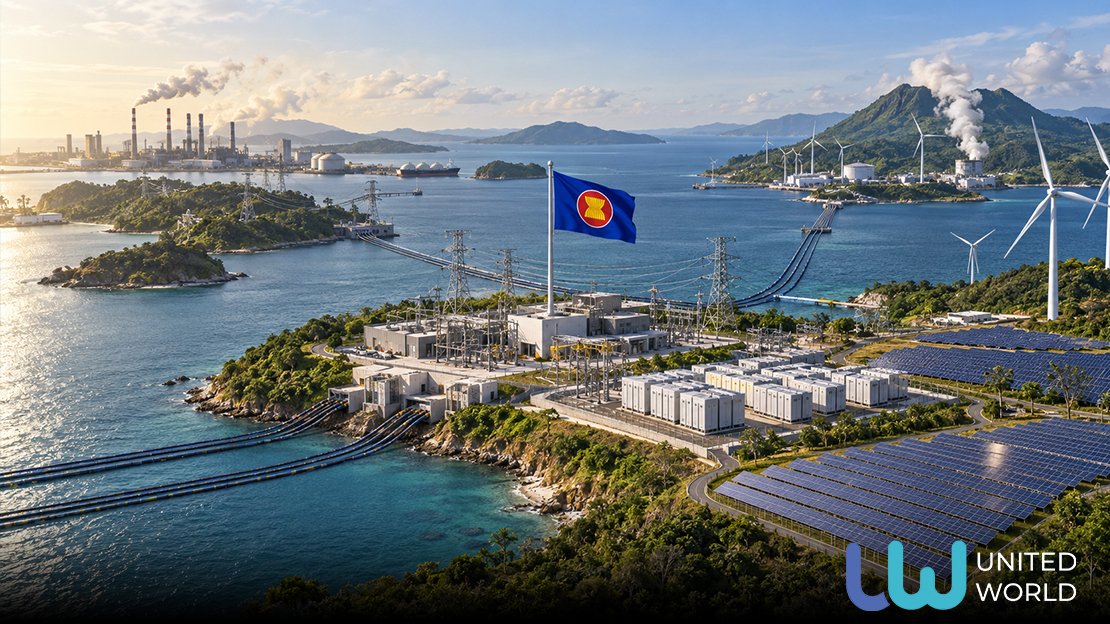
However, transition should also be viewed as a regional process. Currently, there is little cross-country collaboration in the energy domain, but such cooperation is crucial. The development of the ASEAN Power Grid (APG) and the Trans-ASEAN Gas Pipeline (TAGP), which are intended to facilitate energy cooperation among nations of the region, has been dragging since the late 1990s due to disagreements, funding issues, and inconsistent policies of different nations. Nevertheless, accelerated progress in this direction is essential. An interconnected grid, managed by ASEAN countries as a whole, may provide a range of advantages to nations that participate in this project. For example, Laos, with its hydropower resources, could potentially sell excess energy to other members of the region. Indonesia and the Philippines could provide geothermal energy to other ASEAN nations, and Thailand could share its experience in grid management and invest in energy networks.
Southeast Asian nations also require joint contingency planning that will help address the issues of strategic fuel reserves, stockpiling, etc., in emergencies. During the recent pandemic, it became clear how fragile supply chains are, and in the future, there will be other challenges that may disrupt energy supplies even more severely. Consequently, ASEAN countries should coordinate their actions during emergencies and develop mechanisms for such coordination in advance.
Moreover, the region’s energy security requires proper financing – transitioning the energy sector of Southeast Asia by 2040 will entail investments of several hundreds of billions of dollars. In particular, fossil fuel subsidies currently distort energy markets, preventing investors from allocating funds to renewable projects. As a result, governments need to phase out fossil subsidies in favor of green infrastructure and energy efficiency projects.
At the same time, international financial organizations, such as MDBs, need to allocate more resources for developing nations’ energy projects. Various innovative financing instruments, such as green bonds or blended finance models, will attract institutional investors wary of investing in emerging market assets. In addition, ASEAN nations’ domestic financial systems need to change to encourage green investments. For example, Indonesia is working on the first ever green sukuk, and Vietnam adopted a feed-in tariff for solar energy producers, which is also likely to be implemented in other nations.
It is also crucial to engage the private sector in the energy transition process, as entrepreneurs are more likely to adopt energy-efficient technologies and innovations compared to states. In particular, Southeast Asia is known for its innovations in the field, from small-scale solar panels in rural communities to artificial intelligence-driven energy management solutions in cities. Energy efficiency measures are often neglected in favor of discussions about increasing supply, yet they offer numerous opportunities to decrease carbon emissions, improve air quality, etc. By adopting common standards and encouraging technology transfer, ASEAN countries could accelerate their progress in energy transition.
Finally, energy justice is required to ensure a fair process in which marginalized communities are protected and energy access and affordability become priorities.
Conclusion
Southeast Asia faces a crucial choice in the realm of energy policy. Traditional energy approaches are outdated and do not fit into the conditions of the current era; consequently, it is time for a paradigm shift. Energy security should no longer be perceived as securing access to fossil fuels, as it is now possible to achieve the same results using renewable sources. Therefore, Southeast Asia’s transition to renewables represents its next step in history.
There is a great potential in Southeast Asia for achieving green objectives and leading the transition in the 21st century. The task now lies in utilizing this potential through coordinated regional efforts and innovative thinking.