


By Mehmet Enes Beşer
Rice is a crucial crop in the agriculture, economy, and culture of Southeast Asia. For years, rice is a staple rather than just a product. For most of the countries of the region, it is the core of their cultural identity, a national pride, and an important part of local rural economies. But with changing climate and weather patterns bringing more challenges to the existing agricultural sector, the current dependency on this product becomes unsustainable. In view of rising temperatures, water deficiency, and unpredictable weather conditions, the whole region will need to start considering a paradigm shift. Though shifting the focus of food systems away from rice might prove politically complicated and technically challenging, there is no other way for this region to ensure its future resilience.
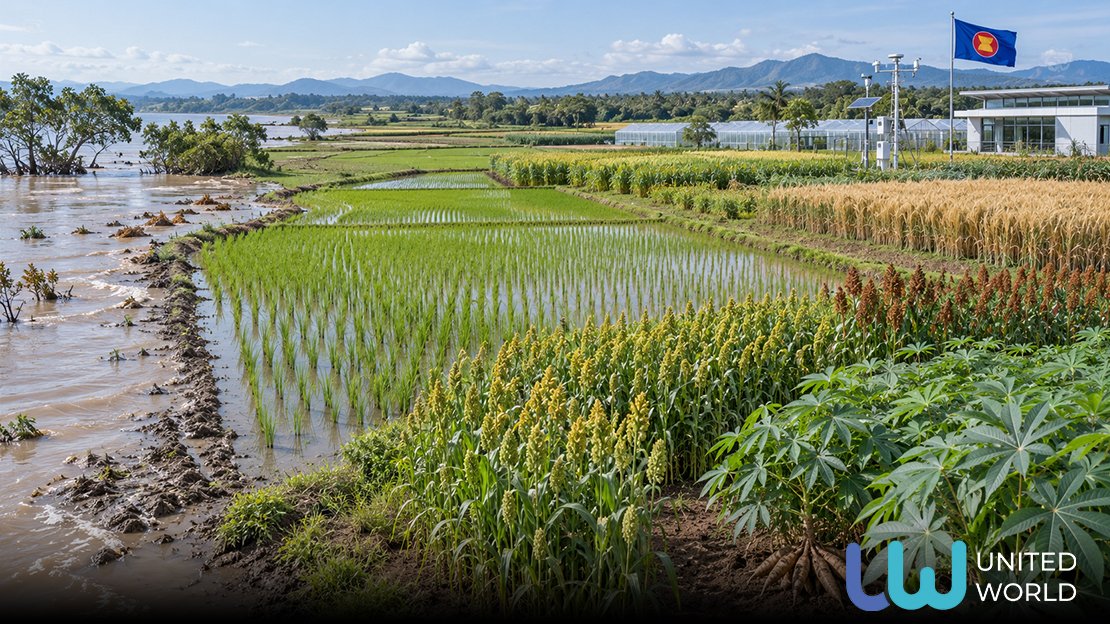
As mentioned above, there is an increasing number of factors which make the current approach toward rice production and consumption inefficient. With more frequent and severe periods of drought, floods, and seawater intrusion, Southeast Asia cannot rely on its traditional source of staple food any longer. Apart from climate change issues, the rising costs of production and poor yields of rice paddy fields make diversifying the staple food base inevitable. Some of the alternative cereals that proved to be sufficiently resistant to adverse conditions such as water shortage, pests, and heat include millet, sorghum, barley, and cassava.
Among other advantages of using such alternatives in agriculture, crop diversification could help Southeast Asian countries become better prepared to the challenges of climate change as well as increase soil fertility and biodiversity. As far as nutrition goes, crop diversification will be beneficial in terms of creating more diversified diet and compensating the lack of micronutrients characteristic of rice-based eating habits. Yet, it is not an easy process to follow. First, the region is faced with the problem of deep-rooted cultural and psychological dependency.
In most Southeast Asian countries, rice is the basis of people’s cuisine, peasant’s livelihoods, and the government’s subsidizing system. The shift will thus require overcoming a certain feeling of rice superiority among other products in terms of desirability and palatability. This implies educating citizens about the advantages of other grains, promoting alternative recipes, as well as involving food companies in making alternative crops seem trendy and healthy. Second, policy frameworks are still biased in favor of rice. The vast majority of government funding for farmers is directed to the cultivation of this cereal. Research and extension services concentrate on rice production; thus, farmers who want to try something new face increased risks.
In order to facilitate switching to another type of production, direct government assistance in the form of guaranteed purchases, subsidies, and crop insurance might be needed. Third, ASEAN member states have not yet formed strong mechanisms for coordinating their activities when it comes to dealing with the consequences of climate change. Although it is a strategic priority of the region, institutional instruments for implementing such policies and cooperating in the sphere are yet to be developed. There is thus a need for establishing a common platform for agricultural diversification with defined goals and resources available for all participants.
Digital technologies and climate-smart agriculture should also be considered in the context of growing importance of crop resilience. By providing satellite data, precise information, and real-time advisory, farmers will be able to make timely decisions regarding the duration of cultivation and use of inputs. This is especially beneficial for less-known crops that need time to gain popularity among both consumers and producers. All in all, moving beyond rice and focusing on more robust crops will be a difficult and long-lasting task that involves a lot of work. In order to stimulate such initiatives and support innovators, the government should develop a favorable environment.
The public procurement of alternative crops by schools, military, and government institutions can also help promote them to consumers. Southeast Asia’s food system needs restructuring, but it is going to be a painful and time-consuming process. Nonetheless, the alternative to rice has to be found due to the climate crisis which makes current practices unsustainable. Future generations will require a resilient and innovative agricultural sector in the region to ensure their food security. Thus, the rice bowl should stay at the core of Southeast Asian life but enhanced with more crops.