


By Arman Ahmadi, International Affairs Researcher, from Tehran / Iran
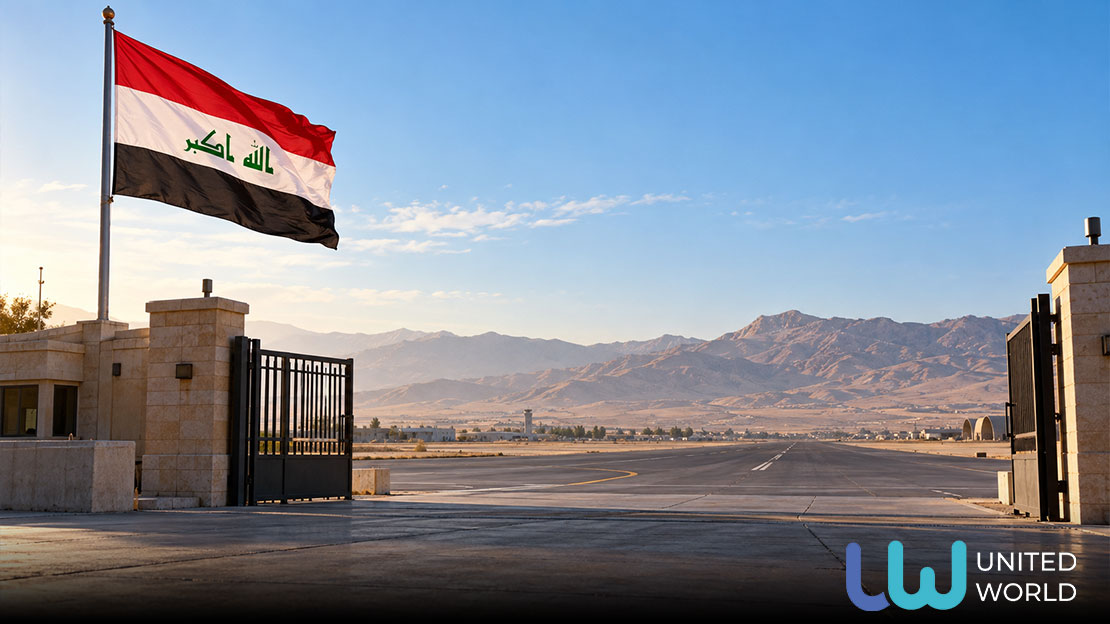
Empires rarely disappear overnight. They retreat in stages—through negotiations, gradual troop withdrawals, and quiet concessions—until the final convoy passes through the gates and a country is left to grapple with the consequences of their presence. For Iraq, that day came on September 30, 2026, when the Pentagon and US Central Command (CENTCOM) confirmed that the last American troops had completed their “orderly withdrawal” from Erbil Air Base. Their departure marked the final chapter of a twelve-year mission that the US-led coalition had framed as a campaign against ISIS, as well as a military presence that dated back to the 2003 invasion.
Washington hailed the withdrawal as a victory, while Baghdad declared the day “Sovereignty Day.” Resistance groups, however, saw it as the fruit of their steadfastness. Hours after the departure, a commander of Kata’ib Hezbollah stated that the resistance had won “this round.” Each of these accounts captures part of the truth. The critical question, however, is what this withdrawal will actually alter in practice: for Iraqi sovereignty and the position of resistance groups, for the fight against ISIS, and for the strategic balance that both the region and the United States must now navigate.
A Withdrawal Set in Motion Two Years Earlier
It is tempting to view the withdrawal as an immediate response to current regional crises, but the decision predates them. In September 2024, Baghdad and Washington agreed to conclude the coalition’s mission in two distinct stages by the end of September 2026: first in federal Iraq and then in the Kurdistan Region. Negotiated under the Biden administration, the plan was carried through to execution by the Trump administration. Iraqi Prime Minister Ali al-Zeidi described the deadline as “definitive and final,” and it was fulfilled accordingly.
The scale of this shift is worth recalling. In 2007, the number of American troops in Iraq exceeded 170,000. The 2003 US-led invasion—justified by claims that Iraq possessed “weapons of mass destruction”—did far more than overthrow a regime. The collapse of state institutions, widespread insecurity, and mass displacement plunged the country into years of turmoil. American forces withdrew in 2011, returned in 2014 amid the rise of ISIS, and have now departed once more.
Washington’s official narrative maintains that the mission was successfully completed. That account, however, tells only part of the story. The United States has consistently invoked counterterrorism to justify its presence in Iraq, yet the history of its intervention demonstrates that declared security objectives were intertwined with broader political and strategic calculations. The official announcement does not settle whether Washington chose to leave on its own terms or was compelled by the mounting costs of its presence and growing political pressure inside Iraq.
Crucially, what matters more than why the United States is leaving is what its departure will mean in practice. Washington is scaling back its direct military footprint, but the contest over Iraq’s future is far from over. The coalition’s headquarters is being relocated to Jordan, while US operations in Syria continue uninterrupted.
The Resistance and the State’s Monopoly on Arms
Iraq’s security landscape post-2014 cannot be understood without accounting for the role played by Iraqi forces and resistance groups. When ISIS seized large swathes of Iraqi territory and advanced toward Baghdad, the Popular Mobilization Forces (PMF) and resistance groups, operating alongside the regular army, became central to confronting the threat. The PMF emerged from this context and was formally integrated into the country’s legal security structure under a law passed by parliament in late 2016, although its constituent groups do not all answer to the central government to the same extent.
The territorial defeat of ISIS in 2017 resulted from a combination of factors: operations by Iraqi forces and the PMF, external support, and regional cooperation. Iran’s support for the forces fighting ISIS, including the role played by commanders such as General Qassem Soleimani, forms an integral part of that effort. To credit any single actor with the victory would be as misleading as ignoring the contribution of Iraqi forces. Resistance groups view themselves not as an impediment to state authority, but as one of the primary pillars on which national defense rests.
From this perspective, the American withdrawal represents a historic milestone for these groups, which have long regarded the US presence as an occupation. Kata’ib Hezbollah has rejected any disarmament agreement with the prime minister. Its conditions go well beyond troop withdrawals, extending to the elimination of American political and economic influence, an end to Turkey’s military presence in northern Iraq, and the dissolution of the Peshmerga. Yet these factions are far from united on the issue. Five major groups—including Saraya al-Salam, Asa’ib Ahl al-Haq, and Kata’ib Imam Ali—have reportedly agreed to place their weapons under government supervision. The issue of arms in Iraq is therefore not a simple binary struggle between “the state” and “the resistance,” but rather reflects a complex matrix of political calculations.
Two distinct questions must be separated. The first concerns the role of resistance forces in confronting foreign military intervention and security threats. The second concerns institutional discipline and the establishment of a unified chain of command within the national defense framework. Ignoring the contribution of these forces yields a distorted picture of Iraq’s security experience. But the challenge of establishing the state’s monopoly on arms cannot be set aside simply by pointing to past victories over ISIS.
Prime Minister al-Zeidi had linked the issue of disarmament directly to the US exit, arguing that once foreign forces departed, there would no longer be a pretext for maintaining independent arsenals. The government has now set June 2027 as its target timeline for resolving the issue. Under current proposals, the PMF is expected to play a role in registering and storing weapons, while the prime minister plans to reintroduce legislation to solidify its legal status. His proposal also envisages a 90-day moratorium during which factions refrain from attacks and are spared from US targeting. Baghdad is clearly seeking a negotiated arrangement rather than confrontation.
Washington, by contrast, takes a different stance. It has designated several groups as “terrorist organizations,” imposed sanctions on key leaders, and urged Baghdad to exclude them from government structures. This fundamental disagreement remains a key source of friction that the US withdrawal will not resolve automatically. While some analysts anticipate that the justification for retaining arms will diminish, factions that spent years fighting to force a US exit are unlikely to simply fade into the background. The outcome will depend on the evolving domestic political balance and the government’s ability to establish a mutually acceptable framework.
US Influence, the ISIS Question, and the Test of Sovereignty
The question of weaponry addresses only part of the broader equation. The departure of American combat troops does not mean Washington has lost its capacity to shape developments in Baghdad. Over two decades, the United States built extensive levers within Iraq’s financial, energy, and security sectors alongside its military presence. Iraq’s reliance on oil revenues to finance its budget, its banking ties, and its access to international markets provide continuing leverage for Washington—explaining why resistance groups demand the elimination of US political and economic influence as well.
Furthermore, the United States maintains a strong military footprint across Gulf states and Jordan, while the Iraqi leadership continues to engage with the White House. The current pullout is therefore less an end to America’s regional strategy than a realignment in the form and geographical distribution of its presence. It may, however, reduce the political friction that foreign troop deployments place on Baghdad. Capitalizing on this opportunity requires Iraq to reduce economic vulnerabilities, bolster sovereign defense capabilities, and diversify its foreign partnerships.
This persistent leverage also invites scrutiny of Washington’s official account of its mission. While the Pentagon maintains that ISIS has been defeated as an organized military force, the structural origins of the group warrant consideration. Many regional analysts trace the rise of ISIS to the consequences of the 2003 invasion, institutional collapse, and the security vacuum that followed. The issue has also surfaced in US political discourse; during the 2016 campaign, Donald Trump notably referred to Barack Obama and Hillary Clinton as the “founders of ISIS.” Rhetoric aside, this debate underscores that the narrative casting Washington as the sole savior against terrorism faces serious counterarguments.
Consequently, the premise that ISIS will automatically re-emerge without American intelligence support is subject to debate. The group’s territorial defeat in 2017 was achieved through joint efforts involving Iraqi forces, resistance groups, and regional partners, whereas two decades of direct US engagement failed to eradicate systemic instability. Nevertheless, security risks remain present. ISIS sleeper cells continue to operate in Iraq and Syria, particularly across disputed territories between Baghdad and Erbil, with Iraqi officials warning of potential resurgence attempts post-withdrawal. Kurdish concerns regarding the removal of American air defense systems are similarly pronounced, compelling Baghdad and Erbil to strengthen security coordination, including the deployment of joint anti-ISIS brigades.
Iraq’s security challenges extend well beyond ISIS. The US withdrawal coincides with heightened regional tensions involving Iran, and Iraq’s geographical and economic position exposes it directly to the dynamics of US-Iran confrontation. However, analysts note that the September 30 deadline itself alters little regarding Washington’s broader deterrence posture, as the US retains extensive strike capabilities across regional bases. Exiting Iraq neither concludes the standoff between Washington and Tehran nor signals a total US retreat from West Asia, though the reduction of direct US forces in a neighboring state remains significant for Iran.
In this context, Iraq’s ties with Iran extend beyond security considerations, rooted in geography, shared history, religious links, trade, and energy interdependence. True Iraqi independence does not require severing relations with neighboring states, but rather maintaining balanced external partnerships grounded in mutual interest and reciprocal respect for sovereignty. The critical requirement is for Baghdad to make policy decisions based strictly on national interest, resilient to external pressure from any quarter.
This push toward self-reliance reflects a broader regional trend. Initiatives such as the Mecca Joint Defense Agreement between Saudi Arabia, Türkiye, and Pakistan—viewed by Iranian officials as a response to declining direct US engagement—indicate that regional actors are recalibrating security frameworks away from complete reliance on external guarantees.
The withdrawal of US forces presents Iraq with both an opportunity and a test. It offers an opportunity by reducing the political friction of foreign military presence and restoring greater autonomy to Baghdad. It serves as a test because physical troop movements alone do not guarantee strategic independence; Washington retains significant non-military leverage, and the contest over Iraq’s political orientation remains ongoing.
Evaluating the outcome of this test hinges on critical benchmarks:
- The Arms Framework: Will the government and resistance groups reach a viable consensus on the arms issue by June 2027?
- Security Resilience: Can Iraqi forces, leveraging national capabilities and regional cooperation, successfully contain remaining ISIS cells?
- Sovereignty in Decision-Making: Can Baghdad maintain an independent foreign policy centered on national interest amidst competing external pressures?
Genuine sovereignty is not forged by troop relocations alone; it requires the capacity to govern independently, defend territorial integrity, and resist external dictates. The outcome of the 2011 withdrawal demonstrated that removing foreign troops without robust national institutions creates a vacuum that invites subsequent crises—culminating in the rise of ISIS three years later. The post-2026 era presents Iraq with the opportunity to demonstrate a different outcome, transitioning from a theater of external rivalry into a fully self-reliant sovereign state.