


By Mohammad Reza Moradi, General Director of Mehr News Agency’s Foreign Languages and International News Department, from Tehran / Iran
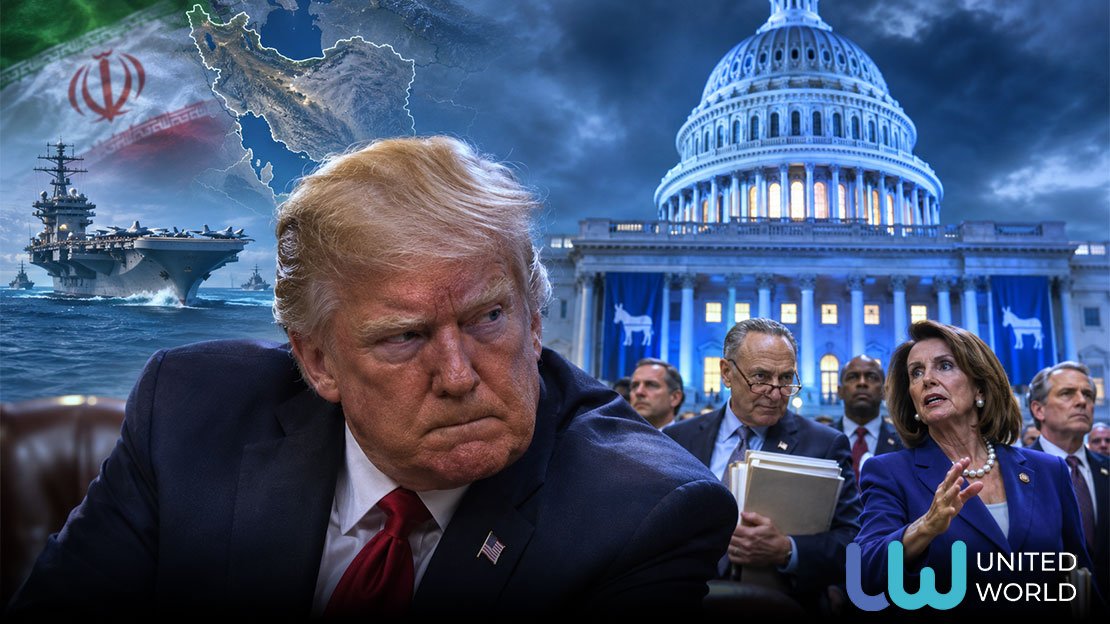
The results of the November 2026 US midterm elections will have implications far beyond the shift in control of Congress. They are likely to shape the foreign policy of President Donald Trump’s administration, particularly Washington’s approach toward Iran. By winning majorities in both the House of Representatives and the Senate, Democrats have wrested control of Congress from Republicans, leaving the president to face a political opposition in both chambers during the final two years of his term.
The conflict with Iran has emerged as one of the main issues in interpreting the Republican defeat. Vice President JD Vance went so far as to explicitly identify the conflict as the primary reason for his party’s loss. The central question now is whether the shift in the balance of power in Congress can alter the course of US policy toward Iran, or whether it will simply raise the political and institutional costs of continuing the military approach.
A Democratic Congress: New Constraints on the Trump Administration
The Democratic victory in both chambers will impose new political constraints on Trump during the second half of his presidency. Beginning in January 2027, his administration will have to negotiate with a congressional majority that has considerable political incentives to scrutinize the White House’s performance and highlight policy disagreements. Congressional committees will be able to hold hearings, summon administration officials and launch investigations, potentially turning the government’s decisions on foreign policy and national security into matters of public controversy.
These tools will be particularly significant in the case of Iran. A prolonged military confrontation requires not only decisions at the level of the commander-in-chief, but also financial resources, political backing and public support. Through its legislative powers and control over appropriations, Congress can increase the costs of continued military operations and pressure the administration to explain their objectives, duration and consequences.
However, the Democratic victory should not be interpreted as stripping the president of his military powers. The US Constitution divides authority between Congress, which has the power to declare war, fund the armed forces and regulate the military, and the president, who serves as commander-in-chief. Historical practice shows that US presidents have, on several occasions, undertaken limited military operations abroad without obtaining prior congressional authorization.
The War Powers Resolution of 1973 also establishes procedures requiring the president to notify and consult Congress, while setting time limits on the deployment of US forces. Nevertheless, there are longstanding legal disagreements over how the law should be enforced and the extent of the president’s unilateral authority.
Trump, therefore, would retain the ability to order limited military action. But turning such action into a prolonged and costly campaign would become considerably more difficult with an opposing majority controlling Congress.
The Iran Conflict and the Growing Rift Within the Republican Party
One of the election’s most significant consequences has been the exposure of divisions within the Republican Party over the costs of Trump’s foreign policy. Following the announcement of the results, Vice President JD Vance made an unusually direct statement, saying: “The reason we lost was the war.”
He also outlined four priorities for winning back dissatisfied voters: ending the conflict with Iran, focusing on the cost of living and inflation, returning to the “America First” approach, and reassessing Washington’s relationship with Israel.
Vance’s position is significant for two reasons. First, the Iran conflict has evolved from a foreign policy issue into a source of division within the Republican Party itself. Second, while Trump has continued to emphasize the need to maintain the military approach, Vance has drawn attention to its political and economic costs.
It would nevertheless be misleading to conclude that the conflict was the sole factor behind the Republican defeat. Economic concerns, inflation, the cost of living and dissatisfaction with the administration’s overall performance also played a role in voters’ decisions. Indeed, election polling data from the Associated Press indicate that issues such as the cost of living and government corruption were among the leading concerns for large segments of the electorate.
Even so, Vance’s remarks suggest that part of the Republican Party has concluded that continuing the confrontation with Iran runs counter to Trump’s campaign promises to avoid costly foreign interventions. An Axios report on Vance’s private criticism of Israeli Prime Minister Benjamin Netanyahu, and his negative assessment of Israel’s calculations regarding Iran, further points to disagreements over the objectives and costs of the policy.
In this context, the Iran issue could become a defining factor in the future reshaping of Republican political identity and the party’s internal power struggles, particularly as Vance is widely regarded as one of the leading figures of its next generation.
Vance’s Emerging Role: From Crisis Management to Diplomacy
Signs of changing calculations in Washington have not been limited to election-related statements. An Axios report published on November 6 said Vance had personally become involved over the previous two weeks in indirect efforts to secure a new ceasefire and resume nuclear negotiations with Iran.
According to the report, Vance had been in almost daily contact with the Qatari prime minister, Pakistani officials and other intermediaries. He had also reportedly sent a letter to Mohsen Rezaei, secretary of Iran’s Supreme National Security Council, proposing the resumption of direct negotiations. The technical meeting under discussion has yet to take place, while informed sources have described progress in the talks as slow.
The vice president’s direct involvement can be understood as part of the Trump administration’s effort to manage two variables simultaneously: preventing the domestic political costs of the conflict from escalating, while maintaining pressure on Iran.
On the one hand, Vance’s critical stance toward the conflict may give him greater political room to advance a diplomatic track. On the other, his involvement could indicate that efforts to reach an agreement are being pursued at a level higher than that of conventional diplomatic channels.
However, these developments alone do not establish that Washington has definitively changed its strategy or that Trump has made a final decision to end the confrontation. Reports indicate that while diplomatic contacts continue, the military option remains part of Washington’s calculations.
Conclusion
The implications of the midterm elections for US policy toward Iran should be understood primarily in terms of the increased political and institutional costs facing Trump, rather than the complete removal of the military option from the White House’s agenda.
The president retains the authority and capacity to undertake limited military action. However, sustaining a prolonged confrontation would now encounter greater political, budgetary and institutional obstacles. At the same time, divisions within the Republican Party and Vance’s direct involvement in diplomatic efforts point to signs of a reassessment within parts of the US administration.
For Tehran, this situation offers neither a guarantee of an agreement nor proof that the threat of further confrontation has ended. Rather, it suggests that Washington’s decision-making environment has become more complex. From now on, US calculations regarding Iran will have to take into account not only regional and military balances, but also domestic political pressures and the electoral costs of continuing the current course.