

In recent weeks, we reported on Trump’s concern about what he considers a “grave threat” to the entire American governmental system. Referring to the enemies of the system without hesitation, he defined them as Marxists and said that what they were doing was “communism, socialism, Marxist deviations that started from a premise opposed to that of the United States.” He therefore called for opposing this trend and combating it not only in electoral terms. In this context, he appealed to Americans to “avoid madness and unleash common sense against communism,” urging citizens to wake up “now that the barbarians are at the gates.”
It is clear that a major upheaval is shaking the American political landscape, beginning to reveal an internal dimension that exposes these movements and explains the furious reaction of Trump and his cronies. We discussed this last week. Now we will examine some external manifestations of this phenomenon.
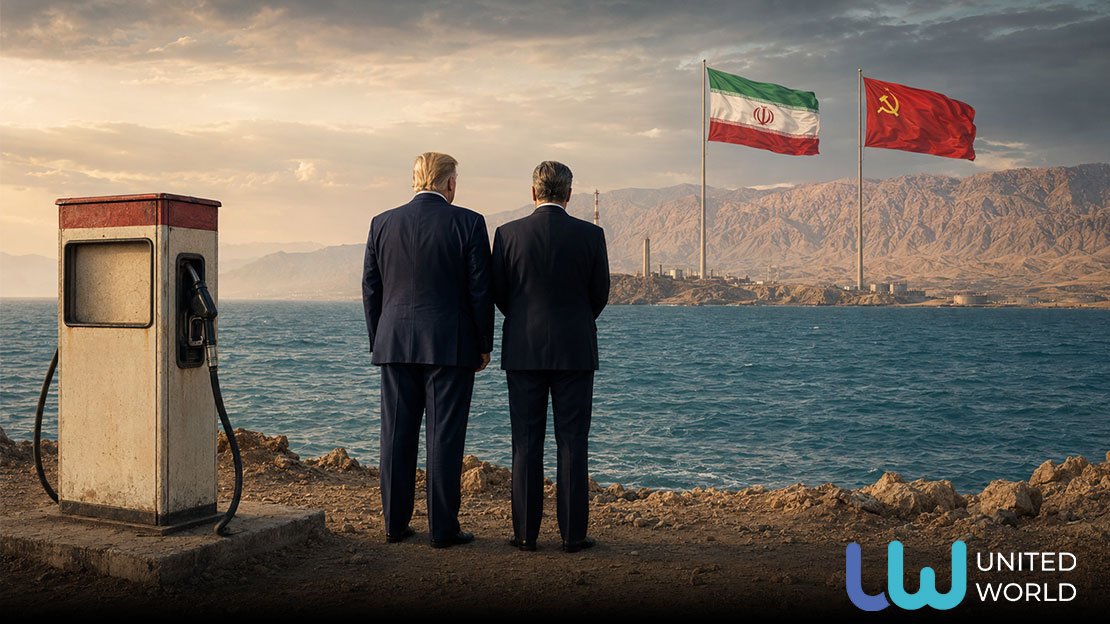
First and foremost, from a tactical standpoint, Trump faces a concern about the poll numbers indicating a defeat for the Republicans and for himself in the November elections. He has a dilemma he has been unable to resolve: his ego prevents him from accepting his defeat to Iran in West Asia, and he still dreams of inflicting a defeat on Tehran that will force them to capitulate.
Meanwhile, the other side of the dilemma shows that continuing the war leads to higher gasoline prices and increased inflation, which affects American voters and could influence the outcome of the elections. It is well known that the American public cares little about its government killing citizens anywhere in the world. The massive protests against the Vietnam War were not sparked by the hundreds of thousands of Vietnamese victims subjected to chemical weapons attacks and maimed, but rather by the large number of Americans killed. Therefore, the new approach implemented has focused on concealing or minimizing American deaths in illegal acts of war.
American public opinion is indeed sensitive to this, and it also cannot tolerate having its wallet affected. Both things are happening. Trump needs to respond; the problem is, he doesn’t know how. Iran does. In the American political lexicon, there is the term “October Surprise,” which refers to an unexpected or deliberate news event that occurs just before an election and is related to last-minute actions or scandals designed to decisively influence the election result. Its origin dates back to 1972, when a last-minute announcement was made about the end of the Vietnam War just days before the election that kept Richard Nixon in the White House.
And it also happened in 1980, with Iran as the protagonist. Faced with the imminent release of American hostages in Tehran, during the campaign between Jimmy Carter and Ronald Reagan, Reagan’s advisors secretly negotiated with Iran to delay the release until after the election and ensure Carter’s defeat. The Iranians agreed.
It was a response to the Carter Doctrine, which stated that any attempt by a foreign force to control the Persian Gulf would be considered an attack on vital U.S. interests and would be repelled, if necessary, by military force.
In the presidential elections of November 4, 1980, Reagan defeated Carter. The Algiers Accords between the United States and Iran, mediated by Algeria, were signed on January 19, 1981—the day before Reagan’s inauguration and about two and a half months after the election. The 52 hostages were released the following day, January 20, 1981, just minutes after Reagan’s inauguration. Thus, without leaving West Asia, Iran dealt a defeat to the President of the United States.
Now, in preparation for an “October Surprise” to reverse the Republicans’ disastrous electoral situation, the Pentagon is drawing up plans to attack Cuba, for which it has deployed a massive military contingent in the Caribbean, led by the 101st Airborne Division. As always, the United States needs to justify its actions to its stupefied public, which believes everything it is told. To this end, it has produced reports linking Cuba to progressive American organizations and figures, including Black Lives Matter, Antifa, Zohran Mamdani, and Karen Bass, the mayor of Los Angeles, among others. Do you now understand, dear readers, how Trump and Rubio’s anti-communist rhetoric relates to the internal electoral dynamics of the United States and its expansionist policies worldwide, especially in Latin America and the Caribbean?
But Iran also has its “October Surprise.” They’re not going to hand Trump a victory. I think they’re going to prolong the war, at least until after November. They’ve already defeated Trump militarily and diplomatically; now they’re going to defeat him politically and electorally. Once that happens, the MAGA and Republican debacle will accelerate.
As a way to respond to and justify its actions, the far-right fascist movement in the United States has called for the creation of a “Fascist International” that surpasses traditional right-wing international groups such as the Socialist International (SI), the Centrist Democratic International (CDI), and the International Democratic Union (IDU) . This new organization, convened by Secretary of State Marco Rubio, brought together ministers from more than 60 countries in Washington on July 16 to coordinate an international offensive against the popular movement and left-wing forces.
The initiative focuses on intelligence sharing, tracking financing networks, and police coordination to curb the activities of leftist groups. In effect, in Latin America, it’s about reviving Operation Condor, with the difference that that was a secret network of state terrorism and repressive coordination created by the dictatorships of the Southern Cone in the 1970s with logistical and intelligence support from the United States.
And now it is an open organization that has set out to repress and persecute leftist forces as a way to regroup anti-communist followers and revive fascism and Nazism as political options that deny democracy, recognize racial supremacism, blame minorities for their failures, and aim for the territorial expansion of their ideas through war and the extermination of populations. Alongside Rubio, Zionist leaders and Ukrainian neo-Nazis are playing a leading role that provides context and character to their objectives.
This meeting is part of the new counterterrorism strategy signed by Trump in May, which, in the case of the United States, focused on groups that the White House describes as “anti-American, anarchist, or associated with Antifa.” The meeting also reflects a shift in priorities in the Trump administration’s national security policy.
While for the past two decades the fight against terrorism has been concentrated mainly on jihadist organizations such as Al Qaeda or the Islamic State, the White House now seeks to establish as a priority political violence inspired by left-wing ideology.
State Department spokesman Tommy Pigott stated that the event was organized because far-left terrorism is “an old threat resurfacing with strong transnational ties and new convergences,” adding that: “Because this threat has not been adequately addressed in the past, every intervention, designation, or security assistance program creates a multiplier effect that strengthens countermeasures both domestically and internationally.”
In this context, the United States is dismantling representative democracy as a valid political system in the region because it no longer serves its purpose as a model for controlling populations. As Trump himself has acknowledged, Washington, using every tool at its disposal, has rigged elections in Honduras, Chile, Colombia, Peru, and the parliamentary elections in Argentina, and is preparing to do the same in Brazil. In Venezuela, they were unable to do so and resorted to direct military intervention to transform the country into a protectorate.
The popular forces of Latin America and the Caribbean must take note of this situation, reorganize, regroup and prepare for this new offensive of the right wing that now manifests itself as a need for imperial survival when it receives powerful military, economic, political and diplomatic blows in West Asia, Ukraine, China and Africa.
The people will know how to recover and respond. This was the case in the early decades of the 19th century and the late 20th. Leaders emerged who were able to lead their nations to victory…and it will be so again…by reason or by force.