


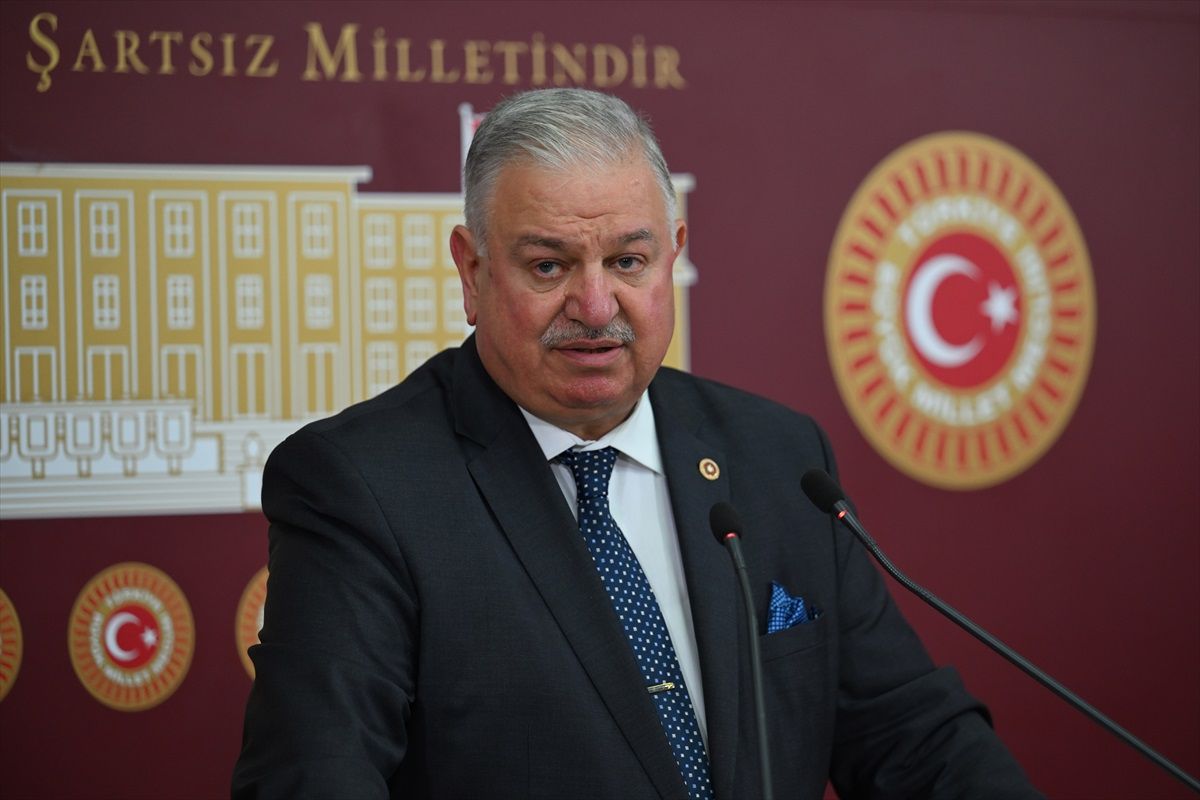
Speech of Doğan Bekin, MP and Deputy Chairman for New Welfare Party (Türkiye) at the Conference on Global Security and NATO
Speech of Doğan Bekin, MP and Deputy Chairman for New Welfare Party (Türkiye) at the Conference on Global Security and NATO
The World Civilizations Initiative Research Center organized an international conference on Global Security and NATO on June 26-27, 2026, in Istanbul, Türkiye, ahead of the NATO summit scheduled for 7 and 8th of July in Ankara. One of the speakers was Doğan Bekin, MP and Deputy Chairman for New Welfare Party (Türkiye). Below we present his speech. The title was set by UWI.
Distinguished Guests, Ladies and Gentlemen,
When Türkiye joined NATO in the early 1950s, it paid a significant price for its membership. Shortly after the Alliance was founded, Türkiye applied to become a member. However, we should not overlook the fact that its first three applications were rejected, and that Türkiye was not admitted until 1952, following the Korean War.
At the time, it was made abundantly clear that Türkiye first had to prove its worth before it could be accepted into the Alliance. The Korean War was therefore regarded by Ankara as a historic opportunity. On 26 July 1950, by a decision of the Council of Ministers, Türkiye became the second country after the United States to send troops to Korea. Accordingly, a Turkish combat brigade of approximately 4,500 soldiers was placed under the command of the United Nations.
On the very same day that the Turkish government approved the deployment, U.S. Senator Connally, who was in Ankara for official contacts, declared that Türkiye’s participation in Korea would greatly enhance its international prestige. He stated, “The United States helps those who help themselves. The Korean War is not an American war; it is a United Nations war.”
At the same time, a carefully orchestrated media campaign emerged in Türkiye to shape public opinion in favor of both the Korean War and NATO membership. Newspapers suddenly began publishing sensational stories with little factual basis. Reports claimed that a foreign submarine had been sighted between Yalova and Darıca in the Sea of Marmara and that investigations had immediately been launched. Newspapers dated 26 July 1950 even reported that a seagull allegedly flown from Moscow had been shot near Küçükçekmece, carrying a leg band marked “Moscow 169010-Tre.”
The objective behind such reports was quite evident: to prepare Turkish public opinion for NATO membership and for the dispatch of Turkish troops to Korea. The sheer number of these stories suggests that the public was not particularly enthusiastic about either issue. Unfortunately, public opinion was deliberately shaped through such propaganda. Given Türkiye’s strategic geopolitical position, Washington regarded the country as a crucial component of its containment strategy against the Soviet Union.
Following the Yalta and Potsdam Conferences of 1945, many Western countries increasingly argued that excessive concessions had been made to the Soviet Union. As a result, the United States and its allies gradually adopted a policy of strategic containment toward Moscow, ultimately leading to the establishment of NATO. After Türkiye’s participation in the Korean War, its considerable land forces and exceptional geostrategic importance convinced the Alliance to admit it as a member.
From that point onward, however, Türkiye became increasingly dependent on the United States. Rather than developing a truly independent national defence industry, it gradually found itself operating under Washington’s strategic influence.
It is also impossible to discuss this period without mentioning the Marshall Plan. Before Türkiye formally joined NATO in 1952, Marshall Aid played a significant role in shaping its post-war policies. Yet compared with the enormous financial assistance provided to war-ravaged Western European countries, the aid allocated to Türkiye was relatively modest. This imbalance generated widespread public criticism. The sensational media reports mentioned earlier largely served to counter these growing objections and strengthen support for closer alignment with the West.
Once prepared through the Marshall framework, Türkiye was eventually admitted into NATO. Yet throughout its membership, Türkiye has often been treated not as part of the solution to regional security challenges, but rather as part of the problem. Instead of serving Türkiye’s national interests, NATO policies have frequently reflected an approach designed to safeguard broader Western strategic interests, often at Türkiye’s expense.
One of the clearest examples was the Cuban Missile Crisis of 1962. The Jupiter missiles deployed near İzmir after the 1960 military coup were removed by the United States without any meaningful consultation with Türkiye. In reality, the decision to deploy these missiles had already been reached during the final years of the Democrat Party government through confidential negotiations with Turkish officials—a fact now documented in American archives. Both governments agreed to keep the arrangement secret from their respective publics.
Ironically, although the deployment agreement had existed before the 1960 coup, the missiles were installed only after the military takeover, under NATO’s umbrella. Yet during the Cuban Missile Crisis, they were dismantled and withdrawn entirely without consulting Türkiye.
A similar situation exists today with the Kürecik early-warning radar system in eastern Türkiye. Although officially presented as part of NATO’s missile defence architecture, the system effectively serves Israel’s strategic security interests. During the Obama administration, Ankara came under considerable pressure to approve its deployment. Following President Obama’s public criticism that Türkiye was acting too slowly, the agreement concerning Kürecik was swiftly finalized in Italy.
At the time, Turkish officials assured the public that although the radar system belonged to the United States, operational control would remain in Turkish hands. However, recent regional crises have demonstrated that the system contributes little to Türkiye’s own security interests while significantly enhancing Israel’s strategic defence network. Similar radar installations have been established in Qatar and Israel, forming an integrated regional system.
Despite being a NATO member, Türkiye’s relations with the United States have repeatedly been marked by serious disagreements that cannot simply be overlooked. Throughout the history of the Alliance, Türkiye has rarely received preferential treatment. On the contrary, it has experienced a series of major political and strategic crises.
Among the most notable examples are the Johnson Letter of 1964, which sought to deter Türkiye from exercising its legitimate rights in Cyprus through unprecedented diplomatic pressure; the U.S. arms embargo imposed after the 1974 Cyprus Peace Operation; tensions arising from Türkiye’s expanding cooperation with Russia; and, more recently, the disputes surrounding the acquisition of the Russian S-400 air defense system and Türkiye’s subsequent exclusion from the F-35 fighter aircraft program.
The Trump administration’s growing preference for unilateral action over multilateral cooperation has further intensified debates about NATO’s future. Increasingly critical assessments by political leaders and security analysts regarding NATO summits, together with Washington’s own growing reluctance to shoulder the Alliance’s traditional responsibilities, reveal deep divisions within the transatlantic community. As the United States struggles with trillions of dollars in public debt, it has made it increasingly clear that it is no longer willing to bear the principal burden of Europe’s defense.
As the leading force behind NATO—the institutional pillar of Euro-Atlantic security—the United States emerged after the collapse of the Soviet Union as the dominant power in a unipolar international order. Under this perception of global leadership, Washington intervened militarily in numerous countries, supported military coups, and sought to install governments aligned with its strategic interests by exploiting internal conflicts. These interventions have contributed significantly to instability in many regions, particularly in the Middle East, while creating conditions that have enabled extremist and terrorist organizations to flourish.
History offers many instructive examples. During British colonial rule in India, Hindus and Muslims had coexisted for centuries. The British Empire deliberately implemented a strategy of “Divide and Rule,” systematically encouraging communal divisions in order to strengthen colonial control. This policy ultimately contributed to the partition of the Indian subcontinent and the creation of Pakistan and, later, Bangladesh.
A similar geopolitical approach can be observed in the terminology imposed upon our own region. Today we commonly refer to it as the “Middle East.” Yet historically such a geographical concept did not exist. European powers traditionally described the vast region extending from Morocco to Indonesia as the “Near East,” reflecting the cultural and historical continuity of the broader Islamic world. Over time, however, this expansive civilizational space was redefined and fragmented into the narrower concept of the “Middle East,” gradually encouraging societies to perceive themselves as disconnected from the wider geography to which they had historically belonged.
Among the countries most profoundly affected by these interventionist policies, Türkiye occupies a particularly significant place. Such external interventions have consistently hindered the development of genuine democracy and independent policymaking within the country. NATO, conceived as the security pillar of the American-led Pax Americana, has evolved far beyond its original mission of preserving peace and stability. Instead, it increasingly functions as an instrument supporting the geopolitical expansion of the United States.
History should never be regarded as a rigid template. Rather, it serves as a guide, enabling us to learn from past mistakes and make wiser decisions for the future. In light of the experiences of Iraq, Libya, Gaza, the West Bank, Lebanon, Syria, and Iran, Türkiye must now draw the necessary lessons and pursue a more independent approach to its national security.
This necessity arises because U.S. policy in the region is fundamentally shaped by two priorities: safeguarding Israel’s security and maintaining strategic control over energy resources. Given Washington’s repeated interventions in the affairs of sovereign states, expecting the United States to safeguard Türkiye’s national interests would be an act of extraordinary naivety. The continued policy of making concessions to Western and imperial strategies represents nothing more than the repetition of past strategic mistakes.
Despite Türkiye’s willingness to purchase Patriot missile systems with its own financial resources, its request to strengthen the defense of not only its own borders but also NATO’s southern flank was rejected by its allies. Such an attitude is difficult to reconcile with the principles of genuine alliance and solidarity. Likewise, persistent restrictions imposed upon Türkiye’s defense industry continue to undermine confidence among the Turkish people.
From the Greater Middle East Project to the Oded Yinon Plan of 1982, numerous geopolitical strategies aimed at fragmenting and weakening the countries of the region have been implemented gradually over time. After the destabilization of Syria, Iraq, and Libya, Türkiye must remain vigilant against the possibility that similar strategies could eventually be directed toward itself.
For this reason, it is of vital importance that we approach these developments with wisdom, prudence, and strategic foresight. I therefore believe that today’s workshop is exceptionally valuable. I sincerely hope that the conclusions reached here will contribute to Türkiye’s future and illuminate its path toward genuine national independence.
Thank you very much for your attention.