


I’m in China again. This is my thirteenth trip to this fabulous and intriguing country. It’s difficult to get a complete picture of what’s happening in just a few days, but it’s possible to take a brief look that sheds light on some of the main events that highlight national interests.
The country is preparing for the year 2027 when it will commemorate the centenary of the founding of the People’s Liberation Army (PLA) and hold the 21st National Congress of the Communist Party of China (CPC), where Xi Jinping is expected to assume a fourth term as the Party’s top leader in the capacity of general secretary.
In general terms, the country is operating based on the decisions made at the Fourth Plenum of the CPC Central Committee, which govern the political, economic, and social guidelines of the Fifteenth Five-Year Plan, officially adopted in March of this year. In a planned economy like China’s, these plans are especially important because they set the economic and strategic objectives that must be met, in this case, during the period 2026-2030.
With the economy being the main concern of the top Chinese authorities, the keys for the next five years will revolve around four axes: scientific and technological leadership, strengthening national security – a broad concept that in China encompasses different areas such as the political, economic, military or social – self-sufficiency and boosting domestic consumption as an engine of growth.
However, the CPC does not hide the risks and challenges facing the country and warns of increasing “uncertainties and unforeseen factors.” The main guidelines for the period are:
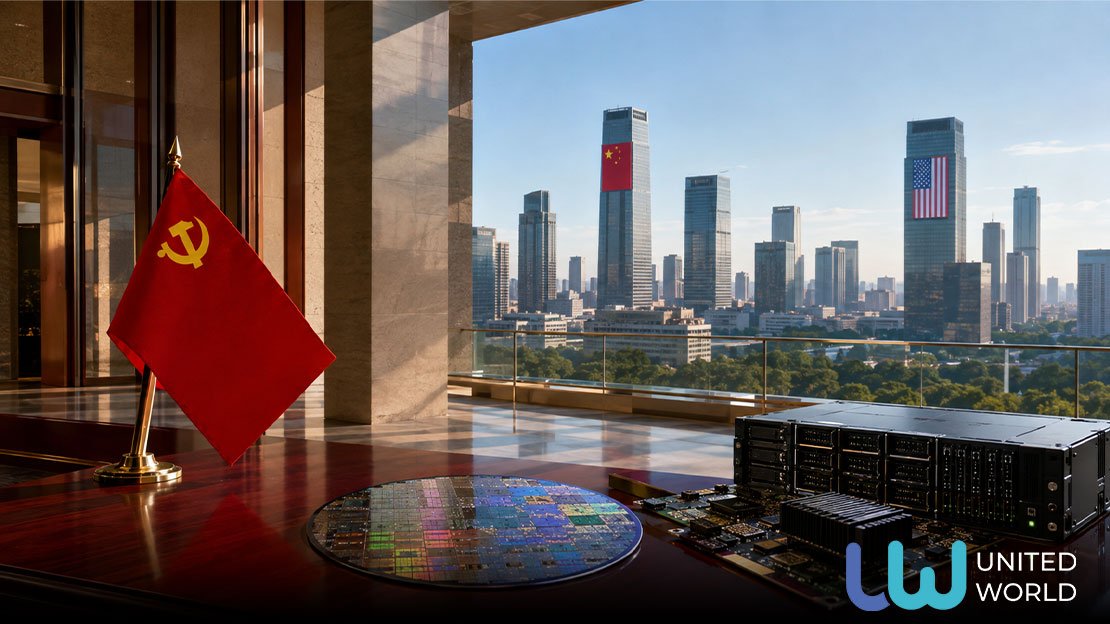
- Accelerating self-sufficiency and high-level scientific and technological self-strengthening to lead the development of new productive forces. All of this within a framework of rivalry with the United States and the West, in which Beijing understands that conditions do not exist for a direct military confrontation. Therefore, they are preparing for a technological confrontation in those sectors that will define the so-called Fourth Industrial Revolution, such as semiconductors, robotics, and artificial intelligence.
- Building a robust domestic market and accelerating the establishment of a new development model is not a new goal, but one that China has not yet fully achieved. Private consumption remains low, representing around 39% of GDP in 2023, well below other advanced economies such as the United States, Japan, or Germany. This explains why the Chinese economy is so dependent on foreign markets and exports, something it considers a strategic vulnerability.
- Maintaining “national security” as the cornerstone of all their strategies, they propose to promote high-quality national defense and military modernization, and firmly implement the comprehensive concept of national security based on the principle that “governing the country requires first governing the Party, and only when the Party prospers does the country become strong.” In this way, they will continue to increase the defense budget to, as Xi Jinping himself declared, be prepared to “win wars.”
All of this is happening against the backdrop of a fierce fight against corruption that has permeated the Party, the State, and especially the Army. During the fourth plenum, the dismissal of 11 full members of the Central Committee was announced, as well as the expulsion of 14 high-ranking CPC officials. The state of the Armed Forces has been a top priority for China’s highest authorities. Of the seven members of the Central Military Commission (CMC) at the end of 2022, only Xi Jinping and Zhang Shengmin, the second vice chairman and head of the anti-corruption campaign within the Army, remain. Last year, nine high-ranking military generals were dismissed , including He Weidong, who was then vice chairman of the Central Military Commission, the country’s highest military body, for “seriously violating CCP discipline.”
In general, the most important concerns perceived in the country relate to the need to maintain political stability, the economic situation, the management of Artificial Intelligence (AI) which is having repercussions on employment, especially among the younger members of society, and the need to maintain and improve the well-being of the people.
The economic situation, marked by deflation caused by reduced domestic demand, and the pursuit of job stability are perhaps the most pressing problems the government must address. Therefore, they have proposed diversifying the economy, shifting from a model primarily focused on the real estate sector to one that stimulates other industries, particularly high-tech ones. Within this framework, there is a significant effort underway in the development of AI, robotics, and semiconductors.
On the international stage, relations with the United States dominate the interests of the CPC, the government, and the state, particularly regarding Washington’s interference in Taiwan, which Beijing, as is well known, considers an internal matter. Although China has pledged to return the island to its sovereignty through peaceful means, it has clearly established the possibility of using armed force to achieve this should separatist sentiments within Taiwan gain traction and threaten a change in the current status quo.
China’s other major international concern is the rampant increase in militarism in Japan following the rise to power of Prime Minister Sanae Takaichi. Breaking the agreements signed after the end of World War II, the Japanese government has even hinted at beginning work on developing atomic weapons, explicitly prohibited after its military defeat in the mid-20th century. Takaichi’s statements linking Japan’s stability to that of Taiwan have brought bilateral relations to a critical point.
This week, a Japanese parliamentary delegation, consisting of one legislator from the ruling party and two from the opposition, is in China with the aim of repairing ties after Prime Minister Takaichi’s comments about Taiwan, which angered China and caused tensions that have spread to the economy.
At the multilateral level, Beijing has committed to supporting the UN as a valid instrument for maintaining peace, upholding international law, and serving as a basic tool for resolving and overcoming disputes through negotiation and dialogue.