


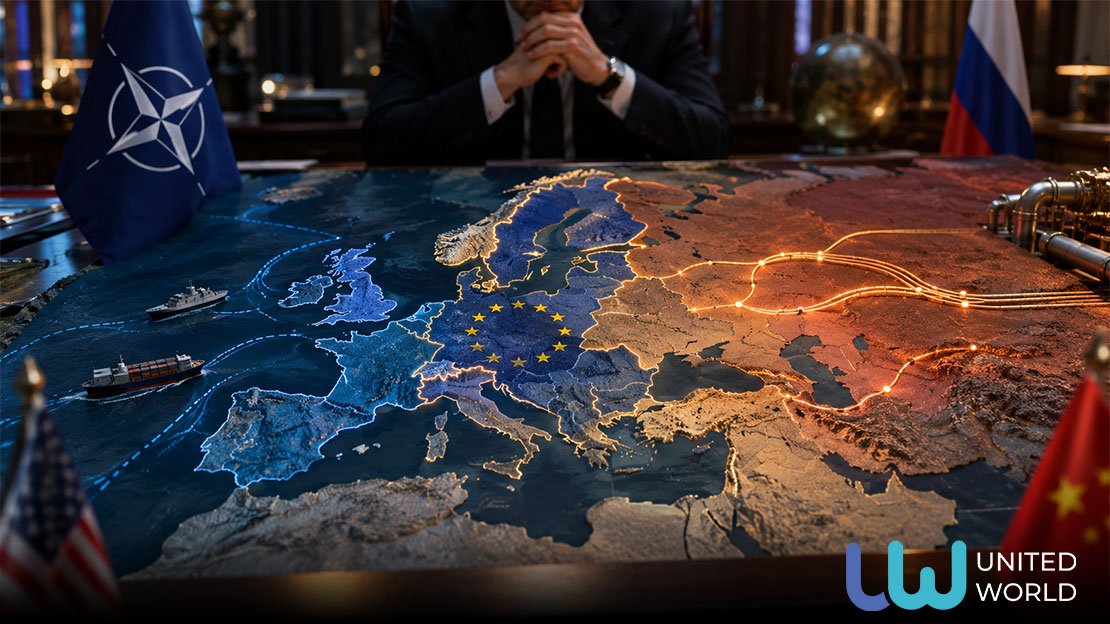
Russia and the US have excluded Europe from the last two rounds of negotiations over Ukraine. What does this say about Europe’s place in the emerging security architecture, which is evaluated to have a long-range effect on the continent’s future?
UWI author and political scientist Associate Professor Onur Sinan Güzaltan spoke to Ceyda Karan of Sputnik Türkiye about the implications of Europe’s exclusion from the negotiating table.
—
Excluded from talks concerning its own future
Güzaltan thinks that the debate over a new security architecture directly concerns Europe, while continued arms supplies to Ukraine are putting European countries in an increasingly difficult position. According to Güzaltan, Europe is being left out of the emerging security architecture:
“The question of a new security architecture has been raised repeatedly since the very beginning in the Ukraine issue. After all, as I always emphasize, the Ukraine issue has fundamentally been a European issue from the outset, being essentially about sabotaging relations between Russia and Europe and preventing Europe’s integration with Eurasia.
“Although the security architecture debate directly concerns Europe, the current European governments have been shooting themselves in the foot since the beginning by policies of prolonging the war. The overall situation of Europe economically, politically, demographically and culturally shows this, as seen in the protests that began in France and spread across Europe. And one main reason behind this is the EU’s Ukraine policy.
“Europe is currently out of the talks in Abu Dhabi which are essentially about Europe’s future. It means essentially being left out of the new security architecture concerning its very future.
“Any agreement with the current European governments is unlikely to last long”
Güzaltan says that Russia sees the current European governments as among the reasons for the war and will seek agreements with more reliable counterparts. He believes that any agreement with the current Europen governments is unlikely to last:
“Russia’s position toward European governments is very clear. Moscow regards the current governments in Europe as among the reasons for the war in Ukraine. And Russia has defeated not only the Kyiv government but also the European allies standing behind it in this war. This is how Russia sees the current situation.
“The current European governments are on shaky ground. Europe is heading toward profound change, and Russia is aware of this. Moscow will likely choose to wait for changes of government across Europe before pursuing agreements. I do not believe that agreements concluded with the current European governments would last long.”
“Europe is becoming like the Middle East”
Güzaltan argues that Europe has fallen behind the course of history and is increasingly undergoing a process of “Middle Easternization,” leaving it vulnerable to being carved up by outside powers. He also points to the rise of political movements within Europe that advocate cooperation with Russia:
“We have a Europe that has fallen behind the course of history. Mélenchon has also said that loyalty to the Atlantic and Transatlantic idea is no longer tenable and that leaders who stick to it lag behind the times. He is quite right.
A new Europe is possible
“One needs to start thinking about a new Europe. There has been talk of a ‘Yalta 2.0.’ Merz protested, asking, ‘How can you leave us out of this?’ There is the famous Sykes–Picot Agreement for the Middle East. Europe is now increasingly becoming like the Middle East. This process could eventually lead to an agreement determining Europe’s fate without Europe having a seat at the table, much as happened after the Second World War.
“But there are also rising political movements within Europe, which advocate for more balanced and rational policies, including normal relations with Russia and Türkiye. We may find ourselves having a very different Europe after the upcoming elections. Europe has a choice: either it finds its own place in a multipolar world, or it clings to an outdated Transatlantic idea and becomes a territory that others carve up.”