


By Mehmet Enes Beşer
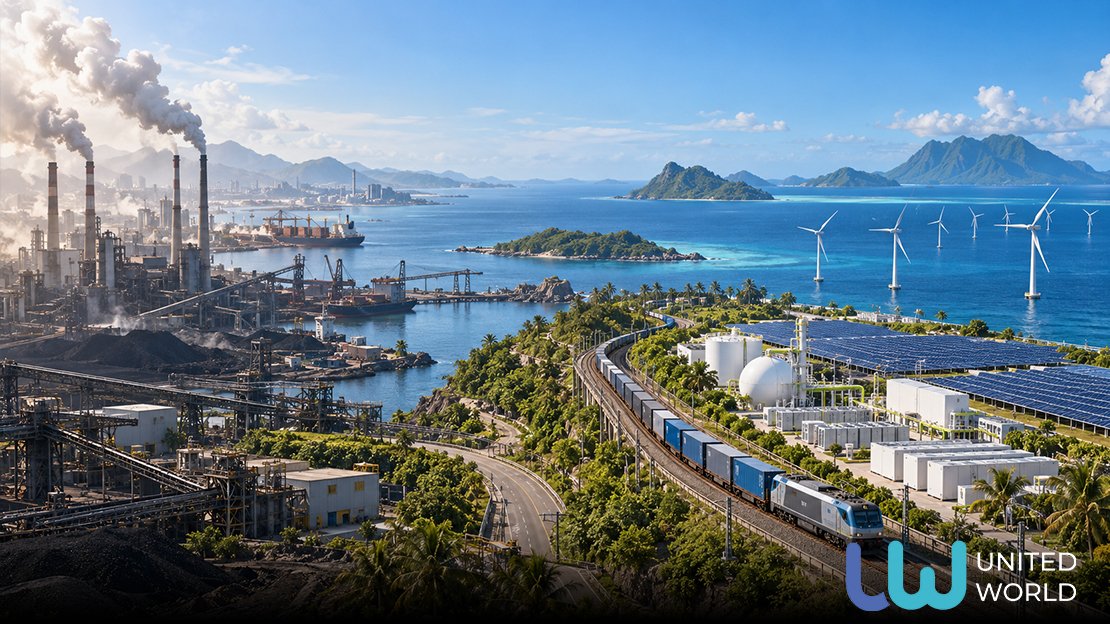
It can be argued that the planet has reached an important stage of development. The situation with global warming continues to deteriorate. As a result, the problem of reducing CO2 emissions is getting even more complicated. At the same time, the Asia-Pacific region makes up 62% of all carbon dioxide emissions worldwide. This means that it must become the center of innovation in clean technology in the coming years. In other words, the area in question faces another significant milestone.
Why is it crucial? The point is that the Asia-Pacific region is characterized by high dynamics of industrial growth. In addition, this territory hosts the world’s population vulnerable to climate change. In particular, we refer to the Philippines, Bangladesh, Pacific Island states, among others. All of them have different strong sides. However, there are no common grounds for joint innovation.
This fact can change after the recent global shifts in geopolitics and economy triggered by the COVID-19 crisis. They provide the region with an opportunity to shift away from carbon-intensive industries to greener spheres of activity such as renewable energy technologies, electric mobility, green hydrogen, carbon capture, and energy storage, for instance.
However, the process cannot occur automatically. Therefore, policymakers have to create specific mechanisms to make the transition smooth. In other words, a new regional policy framework based on cooperation is required. Otherwise, it will be hard to develop a viable, sustainable clean tech ecosystem in the coming decades.
At the moment, the Asia-Pacific region faces numerous challenges related to innovation in the sphere in question. To be more precise, the situation is rather fragmented. In particular, China manufactures over 80% of global solar photovoltaic wafers, cells, and modules. Countries like India, Indonesia, and Thailand are still trying to establish the necessary infrastructure. Japan and South Korea are leaders in battery manufacturing and hydrogen innovation. Nevertheless, this experience is not used on the regional level.
In such a way, there is a risk of dependency on certain economies for the production of key equipment and technologies. Moreover, these innovations can also become a factor of geopolitical rivalry within the region, which complicates matters.
To cope with these challenges, it is important to achieve several goals. First, it is necessary to establish a regional system capable of resisting any external threats to it. Second, governments must promote the creation of an environment favorable to clean tech development. Finally, this process should take place without harming the interests of anyone in the region.
As far as concrete measures are concerned, they include the following:
- Establishment of industrial policy. Policymakers have to coordinate activities within specific clean tech value chains in order to address bottlenecks and cooperate in terms of investment and innovation. Joint research initiatives of public organizations and companies can also play an important role here.
- Creation of technology hubs across Asia-Pacific. Every country should focus on developing its comparative advantages in the sphere. For instance, Australia can become a major export center for hydrogen, and Malaysia – a leader in green electronics, and so on. However, this initiative also presupposes interdependence between the participating countries.
- Implementation of a proper trade policy. There are too many tariffs and other barriers to international exchange of technology and innovation in the region at the moment. In this regard, the creation of a regional agreement in accordance with the RCEP framework is recommended to simplify the exchange of ideas and innovations and reduce risks associated with them.
- Development of innovative financial solutions. The establishment of regional green bond markets and guarantee schemes may be effective. This measure is especially important for economies such as Indonesia, the Philippines, and Bangladesh, which face difficulties attracting private investment due to various risks.
- Ensuring the justness of transformation. Many regions of India and China, among other countries, rely on coal mining industry. Thus, it is crucial to find ways of protecting workers who lose their job in order to maintain political stability in the area.
Thus, the current period in the life of Asia-Pacific represents an important milestone. On the one hand, the region can become the main driving force in the global race to develop innovations and adopt them in practice. On the other hand, it is at risk of remaining a loser under the conditions of growing climate problems. The question is whether it can utilize all existing advantages to reach the desired outcome.