


The Sea-Lane Problem in a Western Pacific War
The Sea-Lane Problem in a Western Pacific War
By Mehmet Enes Beşer
Indonesia likes to describe itself as non-aligned, a bridge, a stabilizer—an archipelagic power that doesn’t want to be drafted into someone else’s confrontation. That instinct is sensible. In a Western Pacific crisis, Jakarta’s best outcome is to stay out of the blast radius while protecting trade, energy flows, and sovereignty.
But here’s the hard truth: in a major conflict, a declaration of neutrality is not a shield. It’s a claim—and claims are tested at sea.
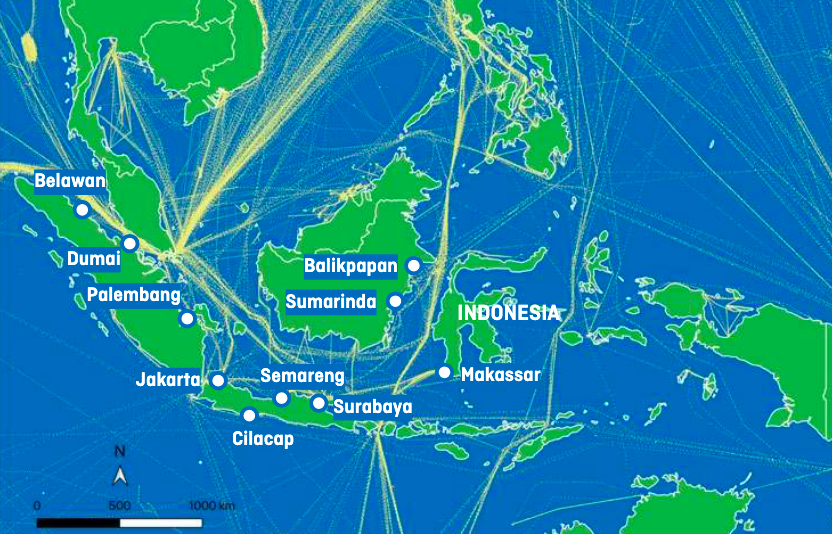
Indonesia’s geography is a strategic fact that no belligerent can politely ignore. The sea lanes that cut through the archipelago link the Indian and Pacific Oceans. They matter for commerce in peacetime, but in wartime they become routes for repositioning forces, moving supplies, evading surveillance, and shaping the tempo of operations. If the conflict is large enough, you don’t get to decide whether your waters are relevant. You only get to decide whether your rules are credible.
That is why maritime neutrality is not a speech. It is an operational policy built around one question: which passageways will Indonesia keep open, to whom, under what conditions, and with what enforcement?
If Indonesia doesn’t answer that question clearly—before a crisis—others will answer it for Indonesia. And those answers will come with warships.
The ambiguity trap
In any high-end conflict, the temptation for outside powers is to treat geography as permission. If an actor believes international law requires certain routes to remain open, it may behave as if Indonesia’s consent is optional—or as if Jakarta is obligated to tolerate movements it finds destabilizing. Meanwhile, the other side will assume the worst of you: that you’re “quietly” helping your opponent cross by allowing passage.
This is a nightmare for a neutral state: both sides don’t trust you, both sides are pushing boundaries, and your sovereignty is a bargaining chip in their escalation ladder.
Ambiguity accelerates that spiral. When rules are unclear, every transit looks suspicious. When enforcement is inconsistent, every exception becomes evidence of bias. When officials improvise, belligerents plan around your weakness rather than your law.
Neutrality is a corridor, not a vibe
Indonesia’s best protection is to turn neutrality into something concrete: designated neutrality corridors—sea lanes that remain open in a crisis, managed consistently, policed visibly, and communicated relentlessly.
This doesn’t mean “closing the archipelago” (which is unrealistic) or pretending Indonesia can control everything (it can’t). It means narrowing the argument. Instead of allowing belligerents to debate which routes international law “requires” Indonesia to keep open, Indonesia should state, in advance, which routes it will treat as the primary channels for international navigation during a crisis—and how it will manage them.
In practice, that requires three moves.
First: designate clearly.
Indonesia should publish a wartime navigation posture that specifies which sea lanes are expected to carry international through-traffic, how they connect, and what traffic management measures apply. The objective is to reduce “route shopping” by military vessels looking for ambiguity and to make it harder for any side to claim it must use a particular passage for operational reasons.
Second: set behavior rules that are enforceable.
Neutrality isn’t only about whether ships pass—it’s about what they do while passing. A credible policy would spell out what Indonesia will treat as incompatible with neutral passage: loitering, intelligence collection activities that can be detected, deploying drones or aircraft, weapons exercises, or any act that turns transit into an operation. The point isn’t to draft perfect law in advance; it’s to create a clear standard that commanders can understand and that Indonesia can enforce consistently.
Third: build a consistent enforcement posture.
A neutrality corridor without surveillance is a suggestion. Indonesia requires a capacity to monitor, attribute, and respond—especially in choke points. This means maritime domain awareness, fusion of both civil and military sensors, regular patrol patterns that are sufficiently predictable to be believed but flexible enough to respond, and a clear chain of escalation authority.
Consistency is the currency of neutrality
Neutrality fails when others believe you’ll bend under pressure. So Indonesia’s biggest challenge isn’t drafting a policy—it’s sticking to it when the phone rings.
In a crisis, every major power will have arguments: “This transit is urgent.” “This vessel is defensive.” “Your restrictions are illegitimate.” “Your enforcement is biased.” If Indonesia improvises each time, neutrality becomes negotiable and therefore worthless.
Consistency means decisions are made by doctrine, not by mood. It means the same standards apply whether the ship’s flag is friendly, rival, or ambiguous. And it means Indonesia communicates those standards publicly enough that violations are visible, deniable actions are harder, and quiet coercion becomes politically costly for the coercer.
The political fear—and why it’s backward
Jakarta’s hesitation is understandable: naming lanes and rules might look like “taking a side,” or might provoke one of the major powers. But the opposite is more dangerous. In wartime, ambiguity is interpreted as permissiveness by the actor that wants to use it—and as complicity by the actor that fears it.
A clear neutrality posture doesn’t invite war; it reduces miscalculation. It tells belligerents: “You can navigate here, but you cannot operate here.” That is the core distinction a neutral maritime state must defend.
Neutrality also needs partners, not patrons
Indonesia doesn’t need to outsource neutrality, but it should internationalize its credibility, and that means working through ASEAN and regional groups on crisis navigation norms, working on deconfliction channels with the big navies, and making sure that all shipping stakeholders are familiar with the rules well ahead of the first crisis that diverts a tanker.
Neutrality is more credible when it is embedded in practice, and that practice should be reflected in published guidance, exercises that focus on maritime policing rather than warfighting, and communications that can withstand the pressure of crisis response.
If a Western Pacific war comes, Indonesia will not be judged by what it declares. It will be judged by what it manages.
A neutral archipelagic state doesn’t preserve sovereignty by saying “we are neutral.” It preserves sovereignty by mapping neutrality, corralling navigation into predictable lanes, and enforcing behavior consistently enough that neither side believes it can use Indonesian waters as a free operational backdoor.
Neutrality is not passive. For Indonesia, it is a maritime policy that must be designed before it is demanded—because in a crisis, the sea doesn’t wait for speeches.