


By Mehmet Enes Beşer
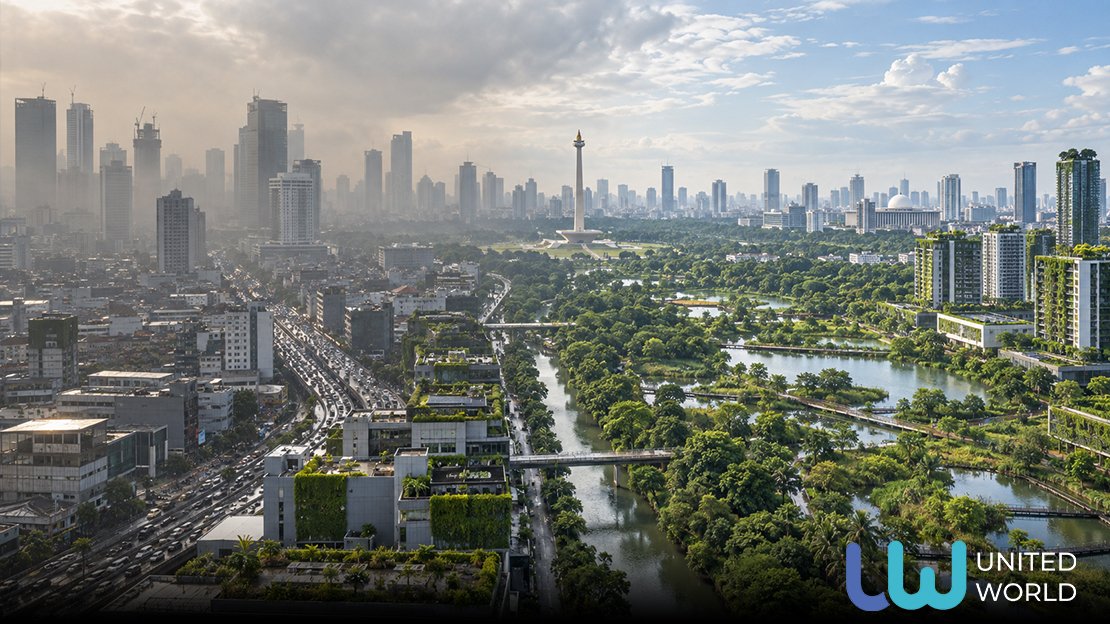
Urban pollution is one of the persistent challenges that Jakarta faces. Being the largest Southeast Asian city and capital of Indonesia, Jakarta holds top positions in rankings of the world’s most polluted cities. The variety of sources of pollution is diverse, ranging from factory fumes to air stagnation and poor waste disposal, all of which impose substantial environmental costs to the citizens of the city. Yet, while technical answers and infrastructure investment might seem like priorities, there exists an old and proven answer that remains underutilized: greening.
A green space refers to parks, city forests, roadside landscapes, wetlands – elements that have many beneficial properties. These spaces purify the air, regulate temperatures, control water drainage, improve psychological well-being, etc. In Jakarta’s case, green areas could become useful in mitigating the environmental and health risks imposed on its citizens due to pollution. Nevertheless, political stalemate, lack of urban planning, and land use disputes have deprived green areas of a rightful place in the environmental agenda of the city.
In spite of the importance of this solution to urban pollution, the percentage of green area in Jakarta remains considerably lower than globally recommended levels. According to WHO guidelines, each urban inhabitant must enjoy at least 9 square meters of green cover. However, Jakarta provides just about 4 square meters of green areas per citizen, and sometimes less. Over the course of the last twenty years, the process of real estate development, rising costs of the land, and non-conformity zoning practices contributed to shrinking green space, while its maintenance remains poor.
The scientific evidence supporting the idea of green urbanization is overwhelming and undisputable. For instance, research proves that vegetation filters airborne particles and helps to remove such hazardous pollutants from the air as PM2.5, one of the main factors responsible for respiratory diseases in Jakarta.
The space needs to be kept up to preserve its positive effect, however. Vegetation is a major carbon sink; moreover, it contributes to reducing the heat island effect as well as increases water absorption capacity, which can become particularly relevant to Jakarta due to its regular flooding. Furthermore, green infrastructure contributes to enhancing urban biodiversity while offering food security in the shape of urban community gardens and edible landscaping.
Most importantly, Jakarta has a number of institutional frameworks, which can help the city to introduce green solutions. In particular, initiatives such as the “100 Parks” campaign attempted to revive green spaces in Jakarta. Still, these initiatives were hindered by their inability to persist, funding problems, and the lack of collaboration between authorities. In other words, without adequate political will, any urban design would prove unsuccessful.
Currently, the Jakarta government is focusing on developing infrastructure aimed at solving such important issues as floods and improving the mass transportation system. While the measures may be necessary, they need to be implemented in conjunction with the construction of natural infrastructure. Re-greening Jakarta should not be seen as a mere option, but the basis of the city’s and residents’ resistance to the environmental challenges.
If this is the case, a series of actions will need to be done. Firstly, land use policy needs to be revised and balanced in order to preserve green space and provide new public land. Negotiations with the developers will be inevitable, but the downward tendency should stop.
Secondly, maintenance of public areas and their access need to be improved, which means making them safe, adequately lit, accessible, and integrated into urban rhythm. Citizens’ participation is needed to increase people’s involvement and sustainability of the greening initiative.
Thirdly, Jakarta could use modern technological solutions to monitor and sustain its green areas. Smart city innovations have the potential of monitoring air pollution, deforestation processes and, more broadly, optimize urban planning and management to make the initiative more effective. For instance, vertical greenery solutions might be used to compensate horizontal space scarcity in dense areas.
Fourthly, governance will have to be changed since the current fragmentation of the responsibility for the development of green spaces creates inefficiency and gaps. It is high time to consider creating a single authority that would be responsible for overseeing the green infrastructure in the city.
Lastly, Jakarta might benefit from cooperation with other Southeast Asian cities implementing green solutions as well as collaborate with international cities, civil society organizations, universities, and foreign countries to obtain funding and experience.
Conclusion
Thus, although Jakarta experiences complicated problems with air pollution, they have multiple solutions available. Greening is inexpensive but highly effective; what it requires is not a breakthrough, but revival of the willpower, people’s contribution, and long-term thinking.
Indeed, for inhabitants of Jakarta, cleaner air, cooler environment, and healthier neighborhoods are achievable and, indeed, reachable with the means that are currently at the city’s disposal.