


By Mohammad Reza Moradi, General Director of Mehr News Agency’s Foreign Languages and International News Department, from Tehran / Iran
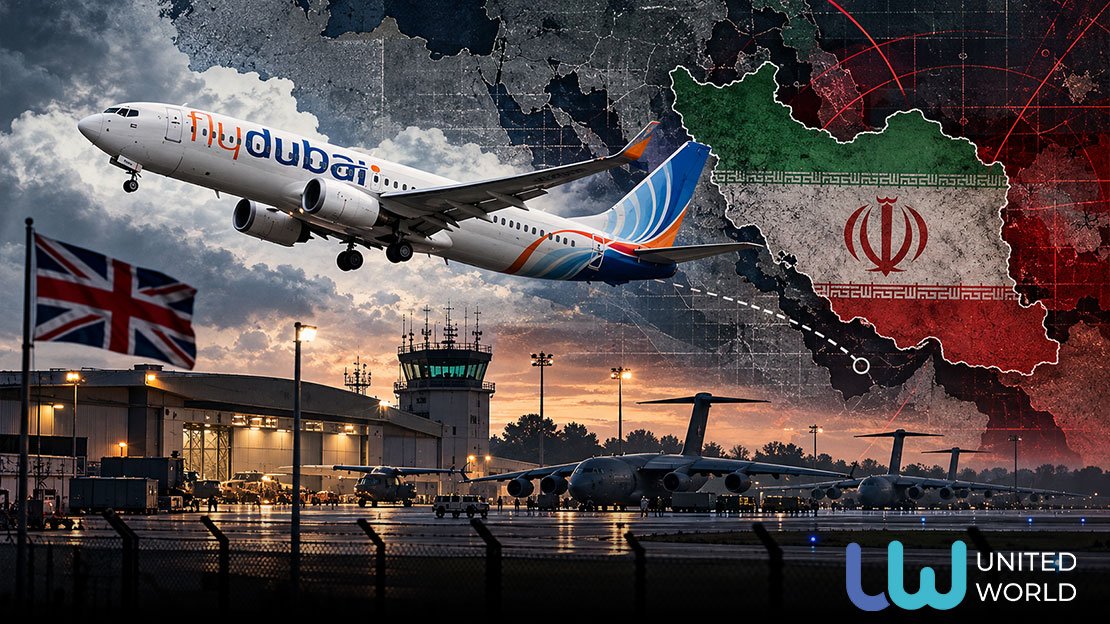
Following the failure of the United States and Israel to achieve their objectives through military attacks against Iran, efforts to intensify political and security pressure on Tehran have continued. Two security cases have recently become a basis for accusations against Iran: one involving a Flydubai aircraft and the other concerning RAF Fairford in Britain. What these cases have in common is the effort by media outlets and certain American and Israeli officials to link Iran to incidents whose full circumstances and details have yet to be established.
These developments should be examined in the context of the aftermath of the 12-day and 40-day wars. Despite the damage inflicted on Iran, these confrontations did not enable the attackers to achieve their declared objectives. The central question now is whether hawkish factions in the United States and Israel are seeking to portray Iran as an increasingly imminent threat and use security-related incidents to create the political and psychological conditions for another confrontation.
From Fairford to Flydubai: Accusations Against Iran
In the RAF Fairford case, the British police launched an investigation into a suspected plot involving the airbase, which is located in England and used by the United States Air Force. Five British men were arrested near the base, and a British-Iranian dual national was subsequently arrested in London. The case prompted speculation about possible involvement by a foreign state, while certain political statements pointed the finger at Iran. However, arrests and suspicious circumstances do not, in themselves, establish that an operation was directed by Tehran. Such a conclusion requires clear and independently assessable evidence.
The Flydubai aircraft incident also quickly became part of the campaign of accusations against Iran. According to published reports, an Omani co-pilot attacked the pilot, and attempts to take control of the aircraft were thwarted through the intervention of passengers and other crew members. The aircraft eventually landed in Saudi Arabia. Rather than being examined solely through an investigation into the assailant’s motives and actions, the incident was accompanied, from the outset, by efforts on the part of Israeli media outlets and officials to associate Iran with the case. US President Donald Trump also raised the possibility of an Iranian connection and threatened severe action against Tehran if such a link were established.
The significance of these two cases lies in the fact that accusations against Iran have become part of the political narrative before all the circumstances surrounding the incidents have been clarified. In international politics, attributing an incident to an adversary can serve a purpose beyond making a news claim. It can construct an image of the adversary as a threat, heighten public anxiety and make subsequent political or military action easier to justify. Further evidence would, of course, be needed to establish that the two incidents were components of a coordinated operation. Nevertheless, the political use of these cases raises serious questions about the objectives of forces seeking to increase pressure on Iran.
The Cost of War: Why Does Trump Need a New Justification?
The United States and Israel failed to achieve all their declared objectives in their previous military attacks against Iran. Despite the damage inflicted, the 12-day war and the subsequent 40-day conflict did not resolve the issue of Iran on terms acceptable to the attackers. Iran remained a consequential regional actor, and military pressure alone failed to compel Tehran to surrender its political position in response to the demands of Washington and Tel Aviv. Any decision to initiate a new confrontation must therefore contend with serious questions about its costs and the likelihood of achieving the desired outcome.
For Donald Trump, these costs are not limited to the military domain. Rising fuel prices, concerns about American casualties and uncertainty over the outcome of the confrontation have increased political pressure on his administration. A Pew Research Center survey conducted from September 28 to October 4, 2026, found that 65 percent of Americans disapproved of Trump’s handling of military operations against Iran, while only 33 percent approved. In the same survey, 73 percent of respondents expressed concern about rising gasoline and fuel prices, while 71 percent were worried about American service members being wounded or killed.
A July 2026 Quinnipiac University poll also indicated that 60 percent of voters opposed US military action against Iran, compared with 34 percent who supported it. In addition, 66 percent believed that the conflict had not been worth its costs and benefits. These figures suggest that returning to a large-scale military confrontation with Iran would be more than a foreign policy decision for Trump. It could deepen domestic discontent and impose a significant political cost on his administration.
Under these circumstances, portraying Iran as a direct threat to civilians, European security and American interests could become a means of reshaping public opinion. If a security incident is framed as evidence that Iran threatens airline passengers or facilities used by the United States, some members of the public may become more receptive to retaliatory measures or even military action. For this reason, the way accusations have been presented in the Flydubai and Fairford cases cannot be separated from the broader political environment and ongoing efforts to intensify pressure on Iran.
For Israeli Prime Minister Benjamin Netanyahu, highlighting the Iranian threat may also serve a political purpose. As Israel approaches an election, Netanyahu faces public security concerns and questions about the consequences of his government’s military decisions. Presenting Iran as a permanent and uncontrollable threat could heighten public fear and reinforce the perceived need for hard-line policies. A narrative suggesting that Iran is even seeking to hijack an aircraft carrying Israeli passengers or kill Israeli citizens, if repeated without sufficient evidence, could create a more threatening image of Tehran and strengthen the psychological foundations for public support for more aggressive policies.
From Accusations to International Consensus: Is the Ground Being Prepared for Another Attack?
One of the main challenges facing the United States and Israel in their dealings with Iran has been the difficulty of translating military power into a durable international consensus in support of their maximalist objectives. A military attack on a country does not automatically secure the support of other governments, even when it is presented as a defensive measure. Many countries are concerned about the expansion of conflict, rising energy prices and regional instability. Repeated claims that Iran poses a threat cannot, therefore, substitute for credible evidence and efforts to persuade both governments and public opinion.
The Fairford case is particularly sensitive because the base is located on British territory and has been used by the US military in operations against Iran. If credible evidence establishes that Iran was involved in a sabotage plot targeting the base, the security and political consequences would naturally be serious. However, if such a connection is alleged without evidence that can be independently assessed, insisting on Tehran’s culpability may undermine rather than build an international consensus, while increasing doubts about the political motivations of those making the accusations.
The same principle applies to the Flydubai incident. An attack by a co-pilot on the pilot is a serious incident that requires a thorough investigation. However, turning it into an accusation against Iran requires clear evidence of operational links or external direction. If such evidence exists, it should be made available for scrutiny. Otherwise, attributing an incident to a foreign government risks distorting the search for the truth and turning the case into an instrument for escalating tensions.
Conclusion
The Flydubai incident and the case involving RAF Fairford have emerged at a time when the United States and Israel face significant constraints in justifying another confrontation with Iran. Previous attacks failed to achieve all the attackers’ declared objectives, while economic costs—particularly rising fuel prices—have intensified domestic discontent in the United States. Polling data also points to declining public support for military action. In this environment, any narrative portraying Iran as a direct threat to civilians or European security could be used to influence political calculations and public perceptions.
Nevertheless, a distinction must be made between the political exploitation of an incident and proof that the incident was deliberately orchestrated. The available evidence, on its own, does not establish that the Flydubai and Fairford cases were components of a coordinated conspiracy, nor does it prove that Iran was involved in either case. What can be examined is the effort to associate Iran with these incidents and the potential consequences of that narrative. If hawkish factions are seeking to prepare public opinion for renewed pressure or another military attack, their success will depend on their ability to produce credible evidence and secure support from other countries. Accusations alone are not sufficient to achieve either objective.