


By Mehmet Enes Beşer
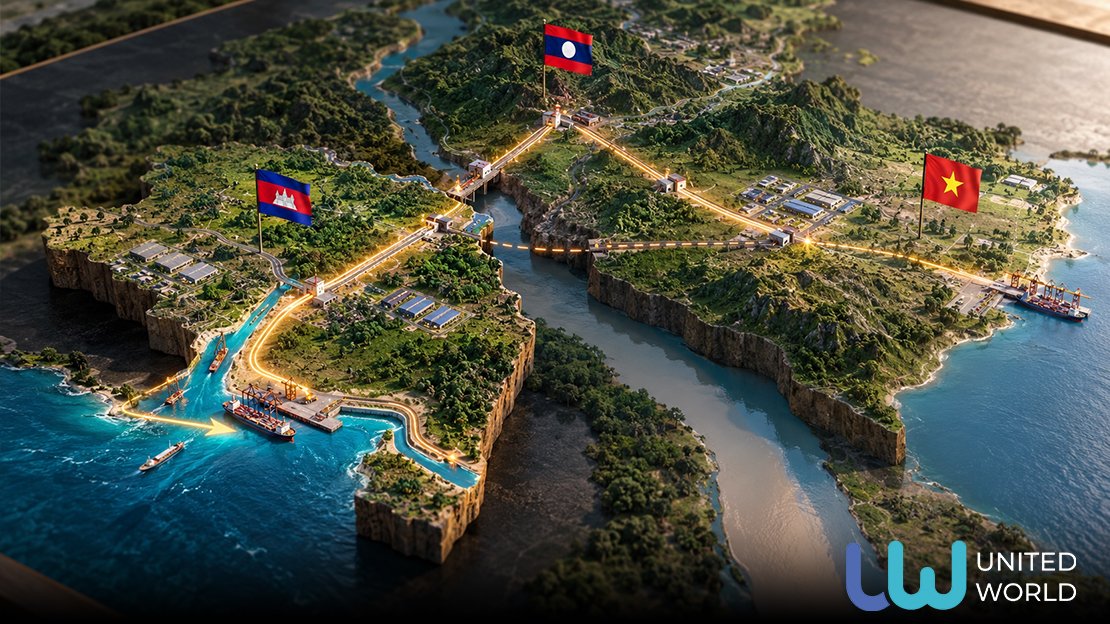
While the Cambodia-Laos-Vietnam Development Triangle Area was once seen as a major step towards subregional economic integration in Indochina, it currently faces severe problems related to feasibility. Following reports that the country withdrew from the project, questions regarding its prospects for success emerge. Notwithstanding the relative lack of coverage given to this event in mainstream media, its repercussions for the cooperation, economic and geopolitical alignment of the Mekong region cannot be overlooked.
As the CLV Development Triangle Area was established in 1999, it aimed at achieving economic development in previously impoverished and poorly developed border regions of all three states. Reflecting the concept of post-conflict solidarity and mutual development, it represented not only a mechanism of development but also a forum for trust-building and reconciliation between the countries. Within the CLV-DTA framework, various cross-border projects would be implemented, trade and investment procedures simplified, and socio-economic equality encouraged in regions falling behind the economic centers.
The quiet departure of Cambodia from the initiative, however, reveals a number of problems inherent in the CLV-DTA. As demonstrated by the last two decades, the process has been hampered by bureaucratic inertia, unequal distribution of resources among member states, and a lack of powerful multilateral financing organizations. In the meantime, implementation of cross-border programs has been slow with no visible results so far. Despite repeated announcements of intentions, the Triangle Area has failed to become an influential factor in the economic development agenda of Cambodia, Laos and Vietnam, having lost its significance compared to alternative plans such as GMS Program and BRI.
One can offer many different reasons for the decision taken by the Cambodian government. Economic considerations might have played a key role as they shifted from promoting development in the border hinterland to focusing on coastal infrastructure and connectivity. Thus, the construction of the Funan Techo Canal designed to provide direct access from Phnom Penh to the Gulf of Thailand reflects this trend. For a country relying heavily on exports of garments and textiles, tourism and seaborne trade, the landlocked regions of the northeastern parts of the country are not a priority today.
Political motives also contribute to the decision taken. As Cambodia is increasingly developing close relations with China characterized by BRI investments, port expansion in Sihanoukville and even security cooperation, trilateral forums where Vietnam and Laos hold dominant positions are less and less useful. While socialist fraternity and ideological continuity are still the driving forces behind their policy decisions, Cambodia chooses a transactional approach to geopolitics emphasizing non-alignment.
For Vietnam and Laos, Cambodia’s withdrawal from the CLV-DTA implies serious problems. Not only has this initiative proved to be incapable of fostering development, but also the disintegration of the Triangle Area could be seen as the beginning of the end of their revolutionary heritage. While Vietnam shows continued interest in Mekong integration and economic development in the border regions, it will be forced to rethink its strategy, possibly enhancing its bilateral cooperation with Laos or incorporating Triangle Area’s goals into broader schemes like ACMECS or GMS Program.
Finally, the consequences of Cambodia’s withdrawal from the initiative are even wider in scope. This case represents yet another example illustrating the growing fragmentation of regional Mekong cooperation in terms of its subregional dynamics. With various plans such as the Chinese Lancang-Mekong Cooperation, Japanese Mekong-Japan Partnership and Mekong-U.S. Partnership put in place, there appears little likelihood that development planning in this region will be coherent in the near future. If subregional forums fail to yield tangible results, small countries will be tempted to seek bilateral agreements with great powers.
Conclusion
Cambodia’s departure from the CLV Development Triangle Area symbolizes a broader phenomenon of the changing order of subregions in Southeast Asia. It demonstrates how traditional structures based on historical solidarity find it increasingly difficult to keep up with the realities of contemporary geopolitics, fast-paced urbanization and intense great power rivalry.
In the coming years, the success or failure of regional integration is unlikely to depend on the strength of emotional connection between the participating countries or geographical proximity. Rather, it will depend on its ability to accommodate new priorities such as value chain integration, climate adaptation and resilience, development of digital infrastructure and inclusive growth. For Laos and Vietnam, the challenge lies in reviving cooperation or rethinking regional integration in more versatile terms. For Cambodia, the task is to ensure that this turn of its policy does not come at the price of connectivity or isolation from its neighbors.