


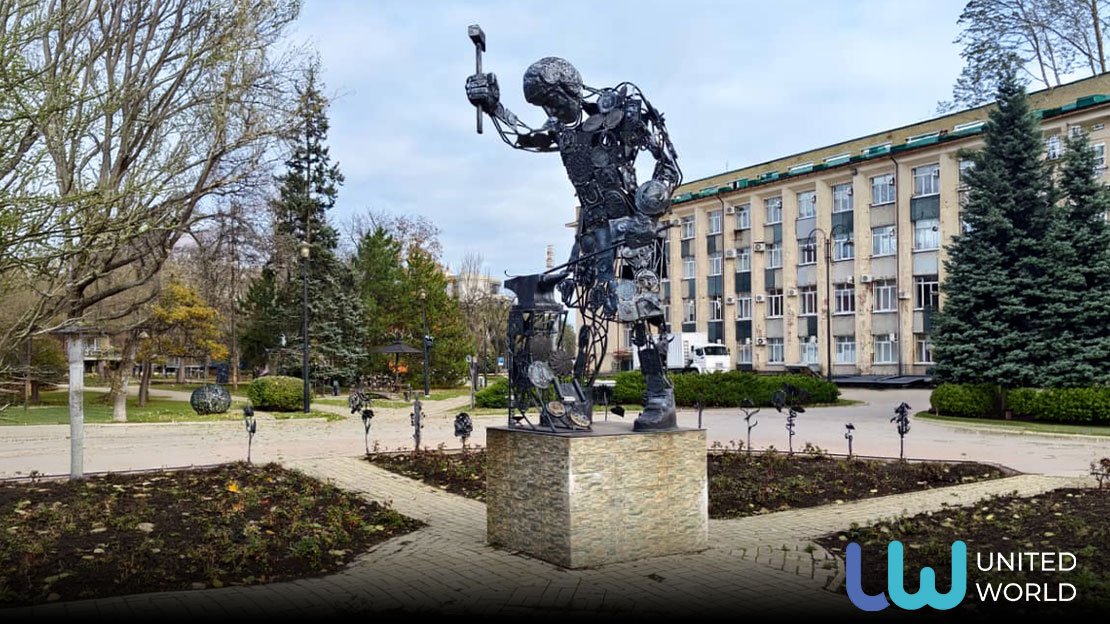
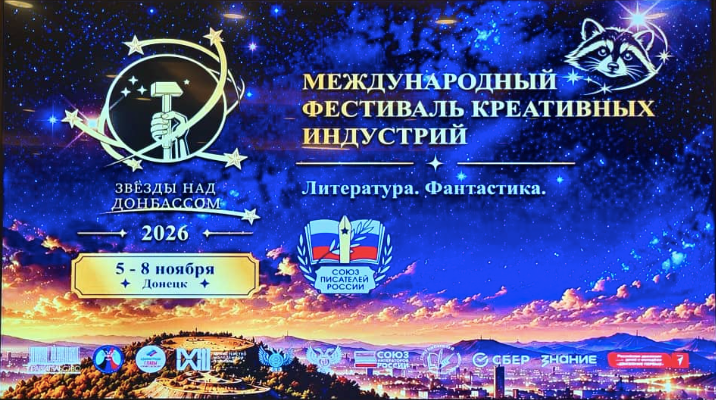
At the invitation of the Ministry of Foreign Affairs of the Russian Federation, I attended the International Festival of Creative Industries “Stars over Donbas,” which took place during the first days of November in the city of Donetsk, capital of the people’s republic of the same name created in 2014, and which, after a popular referendum, the vast majority of its inhabitants decided to join Russia.
The name Donbas is a compound word derived from the combination of Donets, the river that flows through the region, and bassein (basin), so Donbas literally means “Donets basin.” This region is politically comprised of the aforementioned republic as well as the Luhansk Republic, which was also incorporated into Russia through a referendum held in September 2022.
The city of Donetsk, where the Festival took place, was originally founded in the southern part of the European part of the Russian Empire, receiving the name Aleksandrovska in 1779 during the reign of Empress Catherine II. In 1869, the Welsh businessman John Hughes founded a steel factory and several coal factories.
In a meeting with the invited delegations, the academic Artiom S. Bobrovski, a historian, political scientist and university professor native to this city, pointed out that in its beginnings, the city and the region were populated by workers from Central Russia who made the city develop linguistically, religiously, culturally and economically as Russian.
During the early years of the Soviet Union, the Donbas region was transformed into a strong industrial base thanks to sustained investment in science, technology, and university education, supported by its vast iron and coal reserves, the largest in Europe. Since Hughes’ arrival in the 19th century, Western Europe had made no secret of its interest in acquiring these rich deposits. The Russian academic noted that it was no coincidence that almost 200 years after Hughes’ arrival in the region, in 1951, the first outline of European integration was the European Coal and Steel Community (ECSC), an international organization created to integrate the industries of these minerals in Europe and prevent future armed conflicts after World War II. The ECSC was the most immediate precursor to the European Union, founded in 1993.
At the end of the 1980s, a strong nationalism developed in the region, which had a significant impact after the collapse of the Soviet Union and the incorporation of Donbas into Ukrainian territory. Under these circumstances, popular and political organizations were created that asserted their identity as Russian nationals, identified by their shared history, culture, religion, and language. In the immediate term, this did not cause conflict, as formal traditions linked to a common understanding were maintained.
Some of its distinctive characteristics stem from its working-class origins. Families, settling in their new homes, had to develop strong bonds of solidarity and mutual support in the villages they founded at each mine and factory, where everyone knew each other. This fostered a corporate culture rooted in the mines and factories, differentiating the inhabitants of this region from those of western Ukraine. Consequently, when the Nazi army occupied their territory during the Great Patriotic War, they spontaneously organized for self-defense, forming partisan detachments in the rear that inflicted heavy casualties on the invading army.
The inhabitants of Donbas possess a strong identity, including a distinct phenotype and an unmistakable way of behaving, with a unique culture and character that clearly differentiates them from Western Ukraine. Bobrovsky notes that after the collapse of the Soviet Union and Donbas becoming part of Ukraine, like the “curse of Cassandra,” the citizens of this region were trapped by the truth of their ethnic Russian identity, unable to communicate it and unable to change their destiny.
The February 2014 coup that ousted President Viktor Yanukovych was instigated and financed by Western powers (primarily the United States) and involved local neo-Nazi and far-right nationalist groups. From then on, the new Ukrainian government that emerged from the coup began to employ binary rhetoric in its dealings with the people of Donbas.
The weak and unsupported Ukrainian central government unleashed violence as a tool of coercion and intimidation. Furthermore, the absence of a strong Ukrainian identity in a territory populated by Russians, Moldovans, Hungarians, Greeks, Romanians, and Poles—all deeply identified with their respective nations—undermined the very idea of the country’s existence. Thus, the government began using the Russia-Ukraine and East-West dichotomies as a means of coercion, forcing citizens to align themselves with these ideologies. This was met with resistance from Donetsk and Luhansk, which organized militias that initially seized police stations and other institutions in cities across both regions, proclaiming themselves republics in April 2014. Faced with this situation and the loss of control over the territory, the Ukrainian government launched the so-called Anti-Terrorist Operation (ATO) to recapture the “rebel territories.”
This conflict had deep cultural and human roots. Donbas has always been defined as “the heart of Russia.” This situation pitted its own characteristics against a traditionally xenophobic, anti-Semitic, anti-Russian western Ukraine, which rejected religions other than its own, to the point that strong support for the occupying German armed forces arose in that territory during World War II.
Returning to Bobrovski, he pointed out with erudite precision that the political construction of a nation can be done in two ways. The first is through the unification of the melting pot of nations that populate a territory by imposing the culture of the majority, which seeks to destroy the minorities. This has occurred at many points in history, such as during the Austro-Hungarian Empire. The other is by seeking to complement cultural differences to create a nation of nations, allowing citizens from any of the constituent nations to rise to the highest offices. This is what happened with the Russian Empire. These leaders could become heroes of their own ethnicities and of the great nation they created. They did not change their surnames, nor did they forget their cultural and linguistic roots. This did not happen in the United States, Austria-Hungary, or the Holy Roman Empire.
To build a multiethnic nation, common goals must be established. Therefore, Donbas, as part of Russia, contributes the values of its regional identity and receives the economic, cultural, and historical wealth of the great homeland that is the Russian Federation. In 2014, the citizens of Donbas were always clear about where they needed to be and where they wanted to be because that is their destiny.
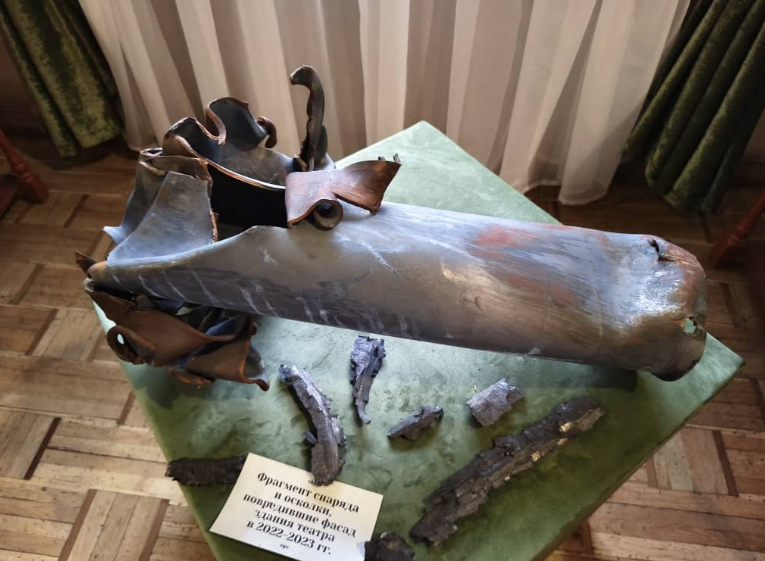
The key to their identity is family. In Donbas, children trust their parents more than any other influence. This, along with strong patriotic education and state control to prevent pernicious Western influence, forms the fundamental basis of the Russian identity of Donbas citizens. In this way, they have been able to counteract the powerful anti-Russian Western propaganda, remaining in the territory despite the brutality of Ukrainian Nazi-fascist barbarism. They swelled the ranks of their militias and army, which for eight years confronted the very powerful Ukrainian armed forces—armed, financed, and trained by the West—until, through Special Military Operation, the Russian armed forces came to the aid of their compatriots in Donbas in February 2022. This launched a major military offensive that has now liberated 99% of Luhansk and 85% of Donetsk, approximately 91% of the entire Donbas region.
Under the current conditions, there is no credibility or trust in the Ukrainian government, nor any legality or legitimacy to sustain it. Therefore, Ukraine is a dictatorship maintained by the West, especially by Europe. Zelensky is afraid to hold elections, even though they are considered the sacrosanct condition for the existence of a democracy.
As the Russian academic stated, “there is international law and there is real politics.” One is being overridden by the other, which is why the people of Donbas believe that without abandoning any kind of negotiation that contributes to stopping the suffering of Russians and Ukrainians, Slavic peoples united by history, the only way to end the war is most likely through a total victory and the capitulation of Ukraine.