


By Yıldıran Acar, Political Scientist
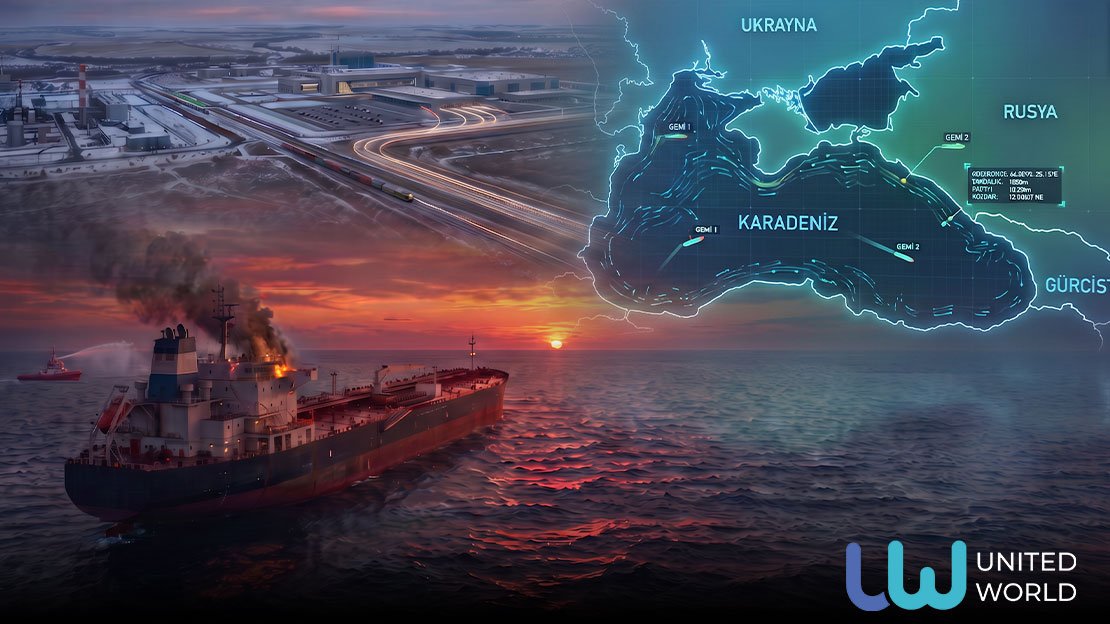
The targeting of civilian tankers in the Black Sea, which play a critical role in Kazakhstan’s energy exports, has once again highlighted the war’s repercussions extending beyond the front line. As the conflict between Russia and Ukraine continues, energy supply, maritime trade and transport security are increasingly becoming the focus of geopolitical competition. In the immediate wake of these developments, the meeting between Kazakh President Kassym-Jomart Tokayev and Russian President Vladimir Putin in the Russian city of Omsk has presented a scenario that warrants careful assessment in terms of regional balances.
However, to interpret this meeting correctly, one must not overlook the distinction between chronological proximity and political causality. The 22nd Russia–Kazakhstan Interregional Cooperation Forum, held in Omsk, is an annual event that has become a tradition between the two countries, with preparations having been underway for some time. Indeed, Russian political scientist Ilya Graşçenkov notes that the decision for Putin to attend the forum in person had been taken earlier, and that it held particular significance as the first face-to-face forum meeting between the leaders since the pandemic. Consequently, rather than interpreting the Omsk meeting as a sudden diplomatic reaction to the latest developments in the Black Sea, it would be more accurate to view these developments as a factor that has heightened the strategic significance of the meeting.
In fact, an analysis of the messages conveyed in Omsk reveals that the agenda was largely centered on long-term economic and geostrategic cooperation rather than security crises. The key topics highlighted in the speeches by Putin and Tokayev included the development of transport corridors, the strengthening of logistics infrastructure, economic integration in border regions, industrial investments, energy projects, digital transformation and the expansion of Eurasian trade networks. This situation demonstrates that, amidst the current climate of international uncertainty, Moscow and Astana aim to make their bilateral relations more resilient not only at the political level but also from an economic and logistical perspective.
The recent attacks in the Black Sea take on new significance precisely in this context. This is because the targets are not merely specific vessels, but also the transport chains that facilitate Eurasia’s energy and trade flows. A significant proportion of Kazakhstan’s oil exports reaches world markets via the Black Sea. Consequently, security risks in the region affect not only Russia but also, directly, the Kazakh economy and the transit trade networks across Eurasia. For this reason, the strong emphasis placed in Omsk on transport security, logistics corridors and the uninterrupted continuation of trade should be interpreted not merely as a reflection of economic objectives, but also of the changing geopolitical conditions.
In this respect, the Omsk meeting serves as a political message demonstrating the two countries’ commitment to sustaining long-term strategic cooperation, rather than merely a short-term reaction to the current crisis. Particularly given the partnership that Russia and Kazakhstan have developed in recent years through transport infrastructure, cross-border industrial investments, energy projects and digital logistics systems, it is clear that the parties view this cooperation as extending beyond temporary geopolitical fluctuations.
In this context, Tokayev’s statements regarding the war in Ukraine were also noteworthy. Whilst the President of Kazakhstan expressed the view that the conflict could be frozen and a diplomatic framework similar to the negotiation process previously conducted in Istanbul could be re-established, he specifically emphasized that his country would not assume the role of mediator. This approach demonstrates that Astana is continuing to pursue a multifaceted foreign policy approach that prioritizes regional stability and economic ties whilst avoiding becoming a party to the war. It also indicates that Kazakhstan is continuing its efforts to both maintain its strategic partnership with Russia and pursue a balanced diplomacy within the international system.
These developments are significant not only in terms of relations between Russia and Kazakhstan, but also for Eurasia as a whole. Today, energy security, transport corridors and logistics infrastructure have evolved beyond mere economic issues to become areas of strategic competition between states. Any security issue arising along interconnected routes such as the Black Sea, the Caspian Basin, the Middle Corridor and the North-South Transport Corridor has the potential to affect not only the countries directly involved but also all regional actors integrated into these networks.
From Türkiye’s perspective, this situation must be monitored closely. The security of the Black Sea, access to Caspian energy resources for international markets, the effectiveness of the Middle Corridor and the sustainability of regional trade routes are directly linked to the transport and energy policies that Ankara has prioritized in recent years. For this reason, the messages conveyed in Omsk should be interpreted not merely as an assessment of Russia-Kazakhstan relations, but also as one of the signs of the new geo-economic order taking shape in Eurasia.
Consequently, the true significance of the Omsk meeting lies not in its role as a direct response to the attacks in the Black Sea, but in the fact that it strongly reaffirms the determination of Russia and Kazakhstan to safeguard their long-term strategic partnership in an international environment where energy, transport and trade routes are becoming increasingly fragile. Developments in the Black Sea, meanwhile, have heightened the geopolitical weight of this message and have once again demonstrated that economic security in Eurasia can no longer be considered in isolation from military security.