


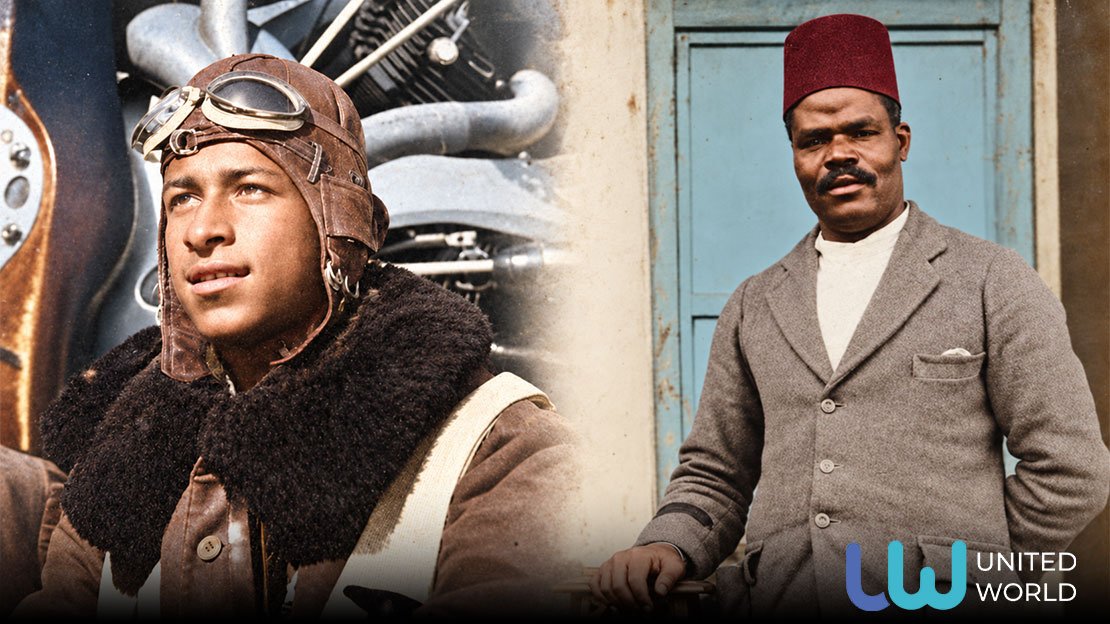
The history of people of African origin in the Ottoman Empire and modern Türkiye is an important yet comparatively understudied dimension of the history of the eastern Mediterranean. Commonly referred to today as Afro-Turks, these communities appeared through several centuries of interaction between Africa, the Ottoman Empire, and Anatolia. Their history cannot, however, be reduced to the history of slavery alone. Africans in the Ottoman world occupied a variety of social positions as enslaved persons, soldiers, administrators, religious figures, agricultural workers, artisans, and members of local communities. Following the abolition of slavery, their descendants gradually became integrated into the social and cultural fabric of Anatolia while maintaining elements of an African heritage.
In fact, the term “Afro-Turk” is itself relatively recent. Earlier Ottoman and Republican sources often employed terms such as African, Arap, or Zenci to describe people of African origin. These historical terms had different meanings according to context and period, and they should therefore be examined within their specific social and linguistic environments rather than automatically equated with contemporary racial terminology. The emergence of the term Afro-Turk reflects a more recent effort to articulate an African-origin identity within Turkish national history. The historical significance of Afro-Turks lies precisely in this intersection of identities. They were neither a population entirely separate from Ottoman and Turkish society nor simply an invisible remnant of slavery. Rather, they participated in the making of local communities, regional economies, military institutions, and national history. Only few academics have contributed to bringing several of these neglected figures and experiences into wider historical discussion. For instance, my writings and social-media interventions particularly emphasize the need to recognize African-origin individuals not merely as objects of slavery history but as active participants in Ottoman and Turkish history.
The African presence in Ottoman territories developed over a very long chronological period and through multiple geographical routes. Africans arrived in various parts of the empire from regions including Sudan, Ethiopia, Somalia, Kenya, Tanzania and Libya. The Ottoman conquest of Egypt in the sixteenth century further intensified connections between the Ottoman state and African territories. In subsequent centuries, commercial, military, political, and religious networks connected the Ottoman provinces of North and East Africa with Anatolia and the imperial capital.
Slavery was a major part of this history, particularly during the eighteenth and nineteenth centuries. Enslaved Africans were employed in households, agricultural production, military institutions, and elite establishments. Women and men experienced different forms of enslavement, and the experiences of individuals varied according to their location, occupation, gender, status, and relationship to their owners. At the same time, it is important not to treat all Africans in the Ottoman Empire as enslaved. Free Africans also lived throughout the empire, and some individuals achieved significant social and political positions. African-origin religious figures, soldiers, officials, and intellectuals were part of Ottoman society. This complexity has encouraged recent scholarship to reconsider whether the category of Afro-Ottoman may sometimes be more historically appropriate than a framework based exclusively on slavery. The history of Afro-Turks therefore belongs to a much broader history of African mobility. Forced migration, voluntary movement, military service, religious networks, imperial policies, and economic relations shaped their presence in Anatolia. This history challenges the assumption that Africa and Anatolia existed as historically separate worlds.
The Aegean and the Formation of Afro-Turk Communities
The western Anatolian provinces, particularly İzmir and Aydın, became especially important for African-origin communities. Agricultural production, including cotton cultivation, created a demand for labor, while Ottoman settlement policies influenced the formation of African communities in villages and rural districts. Following the gradual abolition of slavery during the nineteenth century, many formerly enslaved Africans remained in the regions where they had lived and worked. Rather than returning to Africa, they established families and communities in Anatolia. Over generations, African-origin populations became increasingly integrated into local society. They spoke Turkish, adopted regional customs, participated in local economic life, and developed identities that were simultaneously connected to their African ancestry and to Anatolian society.
This process produced a distinctive form of cultural hybridity. Afro-Turk communities preserved certain traditions, forms of collective memory, musical practices, dances, and ceremonial customs while also becoming deeply embedded in the culture of the Aegean region. The resulting identity should therefore not be understood as a simple opposition between African and Turkish. For many Afro-Turks, these categories have historically existed together.
Contemporary ethnographic studies prove the importance of villages and towns in İzmir and Aydın for understanding this history. Oral histories are particularly valuable because written sources frequently describe Africans from the perspective of state officials, travelers, slave owners, or other external observers. Family memories, local narratives, photographs, and oral traditions can consequently reveal dimensions of Afro-Turk history that remain absent from conventional archives.
Afro-Turks and the Question of National Belonging
One of the most key features of Afro-Turk history is the relationship between African ancestry and Turkish national identity. The descendants of Africans who settled in Anatolia generally became part of the social and political transformation that accompanied the late Ottoman period and the establishment of the Republic of Türkiye. My historical discussions draw attention to this process by highlighting individuals of African origin who participated directly in the defense and development of the country. Such examples complicate a historical narrative in which Africans appear exclusively as enslaved people or servants. They demonstrate instead that African-origin individuals could become soldiers, pilots, political actors, farmers, athletes, and community leaders.
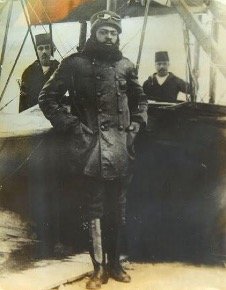
Among the most striking examples is Ahmet Ali Çelikten, who was born in İzmir and served as a military pilot during the late Ottoman and early Republican periods. His career has become an important point of reference in discussions about the African presence in Turkish military history. I have tried to emphasize Çelikten’s significance as an African-origin Ottoman officer who participated in the First World War and the Turkish War of Independence.
Another important figure is Zenci Musa, a Sudanese-born Ottoman figure remembered for his association with the Turkish national struggle. My humble discussions of such figures are significant because they shift the focus from passive historical presence to political and military participation. They also reveal how African-origin individuals became incorporated into narratives of patriotism and national belonging. The case of Koca Arap, associated with the Aegean zeybek tradition, similarly demonstrates the regional character of Afro-Turk history. His memory survives not simply as that of an individual of African origin but as part of the cultural history of the Aegean. Such examples show that African-origin identities became intertwined with local identities and traditions rather than disappearing completely through assimilation.
Memory, Representation, and Historical Visibility
Despite their long presence in Anatolia, Afro-Turks have remained relatively invisible in mainstream narratives of Turkish history. This invisibility has several causes. Ottoman archival records often categorized individuals according to administrative or occupational terms rather than preserving their own understanding of identity. Republican historiography, meanwhile, frequently emphasized a homogeneous conception of Turkish national identity.
Consequently, Afro-Turk history has often survived through family narratives, local memory, oral traditions, photographs, and community organizations. The establishment of Afro-Turk organizations in the twenty-first century represents an important stage in the process of reclaiming this history. Community initiatives have encouraged oral-history projects, public discussions, cultural events, and historical research. The work of scholars and writers like me have contributed to this process of historical visibility. His interventions frequently emphasize that African-origin citizens should be considered an integral part of Ottoman and Turkish history rather than treated as an isolated minority detached from the national past. His use of individual biographies is particularly significant because biography can reveal broader historical processes through concrete human experiences. At the same time, recovering Afro-Turk history requires avoiding another form of simplification. Not every person of African origin in Ottoman society experienced the same historical trajectory, and not all contemporary Afro-Turks necessarily define their identity in identical ways. Some emphasize family ancestry, others local belonging, Turkish national identity, African heritage, or a combination of these dimensions. Afro-Turk identity should therefore be understood as historically constructed, socially negotiated, and internally diverse.
The transition from the Ottoman Empire to the Republic of Türkiye profoundly transformed the political meaning of belonging. The abolition of slavery and the emergence of citizenship as a central political category altered the relationship between African-origin communities and the state. Yet continuity remained important. Many Afro-Turk families remained in the same geographical regions, continued agricultural and commercial activities, and maintained social networks established during the late Ottoman period. The Republican period therefore did not represent a complete rupture with the Ottoman past.
This continuity can be observed in the careers of African-origin individuals who participated in the political, military, and cultural life of the new Republic. The presence of Afro-Turks in the military, sports, public service, and local communities’ challenges narratives that position African ancestry outside the mainstream history of modern Türkiye.
The history of Afro-Turks also illustrates the limitations of understanding national identity through ancestry alone. Turkish identity in Anatolia has historically been shaped by migration, conversion, intermarriage, regional cultures, and the incorporation of diverse populations. Afro-Turk communities provide a particularly visible example of how African heritage became part of Anatolian society without necessarily disappearing into it.
Conclusion
The history of Afro-Turks is a history of mobility, displacement, adaptation, integration, and cultural continuity. Their presence in Anatolia emerged from the extensive connections between Africa and the Ottoman Empire and developed through multiple forms of migration and social interaction. Although slavery represents an essential part of this history, it does not provide a sufficient framework for understanding the subsequent experiences of African-origin communities.
The history of Afro-Turks after emancipation proves the formation of enduring communities in western and southern Anatolia. Their descendants participated in local economies, cultural traditions, military institutions, and the construction of modern Turkish citizenship. Figures such as Ahmet Ali Çelikten, Zenci Musa, and Koca Arap illustrate different dimensions of this history and show why Afro-Turks should be examined as historical actors rather than merely as descendants of enslaved populations.
Recent scholarship and oral-history initiatives have begun to make this history more visible. Some interventions are valuable particularly in this respect because they draw attention to individual African origin figures whose lives intersected with major events in Ottoman and Turkish history. Also, emphasis on archival evidence and biography also demonstrates the importance of connecting community memory with documentary research.
Ultimately, the study of Afro-Turks contributes to a broader reconsideration of Turkish history itself. It reveals that African history and Turkish history are not separate historical fields but have been connected for centuries through migration, empire, commerce, religion, military service, and family formation. Recognizing the Afro-Turk experience therefore does more than add another minority history to an established national narrative. It encourages a more complex understanding of how Ottoman and Turkish societies were formed and how identities were negotiated across generations.
Bibliography
Alabi, Adesanya M. “The Afro-Turks: A Call for Study and Inclusion.” African Research & Documentation, no. 137, 2020, pp. 37–46.
Akpınar, Müge. “Afro-Türkler: Temsiliyet, Gelenek ve Kimlik.” Folklor/Edebiyat, vol. 26, no. 101, 2020.
Durugönül, Esma. “The Invisibility of Turks of African Origin and the Construction of Turkish Cultural Identity: The Need for a New Historiography.” Journal of Black Studies, vol. 33, no. 3, 2003, pp. 298–312.
Erdem, Y. Hakan. Slavery in the Ottoman Empire and Its Demise, 1800–1909. Palgrave Macmillan, 2004.
Ferguson, Michael. The African Presence in Late Ottoman Izmir and Beyond. McGill University, PhD dissertation, 2014.
Gençoğlu, Halim. “Türkiye’deki Afro-Türkler: Gerçek Hikâyemizi Hem Türk Halkına Hem de Batı’ya Anlatmak İstiyoruz.” Independent Türkçe, 8 June 2023.
Gençoğlu, Halim. “İzmir’den Bir Afro-Türk Portresi: Beyhan Türkkollu.” Independent Türkçe, 14 June 2023.
Gençoğlu, Halim. “Afro-Türkler Vatan Müdafaasında (1914–1922).” Aydınlık, 2020.
Gençoğlu, Halim. “Dünyanın İlk Siyahi Savaş Pilotu: Nijeryalı Ahmet Ali Bey (Çelikten), 1883–1969.” 2019.
Olpak, Mustafa. Kenya-Girit-İstanbul: Köle Kıyısından İnsan Biyografileri. Ozan Yayıncılık, 2005.
Uğur, Hatice. “Geç Dönem Osmanlı Toplumunda ‘Afro-Osmanlılar’ı Yeniden Düşünmek.” Türkiye Araştırmaları Literatür Dergisi, vol. 21, no. 41, 2023.
Vurucu, İbrahim, and İsmail Çamiçi. İzmir’de Yaşayan Afro Türkler. Altın Nokta Basım Yayım Dağıtım, 2013.
Zilfi, Madeline C. Women and Slavery in the Late Ottoman Empire: The Design of Difference. Cambridge University Press, 2010.