


By Adem Kılıç, Political Scientist
The conflict that began with US and Israeli attacks on Iran was initially regarded as a show of force aimed at weakening Iran’s nuclear capabilities, missile infrastructure and regional military influence.
However, the picture that emerged as the war progressed demonstrated that achieving military objectives alone does not necessarily amount to a strategic victory. Neither the United States nor Israel was able to eliminate Iran’s capacity to alter regional balances, put pressure on energy markets and threaten global trade routes.
And at this point, the nature of the war changed.
For the past two months, the parties have not been targeting each other’s military facilities, but have instead been attempting to test the other side’s economic resilience, political will and capacity to sustain a prolonged conflict.
Consequently, the war in Iran has gone beyond a conventional conflict fought through airstrikes and missile retaliation, becoming deadlocked and suspended in a state of mutual cost-imposition.
A new era begins!
However, regardless of the reciprocal steps taken by the parties, the Strait of Hormuz remains at the centre of this deadlock, as I wrote in these pages in the third month of the war.
For Iran, Hormuz is one of the most important strategic instruments through which it can directly counterbalance the air and naval superiority enjoyed by the United States and Israel. For the United States, the same region is critically important not only in terms of energy security but also for the sustainability of global trade and American leadership.
Therefore, the fundamental issue that will determine the future of the war is not how many missiles Iran can launch or how many military targets the United States can strike, but rather how far the struggle for control over the Strait of Hormuz will go.
Why will the midterm elections remove the obstacle to an attack?
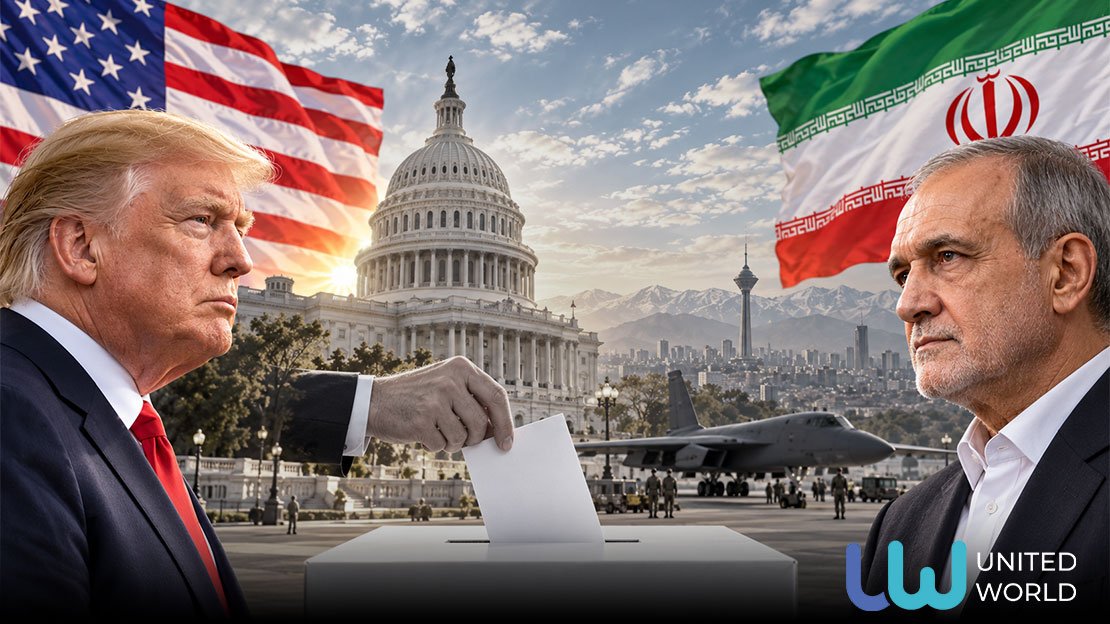
The midterm elections to be held in the United States on November 3, 2026, represent a critical turning point for the future of the war in Iran.
Indeed, the main reason why US President Donald Trump’s administration has refrained from launching a new military operation before the elections is the cost that the war has imposed on the American economy and domestic politics.
Rising fuel prices, uncertainty in energy markets, military expenditures and declining public support for the war in the United States have created a significant electoral risk for the Republican Party.
Most recently, according to information that became public on October 28, US officials warned their Middle Eastern allies to be prepared for new military operations against Iran and possible Iranian retaliatory actions following the November 3 elections.
Although it has been stated that the US administration has not yet made a definitive decision to launch an attack, these warnings issued to regional countries indicate that Trump is almost certainly considering a new military move.
The most important point to note here is that the elections are likely to affect the timing of the implementation of US policy towards Iran rather than change that policy itself.
Yes, a renewed US attack will not mean that Iran will surrender. On the contrary, it will lead Iran to implement even more aggressively its strategy of spreading the costs of the war across the region and the global economy.
However, this situation does not appear likely to prevent a cornered Trump from making a show of force through a “short and sharp” operation.
Indeed, he believes that he has no alternative but to demonstrate that he can put his foot down at the negotiating table in this deadlock, not only against European and Gulf allies but also against the United States and Russia.
Why will Iran not back down on Hormuz?
Evaluating Iran’s position on the Strait of Hormuz merely as a military preference would mean overlooking an important part of Tehran’s strategic calculations.
For Iran, Hormuz has become an issue of sovereignty and deterrence that directly affects the outcome of the war, the regional security architecture and the country’s future bargaining power.
Iran believes that if it loses its influence over Hormuz in the face of US military attacks and economic sanctions, it will also lose its most important strategic bargaining chip developed throughout the war.
Moreover, this situation will not be limited to the consequences of the current conflict.
Iran would also lose access to the same instrument of pressure in the event of another crisis with the United States or Israel in the future.
Therefore, abandoning Hormuz would represent, from Tehran’s perspective, a strategic defeat extending beyond military losses and perhaps even an existential setback.
Why must the United States re-establish control in Hormuz?
For the United States, the issue of Hormuz has evolved into a strategic problem with consequences far broader than Iran’s military capabilities.
If the United States allows Iran to keep one of the most important transit points for global energy trade under pressure, it could suffer a serious loss of prestige not only among its Gulf allies but also in terms of its claim to leadership within the global system.
This is because Iran establishing de facto control or a veto mechanism over Hormuz could set a precedent for other strategic chokepoints.
Considering China’s calculations in the Taiwan Strait and the South China Sea, Russia’s military policies in the Black Sea and the Houthis’ pressure over Bab el-Mandeb, the issue for the United States is not merely about limiting Iran’s influence in the Gulf.
The real issue can be regarded as preventing international maritime trade routes from becoming instruments of political and military pressure in the hands of regional powers.
For this reason, the United States needs to maintain its military presence in Hormuz and attempt to guarantee the passage of commercial vessels. However, achieving this objective is an extremely costly undertaking due to Iran’s coastal-based systems and asymmetric naval warfare capabilities, and one that could perhaps lead to consequences reminiscent of Vietnam.
What will be the target of the new attack?
If the United States launches another military operation following the midterm elections, the operations can be expected to pursue a different strategic objective from that of the initial attacks.
Initially focused on weakening Iran’s military infrastructure and missile capabilities, the United States would make eliminating Iranian pressure over Hormuz, targeting critical locations such as Kharg Island and Bandar Abbas, and limiting Tehran’s ability to threaten maritime traffic its priorities in a new operation.
However, beyond this, the war could be taken into a new phase by targeting critical infrastructure such as energy facilities, water resources and bridges in an attempt to completely break Iran’s resistance.
Indeed, the “short and sharp” attack approach that has emerged in public reporting, along with Trump’s rhetoric, also supports this assessment.
Conclusion: This war will not end without a war in Hormuz!
The possibility of the United States launching new attacks against Iran following the November 3 midterm elections cannot be explained solely by Trump being able to act more freely after the elections.
The real reason is that the United States has not yet achieved its strategic objectives against Iran.
Although Iran’s military capabilities have been significantly damaged, its ability to influence global energy trade through Hormuz has not been eliminated.
The Trump administration needs this move to turn the military results achieved during the first phase of the war into lasting political and strategic gains and, beyond that, to preserve its “global superiority”.
Indeed, the fundamental paradox of this war is now that although the United States possesses the power to weaken Iran militarily, it has not been equally successful in eliminating Iran’s influence over the global economy.
Consequently, it is becoming increasingly clear that the war in Iran will not come to a lasting end without resolving the strategic dispute over the Strait of Hormuz.
Even if new attacks take place, the actual outcome of the conflict will depend on which side backs down in the power struggle over Hormuz. Because what will determine the winner of this war is no longer merely military superiority, but the capacity to use the global energy and trade system to its own advantage.