


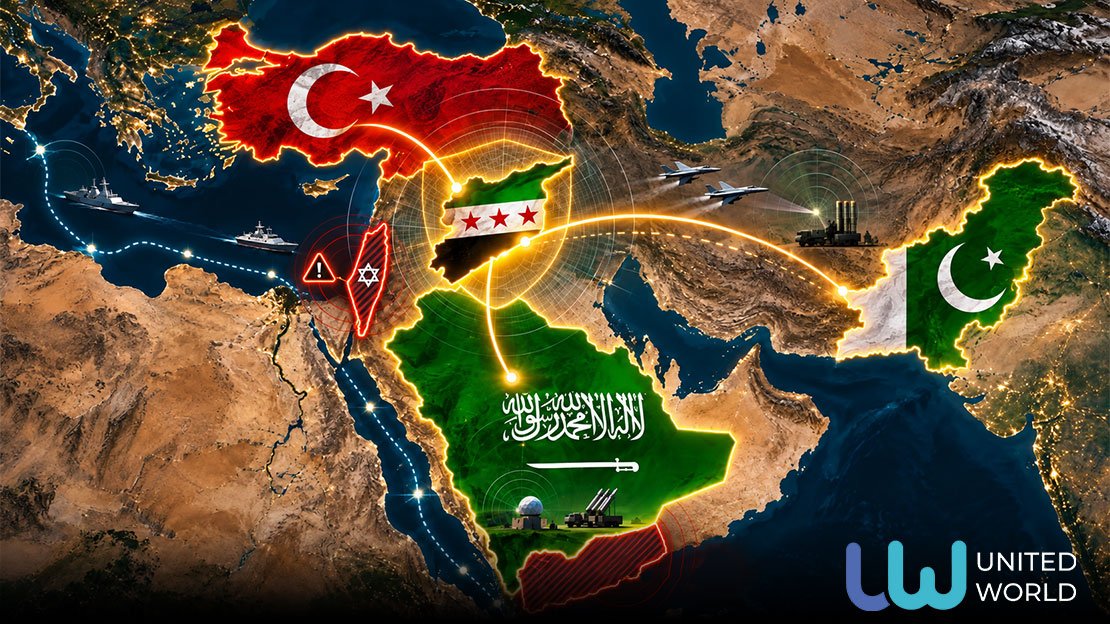
Two years after the collapse of President Bashar al-Assad’s regime in Syria, Israeli incursions into the country’s southern region have evolved into a recurring pattern. A nation that endured a civil war lasting nearly fourteen years—its regime’s fall coinciding with Israeli airstrikes aimed at dismantling its air defense and critical military infrastructure—lacks the bare minimum of power required to deter these incursions. Consequently, Syria’s new administration has been left with no alternative but appeasement, acutely aware of the vast military asymmetry dividing it from Israel.
An unavoidable necessity
However, appeasement—while an unavoidable necessity at the current stage—cannot serve as a permanent strategy. Damascus needs to rebuild its military capabilities and secure alliances that provide additional leverage in confronting Israeli pressures. Hence, its need for a regional security umbrella appears understandable; yet the problem is that such security frameworks do not come without a price, as they may impose commitments on their members that sometimes transcend the very objectives that drove them to join in the first place.
Against this backdrop, the Mecca Joint Defense Agreement—signed by Saudi Arabia, Türkiye, and Pakistan on August 7, which stipulates that any armed attack against one of its parties shall be considered an attack against all—emerges as one of the options tabled before Damascus.
Despite circulating reports that the Syrian leadership has already decided to join, Damascus has yet to submit a formal application, while available information indicates that consultations with the pact’s signatories remain ongoing. During his participation in the Manama Dialogue two weeks ago, Syrian Foreign Minister Asaad Al-Shaibani confirmed that his country is considering joining the agreement or an alternative framework that serves the same purpose.
Al-Shaibani’s statement can only be read as an attempt to test the waters with the alliance’s partners before submitting a formal application that might be rejected or fail to elicit the desired response—particularly given that admitting a new member requires consensus among all three capitals, a feat that may prove difficult given their divergent strategic calculations, and in light of a Turkish official’s remark that the current priority is to finalize the alliance’s institutional framework before expanding its membership.
Consequently, Damascus’s accession to the Mecca Pact can by no means be viewed as a mere matter of time; rather, the entire issue and the surrounding negotiations remain subject to several critical questions from the Syrian side even before the pact’s other members—chief among them: does joining serve Syria’s strategic interests, or would it expose the country to commitments and risks that far outweigh any potential gains?
Benefits and Costs
Proponents of Damascus joining the agreement base their argument on the fact that Syria currently lacks an integrated air defense umbrella while its territory is subjected to repeated Israeli incursions—with Al-Shaibani citing over a thousand violations in less than two years. Viewed from this angle, the pact appears as an opportunity to expand Syria’s deterrence capabilities and provide political and diplomatic cover that Damascus cannot secure on its own.
This trajectory is further reinforced by ongoing shifts in regional security arrangements, as the United States scales back its military footprint in the Middle East following its withdrawals from Syria and subsequently Iraq, alongside prospects of a broader redeployment of its forces in the Gulf. Amid this strategic realignment, several regional states are increasingly moving toward cultivating diversified networks of alliances rather than relying entirely on a single superpower.
Accordingly, Syria’s absence from the emerging security architecture risks rendering it a mere subject of regional decisions rather than an active partner in shaping them. Moreover, banking on U.S. pressure to restrain Israel does not offer a permanent guarantee—particularly if the American military presence in the region undergoes further retrenchment.
However, Damascus is not seeking protection alone; the pact’s founding members also need to know what Syria can bring to their framework.
Geography stands out as Damascus’s strongest card in this context. Syria serves as a vital link connecting the Gulf, Türkiye, and the Eastern Mediterranean, and its stability could pave the way for railway projects, energy corridors, and gas pipelines, as well as the reactivation of oil pipelines via Baniyas—alongside cooperation on border control and combating drug and arms smuggling.
Syria also possesses military expertise accumulated over the years of war, particularly in urban, desert, and rugged-terrain combat, as well as in countering armed networks. Such experience could prove valuable to Saudi Arabia in confronting the asymmetric threats posed by the Houthi group.
Thus, both sides appear to share mutual interests that justify a rapprochement; yet this does not necessarily mean their priorities align, nor that they agree on the nature of the commitments such a rapprochement should entail.
Uncertain Protection
Despite the cogency of Syria’s rationale for accession, the core problem lies in the alliance’s actual capacity to provide the protection Damascus seeks.
The mere existence of a mutual defense treaty does not guarantee that all members will intervene militarily should one of them come under attack. In such alliances, significance is determined not by legal texts alone, but by the political will of the signatory states and their readiness to bear the costs of fulfilling their commitments when put to the test.
It remains unclear whether Syria’s accession would shield it from an Israeli attack, or whether ongoing incursions and the Israeli military presence in the buffer zone since Assad’s fall would qualify as aggression warranting the activation of the collective defense mechanism.
The Associated Press quoted a regional official citing concerns among the pact’s founding members that Damascus might call upon their support in a confrontation with Israel—a factor that may partially explain the hesitation across the three capitals.
Israeli security analyst Yaakov Amidror, former head of Israel’s National Security Council, also believes the guarantees offered by the pact would be limited. He argues that membership does not automatically mean member states will fight in defense of Syria, ruling out the likelihood that Saudi Arabia or Pakistan would rush to its rescue, while casting doubt on the nature of Türkiye’s stance should Damascus require military assistance.
Conversely, Syrian analysts contend that the mere existence of a regional alliance could alter Israel’s calculus regarding its continued incursions in the south. Yet some of them remain wary of such an alliance, given that any activation of the mutual defense clause—even to a limited degree or due to miscalculation—could ignite a regional confrontation that the founding states had not anticipated being drawn into.
Thus, membership neither constitutes an assured guarantee of protection nor necessarily ensures that the alliance will refrain from intervention. Rather, it could place members in a gray zone between legal obligation and political calculation, opening the door to divergent assessments that might lead to dangerous miscalculations. In this context, the agreement’s value hinges on its specific provisions: the definition of aggression warranting a response, the nature of the measures required from members, the degree to which military intervention is binding, and whether special arrangements are included to account for the security challenges facing Syria.
Accordingly, the founding states may encourage Damascus to join while preserving broad political discretion regarding the form of any response—meaning the pact could afford Syria political and diplomatic backing without offering unconditional military guarantees.
Competing Priorities in Yemen
Damascus’s calculations do not hinge solely on protection against Israel; they also extend to the nature of the role it might be called upon to play within the alliance. It is here that the divergence in security priorities among its members—most notably between Saudi Arabia and Syria—comes to the fore.
While Israel constitutes Damascus’s primary security concern, Yemen remains Riyadh’s top priority. The Kingdom needs to bolster its capacity to defend its territory and critical infrastructure against Houthi attacks, whereas Türkiye and Pakistan remain reluctant to be drawn into offensive operations against the group.
While Syrian combat expertise—particularly in unconventional warfare across desert and mountainous terrain—may be of keen interest to Saudi Arabia, it also raises pressing questions regarding the reciprocity that might be demanded of Damascus, and whether cooperation would remain confined to training and advisory roles or evolve into direct military involvement.
Syria’s involvement in Yemen remains a subject of considerable conflicting reports. While Agence France-Presse (AFP) quoted Yemeni officials as stating that hundreds of Syrian military personnel are already deployed on both sides of the border—under a plan to dispatch roughly 3,000 troops, a figure that could rise to 10,000—Syria’s foreign minister maintained that his country neither deploys forces in Yemen nor intends to do so in the foreseeable future, adding that any plan to send troops abroad would be announced transparently.
The Syrian official’s statement was echoed by a diplomatic source who told the Syrian Arab News Agency (SANA) that cooperation between Riyadh and Damascus is strictly confined to training, the exchange of expertise, and advisory roles, without specifying whether this collaboration is tied to the Yemeni file.
Yet these assurances remain inconclusive in light of reports by the Associated Press, which cited three officials stating that Damascus is preparing to deploy fighters to Saudi Arabia near the Yemeni border, with the prospect of their participation in operations against the Houthis.
Despite their contradictions, these accounts point to some form of military or security cooperation between the two sides, though it cannot be asserted with certainty that it is necessarily heading toward direct combat participation. Training, exchanging expertise, or deploying military advisers differs fundamentally from sending troops to take part in active military operations. In any event, these narratives clearly indicate that Damascus is seeking to expand its cooperation with Riyadh in this domain as part of a relationship anchored in mutual interests.
Nevertheless, Damascus may view accession to the Mecca Pact as providing political or international cover for such cooperation—a factor that could help shield it from criticism associated with entanglement in a regional conflict.
Regardless, direct involvement in Yemen carries substantial risk. A conflict that Saudi interventions since 2015 have failed to resolve is unlikely to be decided merely by the addition of new forces—particularly at a time when Syria, given its current political, economic, and military realities, cannot afford the costs of further attrition. Moreover, the Syrian military is still undergoing restructuring and the integration of the various factions that fought in the civil war, making any decision to deploy its forces abroad one that requires careful calculation regarding domestic security and the rebuilding of the military establishment.
Foreign Fighters: A Political Minefield
Even setting aside all these complications surrounding Syrian involvement in Yemen on Saudi Arabia’s behalf, the presence of foreign fighters within the Syrian military represents a political minefield. According to certain sources, Riyadh has stipulated that any Syrian participation in Yemen must consist exclusively of native Syrian fighters, barring foreign nationals who were recently naturalized.
This issue extends well beyond the mere headcount of troops Damascus could dispatch to Saudi Arabia or Yemen; it strikes at the core composition of the military formations making up the new security establishment and their capacity to operate within a unified defense framework.
In this context, reports have highlighted a two-week visit to Saudi Arabia by a military delegation led by Khaled Khattab, commander of the 82nd Division, as well as a visit by 36 Syrian military personnel to the Joint Operations Room in Jeddah.
These visits take on heightened significance given the makeup of the 82nd Division, which incorporates fighters from Ansar al-Tawhid—a group founded by former operatives of Jund al-Aqsa—alongside foreign fighters within its ranks, and faces allegations of committing abuses in Syria’s coastal region and As-Suwayda.
The sensitivity of this file is not confined to the security reputation of these formations or their domestic track record in Syria; it also reaches into the strategic calculations of regional and international partners.
The presence of foreign fighters—including Uyghur operatives—provokes Chinese objections tied directly to Beijing’s national security concerns. This issue carries particular weight for Pakistan, given its close military ties with China, which supplies roughly 80 percent of Islamabad’s arms imports and stands as a key strategic partner.
Consequently, an internal Syrian matter risks becoming a source of friction in the alliance’s relations with external powers—a dynamic that may help explain Saudi Arabia’s insistence that any participating Syrian force be entirely free of foreign fighters.
Ultimately, this issue exposes a telling paradox: the very alliance poised to offer Damascus political and military backing may require it, before reaping any of those benefits, to resolve sensitive domestic files—namely restructuring and disciplining its armed formations, while reconciling the demands of its partners with the imperatives of state-building.
At stake is not merely Syria’s ability to field a few thousand fighters, but the readiness of its military to operate within a formal alliance structure and its capacity to fulfill external commitments without compromising its internal security priorities.
Economic and Military Fragility
Beyond this dilemma lies another challenge concerning Syria’s standing within the alliance and its actual capacity to influence collective decision-making.
Damascus would enter any prospective defense arrangement from a position of acute economic and military fragility, relying heavily on the backing of its partners. By contrast, Saudi Arabia, Türkiye, and Pakistan possess vastly superior military, economic, and institutional capabilities.
This asymmetry could render Syria the member most vulnerable to shifting interests among the other signatories—and the least able to shape the outcomes of collective decisions, particularly if membership carries binding, long-term obligations.
According to circulating accounts of the treaty’s provisions, withdrawal is not permitted until 10 years after its entry into force. If this reading holds true, accession would not represent a transient political gesture, but rather a decade-long commitment demanding a careful calculus of how regional interests and dynamics might evolve over that span.
Here, another paradox emerges in light of Damascus’s declared opposition to joining regional axes. In July, Turkish President Recep Tayyip Erdoğan called for keeping Syria out of regional conflicts, while Syrian President Ahmed al-Sharaa has likewise affirmed his rejection of alignment with regional blocs.
Membership in a regional defense pact might appear at odds with that stance—unless understood as a shift from strict neutrality to calculated alignment, governed by terms that preserve a measure of decision-making autonomy for Damascus.
Even so, Syria’s ability to rally diplomatic backing from Riyadh, Ankara, and Islamabad does not automatically translate into the leverage needed to steer those capitals toward military options aligned with its own priorities. Political support is one thing; the readiness to bear the costs of military confrontation is quite another.
This disparity calls the tangible value of membership into question—especially if the alliance’s objectives and the boundaries of its commitments remain insufficiently defined, or if the agreement lacks concrete mechanisms to address the specific threats confronting Syria, whether Israeli incursions, border violations, or smuggling networks.
An Interim Option
In light of these realities, a more pressing question emerges for Damascus: should rebuilding the military and securing the borders take precedence over any sweeping regional defense commitment?
The answer may point toward a third option: advancing bilateral cooperation with Saudi Arabia, Türkiye, and Pakistan across training, armament, and border control, without transitioning to full membership in a mutual defense pact at this stage.
This trajectory allows Damascus to leverage its ties with all three states while retaining broader room for political maneuver and steering clear of military obligations that could drag it into conflicts outside its core priorities. It also enables the gradual building of trust and military capabilities, rather than plunging directly into collective arrangements whose commitments and boundaries remain ill-defined.
Such an approach may likewise suit the founding states, which do not appear eager to expand their security burdens at a time when they face pressing challenges in the Red Sea and Bab al-Mandab, alongside diverging priorities regarding regional threats.
In my assessment, this course represents the most plausible scenario at the current juncture: it enables Damascus to reap select benefits of security and military cooperation without assuming the full weight of collective defense obligations, while buying the founding members additional time to consolidate the alliance and define its ultimate role.
An Expensive Isolation
Ultimately, even if Damascus has already made the decision to join the Mecca Pact, it has yet to be met with any declared acceptance from its prospective partners, as the matter remains contingent upon the approval of three capitals, each governed by its own calculations and priorities.
Meanwhile, the primary rationale driving Damascus toward the alliance—securing a deterrent umbrella against Israel—remains one of the agreement’s most ambiguous facets. There are no assured guarantees that member states would intervene militarily in defense of Syria against a state that maintains close ties with Washington.
Conversely, the risks of sliding from military cooperation and training into direct entanglement in regional conflicts, such as Yemen, appear far more tangible—especially given that the Syrian military has yet to complete the rebuilding of its institutions and the integration of its various formations.
Nevertheless, Damascus’s pursuit of membership cannot be dismissed as irrational. A state emerging from a protracted war, facing repeated incursions on its territory, lacking an air defense umbrella, and reliant on external backing simply cannot afford the luxury of isolation from regional security arrangements.
Yet its need for alliances does not mean it should accept whatever terms are put on the table, or trade reliance on its own limited capabilities for subordination to its partners’ priorities. The real challenge confronting Damascus is not merely securing membership in the Mecca Pact, but ensuring that accession does not turn from a vehicle for strengthening its security autonomy into a mechanism that constrains it with obligations it lacks the capacity to bear.
Accordingly, gradual bilateral cooperation—until the military’s reconstruction is complete and the true nature of the alliance’s commitments becomes clear—may prove a more balanced course. What matters is not how swiftly Syria joins the pact, but knowing precisely what it stands to gain, what it will be bound to deliver, and whether the anticipated rewards outweigh the risks.