


By Safiye Şerif, Archaeologist, Algeria
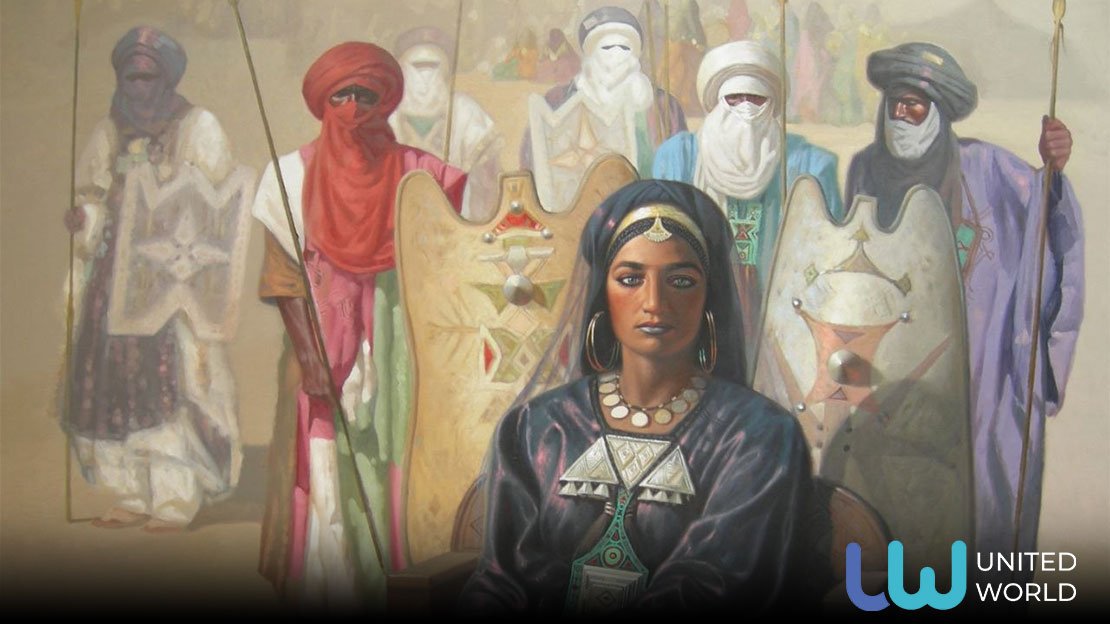
The African continent often considered as the cradle of humanity, throughout its history seen the emergence of societies in which women played an important and sometimes even pivotal role. Certain ancient tales, notably those of Diodorus of Sicily, refer in this context to the existence of the Amazons, whom he associates with Libyan-Berber and Garamantian origins in Fezzan, in the south of present-day Libya. These tales, between myth and memory, testify above all to the ancient fascination for societies where women occupy a singular place. In the Tuareg world, in southern Algeria, this female presence is part of a social reality that is still evident today. It is often associated with the iconic figure of Tin Hinan, whose tomb is located in the municipality of Ablessa in the wilaya of Tamenghasset, in southern Algeria; she is regarded as a founding ancestor of the Tergui dynasty. Her name, interpreted as “the one who comes from far away”, continues to nourish the collective imagination. Recognised as a Tamenokalt – that is, a chieftainess or queen – she embodies authority, memory and a form of female sovereignty within the Tuareg tradition.
This image of the strong and respected Tuareg woman is also reflected in contemporary discourse. The Tuareg politician Mano Dayak noted that “the Targuia is not a submissive woman; she is graceful and strong too”, highlighting a representation deeply rooted in the collective memory.
However, it is necessary to distinguish symbolic representations from social realities. Tuareg societies do not fall under a strict matriarchy, but rather a matrilineal system, in which the filiation passes through the mother. The child’s social identity is thus linked to the maternal lineage, which gives women a central role in the transmission and continuity of the group.
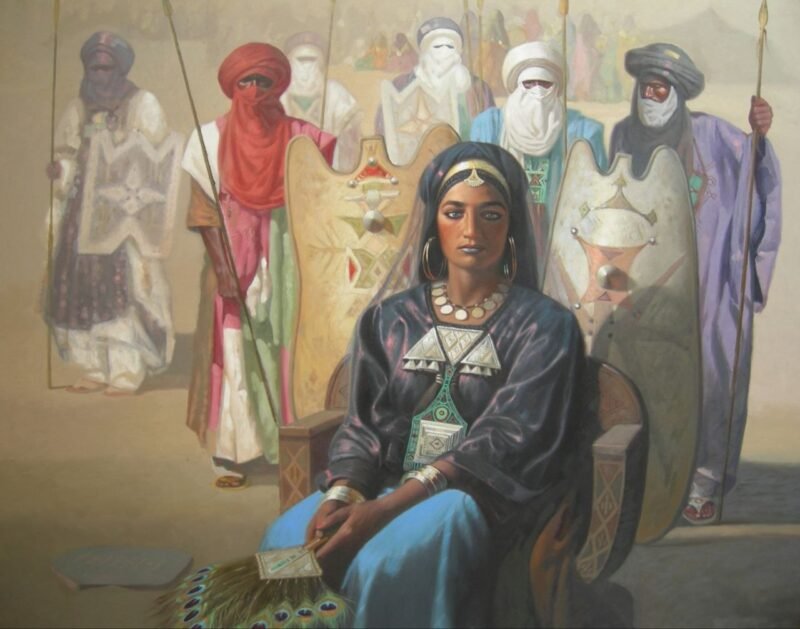
This role is also reflected in certain traditional structures, notably the ‘ettebel’ system – both a symbol of power and a confederal organisation – which brings together lineages descended from a female ancestor. This organisation helps to explain the special place occupied by women in the Tuareg social order.
In terms of marriage, the woman retains a real autonomy. Monogamy is highly valued and the repudiation of a wife is far from being an innocuous act: is generally viewed negatively and can lead to strong social disapproval. In day-to-day life, the couple manages their goods relatively independently, with each retaining their own resources; this reflects a particular balance in marital relations. When a Targui man asks for his future wife’s hand in marriage, he must take his maternal uncle with him and be received by her maternal uncle in order to finalise the engagement.
In many communities, the family tent –the very heart of social and domestic life– belongs to the woman. She remains its owner even in the event of divorce or widowhood, which reinforces its stability and its central role within the household. There are however, some exceptions, particularly amongst noble groups, where the rules may vary.
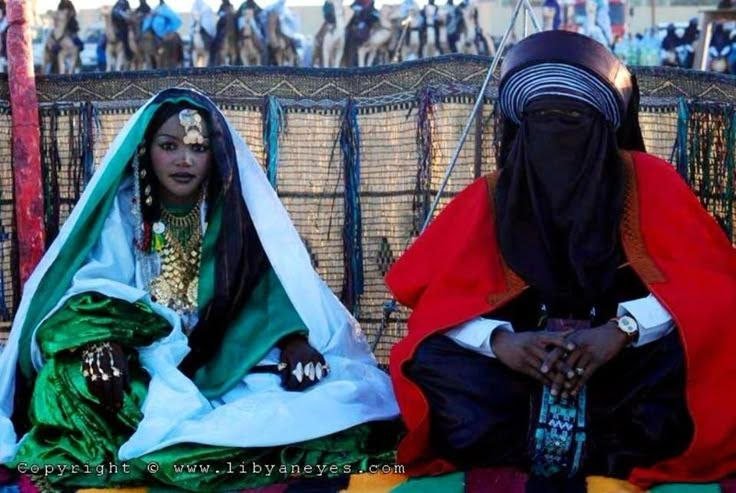
Beyond the material aspects, the procrastinating woman benefits more widely from an important social recognition. She has a real freedom of expression and their individuality is respected. In this context, any form of violence against them is strongly condemned and considered as a serious transgression of social norms. Any violation of a woman’s integrity, whether physical or psychological, is not only prohibited but also strongly condemned by the community.
As a result, Tuareg society offers an example of an original model, where traditions, social organization and cultural representations give women an essential role in the transmission, cohesion and continuity of the group.