


By Yiğit Saner
The payment system Iran seeks to impose on ships passing through the Strait of Hormuz is inspiring other countries as well. This source of inspiration threatens not only regional balances of power but also the so-called global order itself.
Most recently, Talmiz Ahmad, a diplomat who previously served as India’s ambassador to Saudi Arabia, Oman and the UAE, warned that the risk of the Strait of Malacca being used to generate revenue is growing.
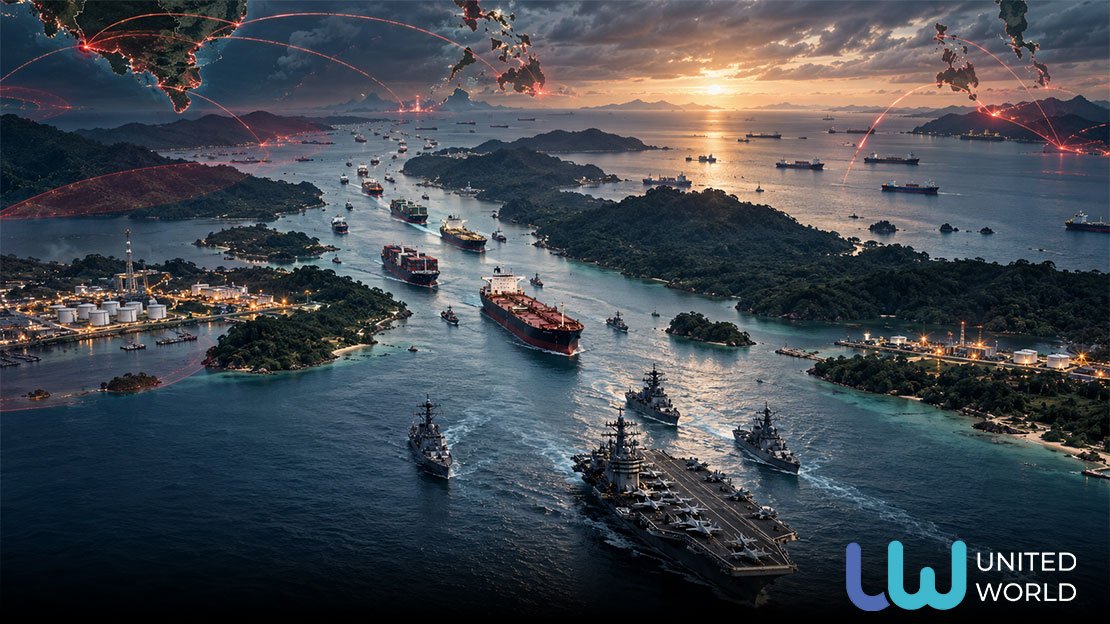
Indonesia, Malaysia and Singapore border the Strait of Malacca. Malacca is a trade route as important as Hormuz. About two months after the Iran War began, Indonesia’s finance minister proposed charging ships passing through Malacca. The revenue was to be shared among the three countries bordering the strait.
Singapore rejected the proposal, Malaysia called for a compromise, and Indonesia announced that no transit fees would be imposed for the time being. However, the idea of implementing such a system in Malacca or other straits has now entered the global debate.
They Set Out to Cut China’s Lifeline
Experts interviewed by The Diplomat warn that the Strait of Malacca could soon become a point where “commercial interests, national security concerns and geopolitical competition intersect.” They have good reason to do so, because the issue is not merely the imposition of transit fees in one form or another, but the strategic leverage the strait could become. The following figures alone are enough to illustrate Malacca’s geopolitical importance:
- Approximately 29 percent of the oil transported by sea and 24 percent of all commercial goods pass through the Strait of Malacca.
- Around 75 to 80 percent of China’s seaborne oil imports are transported through Malacca.
While this route meets China’s needs, the dependence it creates also constitutes a strategic vulnerability. This predicament has come to be known as the “Malacca Dilemma.”
However, the threat does not stem solely from China’s own dependence. For years, US strategists have also been discussing ways to turn this vulnerability into a weapon against Beijing.
An article published in the Georgetown Journal of International Affairs in 2023, titled “China’s Economic Security Challenge,” argued that the United States and its partners should make it more difficult for China to overcome its Malacca Dilemma.
A 2024 study by the Brookings Institution, titled “After Primacy: US Military Options in Contemporary East Asia,” listed a coalition-based counter-blockade targeting China’s commercial maritime traffic among the military options available in the event of a conflict around Taiwan. Such a blockade could extend to strategic chokepoints such as Malacca. The analysis also noted that such a move could impose heavy costs on the global economy.
From Vulnerability to Advantage
According to Pulitzer Prize-winning journalist Andy Browne, US strategists have viewed a blockade of China’s seaborne oil imports as a powerful weapon against Beijing for approximately 25 years. While this strategy remains under discussion today, the Iran War has presented a picture that calls into question the assumptions on which American strategists have relied:
- China has shown that it can weather disruptions to oil supplies through the Strait of Hormuz largely unscathed.
- Beyond using its oil reserves to ease pressure on numerous countries, China also helped prevent fuel prices from spiraling further out of control. At the same time, overland pipelines, coal-to-chemicals technologies and green energy capacity have strengthened China’s strategic position.
- US allies in the Asia-Pacific, including Japan and the Philippines, which have been hit hard by the war, continue to grapple with rising petrol and diesel prices, dwindling strategic reserves and mounting inflation. US allies in West Asia and Europe are experiencing the same effects.
- The image of the United States as a power capable of projecting its military might has suffered a severe blow.
In light of these realities, US experts now acknowledge that closing the Strait of Malacca could leave American allies in the region without oil before significantly affecting China.
According to Andy Browne, China’s Belt and Road Initiative has evolved into a “defensive move,” creating alternative routes to circumvent an energy blockade while also strengthening Eurasian connections.
But the issue does not end there. The Iran War has also exposed the vulnerabilities of US bases, destroyers and aircraft carriers in the Asia-Pacific. China’s hypersonic, cruise and ballistic missiles could strike these targets just as Iranian missiles have struck US assets in West Asia. China’s stockpiles of advanced missiles are enormous.
With Asian actors also debating the possibility of generating revenue from the strait, Washington is being drawn towards its own “Malacca Dilemma.”
A Chain Reaction That Disrupts American Doctrine
The multidimensional equation now taking shape indicates that the objective of “controlling the high seas” and “acting as the guarantor of freedom of navigation”—the backbone of US hegemony since the Second World War—is facing its gravest crisis of the post-Cold War era. The effective loss of Washington’s control over strategic chokepoints such as Hormuz and Bab el-Mandeb is triggering a chain reaction that could spread to the Asia-Pacific and other critical straits. As advances in missile technology, asymmetric threats and local actors’ demands for sovereignty and revenue converge, the global power-projection capability on which the United States has relied for decades is rapidly eroding.
The end of Washington-guaranteed freedom of navigation in some regions, and its growing vulnerability in others, now represents more than a foreign policy failure. It signifies a crack in the fundamental maritime pillar underpinning US global hegemony.