


By Adem Kılıç, Political Scientist
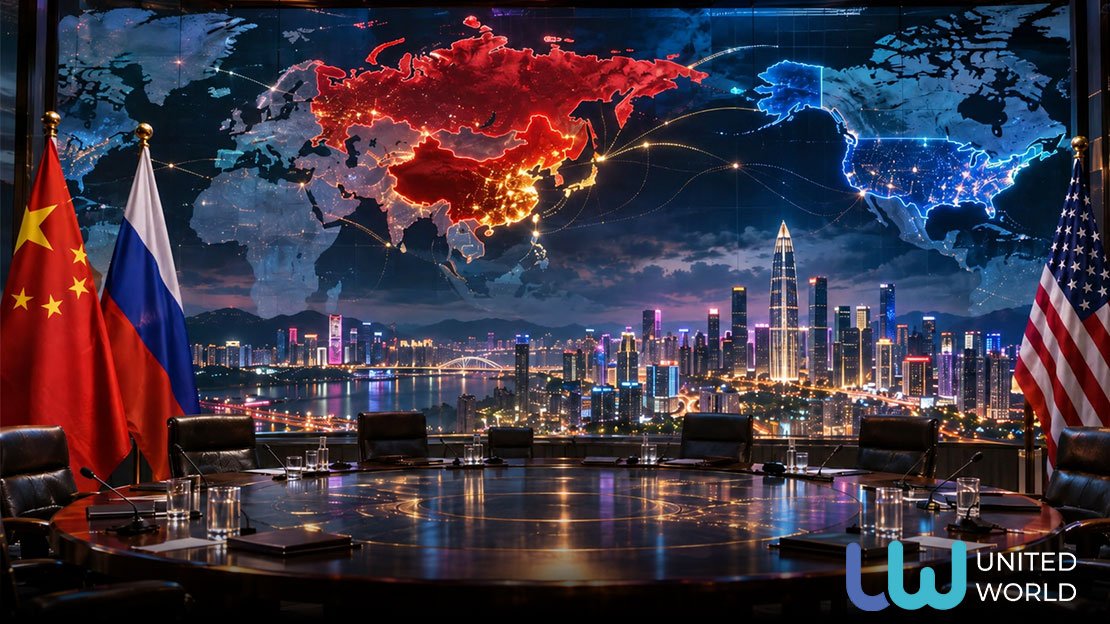
At a time when the distribution of power within the international system is being reshaped, the anticipated Shenzhen meeting, which is expected to bring together the leaders of the United States, China, and Russia on the same diplomatic platform, stands out as a significant development for the future of global politics.
U.S. President Donald Trump, Chinese President Xi Jinping, and Russian President Vladimir Putin are expected to meet on the sidelines of the Asia-Pacific Economic Cooperation (APEC) Summit, scheduled to take place in Shenzhen, China, on November 18–19.
Bringing together the leaders of the world’s three largest nuclear powers is significant not only in terms of improving diplomatic relations but also in reassessing the balance of power within the international system.
While issues such as nuclear arms control, strategic stability, the war in Iran, and North Korea’s nuclear capabilities are expected to feature on the agenda, the meeting carries a much broader significance: how Russia and China can establish greater strategic weight against Washington at a time when U.S. global leadership is increasingly being questioned.
For Washington, the meeting can be viewed as an attempt to initiate a new negotiation process on nuclear arms limitations through direct engagement with Moscow and Beijing. However, bringing the three countries together does not mean that their fundamental differences in national interests have disappeared. On the contrary, the significance of the meeting lies in the major powers’ search for a new diplomatic balance to manage their growing rivalry.
Nuclear balances are no longer an area the United States can determine unilaterally!
Throughout the Cold War, nuclear arms control was shaped largely by agreements between Washington and Moscow. The mechanisms established between the two superpowers helped reduce the risk of direct confrontation while contributing to the preservation of global strategic stability.
Today, however, this traditionally bipolar structure has undergone a significant transformation.
China’s ability to translate its economic growth into military and technological capabilities, modernize its nuclear forces, and become a more influential global actor is turning the existing nuclear equation into a three-power structure. This development is also directly affecting U.S. strategic calculations.
Washington no longer considers an arms control agreement with Russia alone sufficient to manage global nuclear competition. Its desire to bring China into the negotiation process is therefore no coincidence. The United States aims to establish a diplomatic mechanism capable of addressing the expansion of Beijing’s nuclear capabilities.
However, China is unlikely to accept the same obligations as the United States and Russia. Beijing maintains that its nuclear arsenal remains smaller than those of the other two countries and is therefore reluctant to accept an agreement based on equal obligations. Russia, meanwhile, occupies a different position, with its extensive experience in arms control negotiations and its substantial strategic nuclear forces.
The emerging picture therefore demonstrates a shift away from an international system in which the United States could determine nuclear balances on its own. Washington’s growing need to take both Moscow and Beijing into account is one of the clearest indicators of the changing global distribution of power.
Economic interdependence is becoming a strategic weapon in the U.S.-China rivalry
Economic relations between the United States and China will also be among the key issues discussed during the Shenzhen meeting. Implementing previous agreements aimed at easing trade tensions between the two countries remains one of the Trump administration’s expectations of Beijing.
Rare earth elements and critical minerals, in particular, are among the areas where economic competition has evolved into a matter of national security. China’s dominance in processing these resources and its central position in global supply chains create significant vulnerabilities for the U.S. defense industry and advanced technology sectors.
Competition in areas such as semiconductors, artificial intelligence, energy technologies, and defense manufacturing is turning the two countries’ economic interdependence into a potential instrument of strategic pressure. While Washington seeks to contain China’s technological rise, Beijing can also influence America’s room for maneuver through its manufacturing capacity and control over critical resources.
This demonstrates that global competition can no longer be assessed solely in terms of military power or economic size. Manufacturing capacity, access to technology, and strategic supply chains have also become fundamental factors determining the position of major powers within the international system.
The Trump administration’s search for an economic understanding with Beijing is also a consequence of this mutual dependence. While seeking to contain China’s rise, the United States must simultaneously consider the potential damage that a breakdown in economic relations could inflict on its own industry and national security.
Russia’s growing strategic weight against the United States and the war in Ukraine
One of the most significant dimensions of the anticipated trilateral meeting in Shenzhen will be Russia’s position within the international system. Facing severely strained relations with the West over the war in Ukraine, Moscow is seeking to preserve its influence in global politics by relying on its military capabilities and the strategic partnership it has developed with China.
The possibility of another meeting between Trump and Putin following their talks in Alaska in August 2025 is important for the future of Washington-Moscow relations. Although Ukraine is not expected to be discussed directly at the Shenzhen meeting, the strategic consequences of the war cannot be considered independently of negotiations among the major powers.
Russia’s impact on European security, its military capabilities, and its nuclear deterrence will continue to occupy an important place in U.S. global strategy. Washington’s need to maintain direct negotiations with Moscow also demonstrates that Russia continues to retain considerable weight within the international system.
Another noteworthy factor is the growing rapprochement between Russia and China. Cooperation between the two countries is increasing the strategic pressure facing the United States on a global scale. Although Moscow and Beijing have different priorities, together they can generate diplomatic and economic weight capable of limiting Washington’s ability to make unilateral decisions.
This partnership should not be interpreted as a conventional alliance in which all interests are fully aligned. Nevertheless, expanding relations in energy, defense, trade, technology, and international diplomacy are strengthening both countries’ bargaining positions against Washington. In particular, America’s efforts to balance Russia in Europe and China in the Indo-Pacific simultaneously are making the allocation of U.S. strategic resources increasingly complicated.
The war in Iran is putting the global security architecture under strain
The war in Iran, which could feature on the agenda of the trilateral meeting, is important for understanding how competition among major powers is being reflected in the Middle East. U.S. military policy toward Iran is not only changing regional power balances but also raising questions about the effectiveness of international mechanisms designed to prevent nuclear proliferation.
The Iranian case demonstrates that military pressure alone cannot resolve nuclear disputes and that regional conflicts are increasingly intertwined with global power competition. Russia’s and China’s diplomatic and economic relations across the Middle East are also among the factors influencing Washington’s room for maneuver in the region.
North Korea’s continued development of its nuclear capabilities, meanwhile, is making the security balance in the Asia-Pacific increasingly fragile. As security concerns grow in South Korea and Japan, China’s influence over Pyongyang makes Beijing an indispensable actor in regional security discussions.
These two issues highlight one of the fundamental challenges facing U.S. global security policy. To manage crises across different regions, Washington now needs not only its military superiority but also diplomatic engagement with rivals such as Russia and China.
A multipolar balance of power against the United States in the new world order
The real significance of the anticipated meeting in Shenzhen lies less in the diplomatic messages delivered by the three leaders than in what it reveals about the current distribution of power within the international system.
The United States remains one of the world’s most powerful military and economic actors. However, Russia’s nuclear deterrence, China’s economic and technological rise, and the strategic cooperation developed between the two countries are making it increasingly difficult for Washington to shape global policies as freely as it once did.
In particular, America’s efforts to establish superiority across multiple strategic fronts simultaneously are making resource allocation and the prioritization of national interests increasingly important. Russia in Europe, China in the Asia-Pacific, and developments related to Iran in the Middle East are among the principal factors limiting the scope of U.S. foreign policy.
At the same time, Russia’s and China’s growing weight against the United States cannot be explained solely through their military capabilities. Their energy resources, industrial production, critical minerals, trade networks, and influence within international institutions are strengthening their bargaining power in global politics. The emerging competition is therefore not merely a military struggle for power but a broader contest over who will shape the economic and political rules of the international system.
For new nuclear arrangements to become sustainable, other nuclear powers, including India, Pakistan, the United Kingdom, France, and North Korea, must also be taken into consideration. A mechanism established among the three major powers could represent an important starting point, but it would not be sufficient to resolve global security challenges on its own.
In conclusion, the Shenzhen meeting should be viewed not as the declaration of a new world order but as a diplomatic initiative testing how the United States will establish a balance of power with Russia and China, whose strategic weight against Washington continues to grow. While it is becoming increasingly difficult for Washington to maintain its global leadership by confronting Moscow and Beijing simultaneously, Russia and China are seeking to capitalize on this situation to gain a greater voice in the international system.
The fundamental issue shaping global politics in the coming period will be less about how much of its existing superiority the United States can preserve and more about how it responds to the new balance emerging from the rise of other powers. The real significance of the Shenzhen meeting will lie in the clues it provides as to whether this changing distribution of power will lead to diplomatic compromise or evolve into a more intense and prolonged rivalry among the major powers.