


By Adem Kılıç, Political Scientist
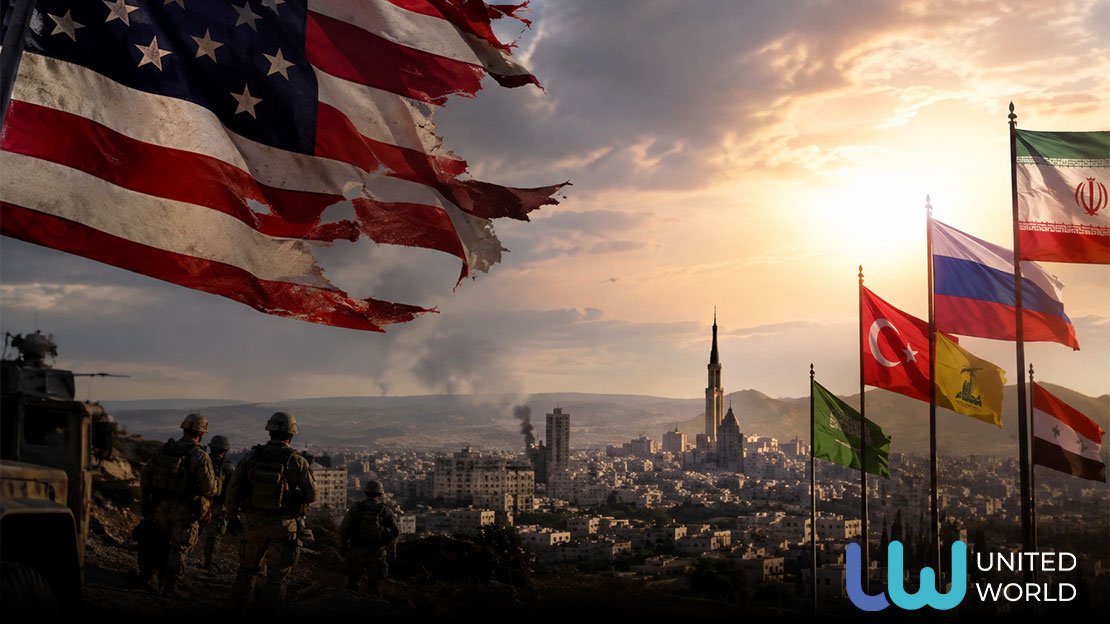
The security equation in the Middle East has been built almost entirely on the US security umbrella for decades, and states in the region, particularly the Gulf countries, believed that they could rely on the military power of the United States.
However, the fact that the US stood alongside genocidal Israel in the face of the genocide in Gaza, the failure of the US in the Iran war, and the failure to provide the necessary support to the Gulf countries that remained under attack throughout the war completely changed the security understanding of the states in the region.
As an example, despite Saudi Arabia’s recent calls for help from the US, the fact that it was left completely alone in the face of the attacks it experienced during the Iran war and threats originating from the Houthis caused the Salman administration to turn towards different security options, particularly the Mecca Pact.
Indeed, it was reported in the international press that during these latest developments, Salman asked US President Trump for help twice, particularly regarding the Houthis, and received a negative response.
On the other hand, the Salman administration faced the reality during the Iran war that US military bases could cause them to become targets rather than provide deterrence.
Yes, the US is still one of the most powerful military actors in the region, and the weight of the US continues in terms of the defense systems, intelligence infrastructure and military procurement relations of the Gulf countries.
But it appears that, following all these developments, the countries of the region no longer want to build their security solely on the guarantees of an actor that comes from outside.
A new era in the region’s security understanding
Countries such as Saudi Arabia, Pakistan and Qatar are maintaining their security relations with the US on the one hand, while on the other hand trying to establish new partnerships with other actors in the region.
In fact, following the last three years, the Israel-Palestine issue has also become one of the most important topics of this security issue.
Because it has clearly emerged that throughout both the Iran process and the genocide process in Gaza, the US did not consider the security of any other country when it came to Israel.
Therefore, it has now become almost impossible to address the security of the countries in the region, particularly the Gulf, and the Palestine issue as two completely separate files.
It is precisely in this context that the Palestine issue has begun to be regarded as one of the most important issues of the regional security alliances that have emerged, such as the Mecca Pact.
The new equation put forward by the Mecca Pact
It is precisely at this point that the Mecca Pact signed between Türkiye, Saudi Arabia and Pakistan constitutes a noteworthy example in terms of the security debate in and around the Middle East.
The importance of the pact does not stem only from the mutual defense commitment of the three countries.
In my view, what is more important is that security is not left to the guarantee of a single power from outside the region and that regional actors have begun to build an institutional security capacity among themselves.
Indeed, the process was not left merely at the level of a political declaration following the agreement.
First of all, the first Strategic Political and Defense Committee meeting, attended by the foreign and defense ministers and chiefs of general staff, was held in Istanbul, and it was decided to establish a secretariat in Riyadh.
The fact that issues such as joint exercises, intelligence sharing, the integration of military capabilities, and joint development and production in the defense industry were put on the agenda shows that the pact aims to transform into a more institutional structure over time.
Therefore, it may be incomplete to evaluate the Mecca Pact merely as a “new military alliance.”
One of the developments revealing the true meaning of the Mecca Pact was the meeting of foreign ministers held in New York on the sidelines of the United Nations General Assembly.
While regional developments were discussed during the meeting of the foreign ministers of Türkiye, Saudi Arabia and Pakistan during the 81st UN Summit, the meeting of the chiefs of general staff that took place immediately afterward in Riyadh also demonstrated that the mechanism was moving from the diplomatic level towards the level of military coordination.
In other words, the political coordination established at the level of foreign ministers in New York was seen to have been transferred to the dimension of military planning and coordination in Riyadh.
This development should also be regarded as an important example of how the regional security architecture can take shape.
Because security does not consist solely of fighter jets, air defense systems or military bases.
The Iran and Gaza wars showed that unless diplomatic communication, intelligence sharing, joint threat assessment, defense industry, logistics and decision-making mechanisms during times of crisis work together, it becomes difficult for military capacity alone to produce deterrence.
The fact that the countries in the Mecca Pact clearly demonstrated their close relations on these issues, particularly joint threat assessment, revealed that they could fundamentally change the balance.
Türkiye’s rising regional role
This transformation also opens an important strategic space for Türkiye. Türkiye’s position cannot be explained solely by its military capacity.
Its NATO membership, extensive defense industry infrastructure, capabilities in areas such as unmanned systems and electronic warfare, diplomatic room for maneuver, and the relationships it has established between the Middle East, the Caucasus, the Balkans and Asia give Ankara a different position in regional security debates.
From this perspective, the Mecca Pact demonstrates that Türkiye has emerged not merely as an actor providing security from outside, but as a regional power at the center of the security mechanism.
In particular, the inclusion of issues such as joint production in the defense industry, technology development, unmanned systems, electronic warfare and the development of joint military capabilities on the institutional agenda of the pact demonstrates that security cooperation can move beyond traditional arms procurement relations.
Conclusion
At this point, for many actors, particularly the countries of the Mecca Pact, as well as Qatar, Iraq and Syria, the question of “Will the US remain in the region or leave?” has begun to lose its meaning.
Indeed, developments such as Iraq’s demand for coalition forces to leave the country by September 30, Syria not allowing US-backed terrorist organizations to gain ground, and the diplomatic and military mechanisms of the Mecca Pact being activated one after another within a short period of time demonstrate how determined the countries of the region are to create alternatives in this regard.
The countries of the region no longer want their own security to depend on decisions taken in other capitals, and therefore, the security order of the region is being reshaped and this process appears to be gaining even more momentum.