


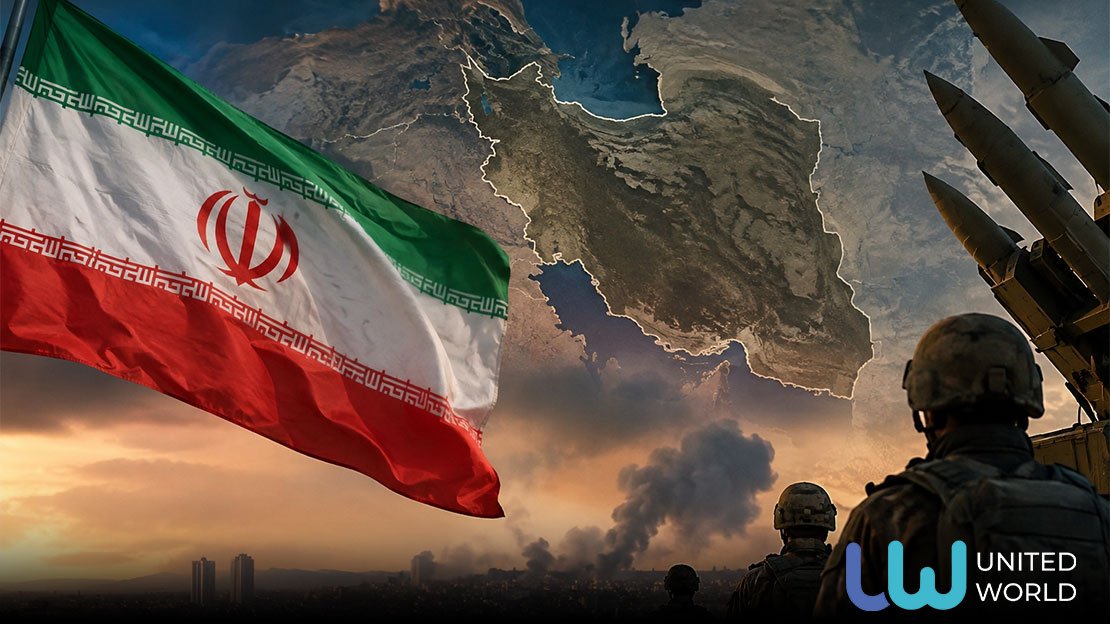
Some transnational disinformation agencies have been insistently reporting on US preparations for an escalation of the conflict in West Asia and a new war with Iran. Assuming this is true, the agencies differ as to whether it will occur during the last week of October (before the Israeli elections) or at the end of the month and the beginning of November (before the US elections). In both cases, the analysis stems from the idea that, having exhausted all resources to defeat Iran within the framework of the “rationality” of war, Washington and Tel Aviv can only resort to a response that could even include the tactical use of nuclear weapons to prevent an electoral debacle that would remove the Zionist from power and leave the American one severely weakened.
In this context, it is worth asking whether a new large-scale war in Iran is possible, when what is at stake is the political, economic, and social stability of the United States in the first instance, but also of the entire planet, if one takes a more comprehensive view of the problem, especially when the hegemonic power manifests vulnerabilities and precarious conditions of existence that can only be hidden because of the overwhelming control it has over the communication, cultural, and media apparatus.
Several factors come into play for a proper analysis of the issue. The first and most important arises from examining the energy situation, which is closely linked to the second factor: the economic and financial situation. This is particularly relevant given the current precipitous rise in fuel prices, which is harming producers in the United States and Europe, especially in the agricultural sector. The escalating conflict in West Asia and the continued ban on Russian energy exports have led to a 10% increase in diesel prices in less than a week. All of this threatens a new wave of inflation before the November 3rd elections in the United States.
Pressures on food prices are building, triggering further increases that are hitting American citizens (voters). The rising cost of grains, fertilizers, and fuel coincides with adverse weather conditions and conflicts disrupting global supply chains. All of this has affected, or will affect, the prices of essential inputs for producing and transporting a wide variety of foods, increasing the risk of further price hikes.
Among the main factors triggering this situation are the conflicts in Iran and Ukraine. As mentioned earlier, this scenario also affects the value of fertilizers. The conflict with Iran has disrupted their supply and driven up prices, since a significant portion of the global trade in these inputs passes through the Strait of Hormuz, a strategic route for the international transport of goods and energy.
At the same time, corn and wheat reached their highest prices in three years this week. Poor weather conditions hampered corn yields, while the conflict in Ukraine continues to disrupt wheat exports.
The impact could extend to numerous products. Wheat is a fundamental ingredient in everyday foods, while corn is widely used to feed both humans and animals. For this reason, a sustained increase in their prices could ultimately put pressure on the cost of meat, dairy products, and eggs as well.
The average national price of diesel in the United States rose to $6.49 per gallon on September 19, up from $5.37 a month earlier. A year ago, the price was $3.71, and before the trade war, it was $3.81, according to the U.S. Energy Information Administration. This figure surpasses the previous record of $5.82 set in June 2022. Farmers also point to the impact of Trump’s trade wars, which have hurt U.S. agricultural exports, particularly soybean sales to China.
Diesel prices in the United States are now more than 60% higher than they were before the US and Tel Aviv’s attack on Iran in late February. Prices rose rapidly as the cost of crude oil —the main ingredient in refined fuels like diesel and gasoline—skyrocketed amid supply chain disruptions across West Asia, particularly due to tanker traffic congestion in the strategic Strait of Hormuz.
As diesel prices rise, so does the cost of transporting everyday goods like groceries in the United States, since much of the national freight and delivery network runs on diesel. Furthermore, it’s the fuel that powers heavy machinery and sustains key sectors of the industrial economy, so sudden price increases can quickly ripple from energy markets to business costs, inflation, and ultimately, investors’ portfolios.
The world consumes 29 million barrels of diesel daily; of this, between 66 and 70% is used for road transport, between 10% and 14% for the industrial and heavy machinery sector, 6 to 8% for the agricultural and forestry sector, and 5 to 6% for maritime and rail transport.
The third factor to consider as a likely trigger for a military escalation is military. The United States has used or depleted nearly 80% of its THAAD interceptor missiles during the recent conflict with Iran. These missiles are used to defend against high-altitude ballistic missiles, leaving stockpiles at historic lows. Previous reports estimated a total inventory of around 625 such missiles. It’s worth noting that the United States currently produces about eight THAAD interceptor missiles per month (96 units per year), although the government plans to increase that figure to approximately 33 missiles per month (400 units annually) following an agreement with the manufacturer. However, this is only achievable in the medium term. The plan is to reach this goal in about seven years, by 2032 or 2033.
In the case of the Patriot system, U.S. forces have consumed approximately 50% to 60% of these interceptors, which are essential for short- and medium-range air defense. Finally, the Navy has significantly depleted its inventory, having used nearly half of its Tomahawk cruise missile stockpile for ground attack.
It is important that the interceptor ratio used to counter the action of an enemy missile is 6:1, that is, for every 100 attack missiles, 600 must be used to guarantee a safe interception.
This explains why Washington had to suspend shipments of this type of weaponry, which is crucial for Ukraine. Likewise, it had to make the drastic decision to withdraw this weaponry from its bases around the world, especially in Japan, Korea, and Europe, leaving these facilities, and consequently the countries that host them, completely undefended.
What neither Trump nor Hegseth say, but what members of the US military high command know, is that to guarantee the defense of its continental territory (against intercontinental ballistic missiles or ICBMs), the United States only has 44 land-based interceptor missiles that are part of the strategic system “Ground Mid-Trail Defense (GMD),” the only one designed exclusively to protect the 50 states and Canada from long-range nuclear threats.
These 44 ballistic missile interceptors are deployed at two strategic bases: Fort Greely (Alaska), which houses 40 interceptors to prevent potential attacks from Russia or Korea using polar flight paths, and Vandenberg Space Force Base (California), which houses the remaining 4 interceptors.
Although the GMD is the primary shield for the continental landmass, the Pentagon has other complementary air and intermediate-range defense systems. However, most of its global inventories have been significantly reduced due to deployments and expenditures in recent foreign theaters of operations (such as Iran, Ukraine, and Yemen).
In comparison, Russia possesses approximately 4,400 warheads allocated to long-range strategic forces and shorter-range tactical forces. Of these, 1,700 to 1,800 are deployed (fully combat-ready), mounted on intercontinental ballistic missiles and heavy bomber bases.
Iran, for its part, possesses more than 1,000 missiles in its arsenal, primarily medium- and short-range, although its production has increased in recent months. The Fateh-110 and Zolfaghar (with ranges between 300 and 750 km) are tactical in nature, while medium-range ballistic missiles (MRBMs) such as the Shahab-3, Ghadr-110, and Sejjil-2 (with ranges between 1,300 and 2,000 km) are capable of reaching targets in West Asia and Israel.
Just today, October 7, Iranian Defense Ministry Spokesman Brigadier General Reza Talaei confirmed that the production capacity for weapons and defense equipment is 2.5 times greater compared to levels prior to the US-Israeli aggression of February 28, 2016. Talaei added that the Defense Ministry has the capacity to produce more than a thousand types of systems, weapons, equipment, and munitions, noting that the total production volume has also increased. The military spokesman asserted that “defense cooperation between Iran, Russia, and China has not ceased or diminished; on the contrary, it has strengthened in certain areas.”
In another area, Iran’s mosaic defense doctrine, which decentralizes the operations of the Islamic Revolutionary Guard Corps, was designed to ensure operational continuity even if the central command is destroyed. Thus, the country’s defense is structured around 31 semi-autonomous provincial commands (one in Tehran and 30 in the various provinces) that guarantee self-sufficiency, with each provincial hub stockpiling its own reserves of ammunition, fuel, medical supplies, and weapons systems. Following this logic, if a high-ranking leader or official is killed or martyred, lower-ranking local officers immediately assume control without waiting for authorization from the capital. This doctrine proved its effectiveness in recent clashes when US and Israeli attacks that resulted in the elimination of high-ranking political and military officials (including the Great Leader) did not paralyze the country’s capacity to respond.
There is no possibility of success in a direct war between the United States and Israel against Iran, and this also applies to Russia’s special military operation in Ukraine. The only remaining option is a negotiation that grants the United States and the West an honorable “exit” allowing for their strategic survival in a world where they will necessarily have to seek a balance with China and Russia, just as Henry Kissinger predicted in 2016.
Finally, it is necessary to consider the political factor, in which the internal situation in the United States seems to loom large over decision-making. This is partially true; of course, the November election results will influence the international situation. However, in strategic terms, regardless of the variables involved and the priorities, the imperialist nature of the US political system makes its decision to intervene, attack, blackmail, and threaten as forms of political action unalterable.
This has proven futile, not only with Russia and China, but also with Iran, Yemen, and the Democratic People’s Republic of Korea. Furthermore, recent wars have had a more devastating effect in the West than in Iran or Yemen, given the clash between two opposing philosophies: austerity versus consumerism, love of God versus fear of God, and death as a reward versus death as a punishment. The sacrifices made by the people of Iran and the Axis of Resistance are for the common good, born from an attachment to their land, a sense of homeland and nation, and a deep-rooted religious faith that clashes with the use of mercenaries and soldiers who don’t even know why they are fighting so far from their own countries.
Many of the Zionist soldiers carry their German, Argentinian, American, or Polish passports in their pockets, which they use to flee Israel as soon as their mandatory conscription ends. The Palestinians, and the other peoples of the region, remain there, attached to the land of their ancestors, which they will defend as their ancestors did in the past.
The peoples of West Asia are accustomed to sacrifice; Westerners don’t even accept being hit in the wallet without reacting. There is no moral force motivating them to fight. Their defeat will be inevitable. Under these conditions, will the leaders of Israel and the United States make a rash and emotional decision that, while it might lead to their immediate personal political survival, would also lead to the inevitable suicide of their countries? Draw your own conclusions, dear reader.