


By Dure Akram
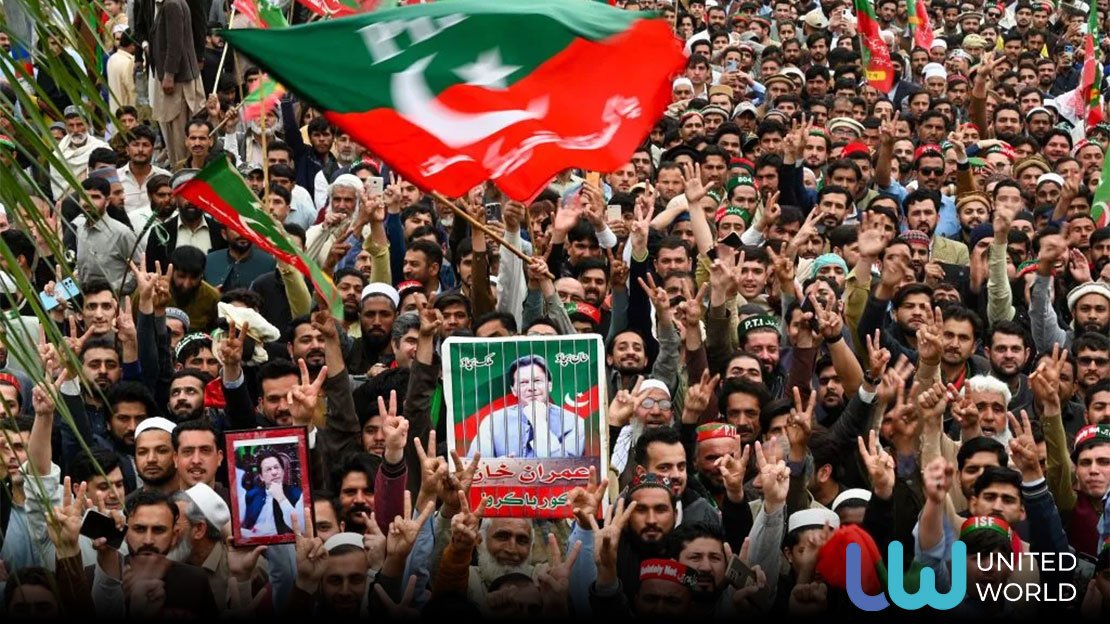
In Pakistan, every new confrontation with Imran Khan is billed as the one that will finally settle the matter. Three years after his arrest, the former prime minister is still in prison, his supporters are still demanding his release, and the government is still looking for a way to contain a political movement that has proved remarkably resistant to official predictions of its demise. This time, the quarrel has cost Khan’s party control of an entire province.
On October 11, President Asif Ali Zardari proclaimed an emergency and imposed governor’s rule in Khyber Pakhtunkhwa, the northwestern province bordering Afghanistan and the last major administrative stronghold of Khan’s Pakistan Tehreek-e-Insaf (PTI). Chief Minister Sohail Afridi was detained, his administration suspended, and executive authority handed to a federally appointed governor with an advisory council.
Islamabad maintains that the decision was forced upon it by worsening militancy and the provincial government’s refusal to cooperate in counterterrorism operations. PTI calls it a political takeover designed to frustrate yet another march on the capital.
Pakistan has been down the road of emergency powers, provincial dismissals and promises of restored order often enough to know that the final chapter is seldom written when the government says it is.
The present confrontation can be traced to May 9, 2023, when Khan’s arrest triggered nationwide protests, some of which descended into attacks on military and government installations. The ensuing crackdown scattered much of PTI’s leadership and left hundreds facing criminal proceedings. Khan was imprisoned again that August and has remained behind bars through successive legal proceedings and political agitation.
The February 2024 general election failed to settle the dispute. PTI-backed candidates, deprived of their electoral symbol and contesting as independents, nevertheless won more National Assembly seats than candidates of any single party, although they lacked the numbers to form a government. PTI retained Khyber Pakhtunkhwa.
That provincial victory proved both a lifeline and a temptation. The government in Peshawar possessed the resources, political legitimacy and geographical advantage to sustain Khan’s campaign. Islamabad, meanwhile, became increasingly accustomed to the paraphernalia of siege: shipping containers across highways, police deployments, arrests and the familiar spectacle of a capital preparing for another invasion by its own citizens.
Addressing the National Assembly on October 14, PPP chairman Bilawal Bhutto-Zardari disclosed that discussions on October 3 had produced encouraging signs. PTI, he said, appeared willing to identify militancy-affected areas and agree to formal cooperation between the federal and provincial governments against terrorism.
The full story of the failed bargain remains untold. Its political significance is already apparent. A government and an opposition that had been discussing arrangements for jointly combating militancy ended up arguing over whether the provincial administration could be trusted to combat it at all.
Bilawal described the PTI leadership’s conduct as a political suicide attack on its own government. He may have had a point about the party’s strategic recklessness. The obsession with Khan’s imprisonment has repeatedly pushed provincial governance into the background, while Afridi’s resistance to another military operation left unanswered questions about how his administration intended to deal with an increasingly audacious insurgency.
Khyber Pakhtunkhwa has paid a terrible price for Pakistan’s war against militancy. Its police have buried colleagues, its villages have endured displacement, and its residents have watched armed groups return to areas supposedly cleared of them. The Pakistan Institute for Conflict and Security Studies recorded 225 militant attacks across Pakistan in September, the highest monthly total in 12 years. At least 259 people were killed and 242 injured.
The Tehreek-e-Taliban Pakistan remains a formidable threat. Islamabad accuses Afghanistan’s Taliban authorities of allowing the group to operate from across the border, an allegation Kabul denies. The danger to civilians and security personnel is sufficiently grave to demand sustained cooperation among the federal government, the provinces and the armed forces.
PTI cannot reasonably expect to govern a province facing an insurgency while treating cooperation with the federal government as an optional political concession. Its opposition to large-scale military operations also requires a credible alternative for protecting the population.
Yet the constitutional question cannot be dismissed. Militant violence had been escalating for years. Extraordinary powers were invoked precisely when PTI was preparing another march against the center.
There is also an inconsistency in Islamabad’s account. Interior Minister Mohsin Naqvi has emphasized the security imperative and the attempts to secure PTI’s cooperation. Information Minister Attaullah Tarar has, meanwhile, accused the party’s provincial administration of sympathizing with, and enabling, terrorists. Such allegations demand evidence and, where warranted, criminal investigation. PTI denies any complicity with and insists the emergency is intended to extinguish the last significant center of opposition power.
Articles 232 and 234 of Pakistan’s Constitution provide for different emergency interventions. Their invocation raises a question that has troubled the country before: has constitutional government genuinely broken down, or has a politically inconvenient administration become intolerable to the center?
Pakistan’s politicians have an unfortunate habit of discovering these constitutional safeguards when they enter opposition and regarding them as an inconvenience when they assume office.
In February 2009, Zardari imposed governor’s rule in Punjab after Shehbaz Sharif was disqualified from office. Sharif, now prime minister, was understandably less enthusiastic about the remedy then.
Politics makes strange bedfellows. In Pakistan, it also makes remarkably short memories.
On October 14, the National Assembly and Senate separately endorsed the emergency. A joint sitting approved governor’s rule the following day amid opposition protests. The parliamentary approvals have strengthened the government’s procedural position without resolving the dispute over whether the intervention was justified.
The contrast is difficult to overlook. Islamabad has secured parliamentary approval for extraordinary authority in its northwest while assuming substantial new military responsibilities thousands of kilometers away without comparable legislative scrutiny.
The Makkah Joint Defense Agreement, signed on August 7 by Pakistan, Saudi Arabia and Türkiye, establishes a collective defense commitment under which an armed attack on one member is treated as an attack on all.
Initially celebrated as an important diplomatic achievement, the agreement acquired an altogether more urgent character as renewed fighting in Yemen brought Houthi missile and drone attacks deeper into Saudi territory.
On October 5, the three governments convened an emergency meeting in Riyadh and agreed to begin implementing their collective defense commitments, including the rapid deployment of agreed military forces and capabilities.
Retired Pakistani Lieutenant General Nauman Mahmood was appointed the alliance’s first secretary-general, giving Islamabad a prominent institutional role.
Within days, a Houthi attack on Riyadh’s international airport killed more than a dozen people and injured hundreds. Further attacks disrupted commercial aviation and threatened energy infrastructure. Saudi Arabia responded with military operations against Houthi positions in Yemen.
On October 15, Saudi authorities reported intercepting a cruise missile over Medina province.
These are serious threats to Saudi security. Civilian airports, energy installations and commercial infrastructure are not legitimate targets simply because they are located in a country engaged in a regional conflict.
Nor is Saudi Arabia an ordinary foreign partner for Pakistan.
Millions of Pakistanis work in the kingdom, Riyadh has repeatedly supported Islamabad through financial difficulties, and the defense of Saudi territory has long occupied a special place in Pakistan’s strategic thinking.
The difficulty begins when the defense of an ally risks becoming participation in that ally’s war.
Pakistan encountered precisely this dilemma in April 2015, when Saudi Arabia requested troops, aircraft and warships for its military campaign in Yemen.
The issue provoked five days of parliamentary debate, accompanied by civil-society demonstrations and warnings against dragging Pakistan into another foreign conflict while the country was still confronting the consequences of the war in Afghanistan.
On April 10, 2015, parliament had unanimously resolved to maintain neutrality in Yemen while reaffirming Pakistan’s commitment to Saudi territorial integrity and the protection of the holy sites. The resolution also recognized that the Yemeni conflict, although not inherently sectarian, could acquire a sectarian character with serious consequences for Pakistan.
It was an uncomfortable compromise for Nawaz Sharif’s government, given its close political and economic ties with Riyadh. Yet it established a distinction that has acquired renewed relevance: defending Saudi Arabia did not necessarily require fighting inside Yemen.
Eleven years later, the same political leadership faces a remarkably similar predicament.
Ishaq Dar, who presented the 2015 resolution, is now deputy prime minister and foreign minister. Khawaja Asif, who explained Saudi Arabia’s request for military assistance to parliament, remains defense minister. Shehbaz Sharif now oversees an agreement that has revived the very questions his brother’s government referred to parliament in 2015.
What has changed is the place of parliament.
The agreement’s full text has not been publicly released, and the government has not submitted its military commitments to a parliamentary debate comparable to that of 2015.
Reuters reported on October 8 that Pakistan had agreed to deploy additional military forces to Saudi Arabia without a parliamentary vote. The information ministry maintained that all necessary government procedures had been followed, while declining to disclose operational details on grounds of confidentiality.
The military presence itself is substantial. Pakistan had deputed approximately 8,000 troops in Saudi Arabia by May under previous defense arrangements.
Yet the public still knows little about the precise missions, command structures, duration or limits of the additional commitments.
Foreign Office spokesperson Sajjad Haider Khan has repeatedly maintained that the alliance is defensive. On October 9, he explicitly ruled out Pakistani troops crossing into Yemen to attack the Houthis.
That assurance is important. Whether it will remain sufficient as the conflict escalates is another question; something Pakistan’s opposition has begun asking.
Among the most direct warnings has come from Senator Raja Nasir Abbas, chairman of Majlis Wahdat-e-Muslimeen and leader of the opposition in the Senate. Abbas has very publicly questioned why parliament had not been consulted and suggested that knowledge of the agreement’s operational terms was confined to a narrow circle within the military establishment.
“It will be a disaster for the country if Pakistan jumps into war,” he warned, pointing to Pakistan’s existing insurgencies, economic difficulties and the danger of religious division. Joining a war against the Iran-aligned Houthis, he argued, could aggravate all three.
His warning also recalls the sectarian risks identified by parliament in 2015. Indeed, Abbas had already called for Pakistani mediation between Saudi Arabia and Yemen in July, before the latest deployments became a public controversy.
PTI, Pakistan’s largest opposition party, has been more cautious.
Zulfi Bukhari, a party spokesman, told media sources that the decision on troop deployments should be debated and approached with political acumen.
The hesitation is noteworthy when set against Imran Khan’s position in 2015. At the time, PTI had supported parliamentary neutrality in Yemen, arguing that Pakistan should not become entangled in another regional war and should preserve its ability to mediate. PTI negotiators were then credited with helping secure the inclusion of neutrality in the parliamentary resolution. The party’s then vice-chairman, Shah Mahmood Qureshi, publicly claimed a leading role in drafting the compromise.
The party now faces a political dilemma. An outright rejection of military cooperation with Riyadh could be portrayed as hostility towards Saudi Arabia or indifference to the protection of the holy sites. Yet silence on the scope of Pakistan’s commitments sits awkwardly with PTI’s longstanding criticism of executive and military overreach.
For now, the Makkah agreement has not produced a unified PTI campaign against the deployment.
More explicit objections have emerged from Pakistan’s progressive and left-wing political circles.
Taimur Rahman of the Mazdoor Kisan Party warned on X that Pakistan was being drawn into another Saudi-Yemen war at a time when its security forces were already occupied on multiple fronts. He questioned the wisdom of entering a conflict against the backdrop of the wider confrontation involving Washington and Tehran.
Ammar Ali Jan of the Haqooq-e-Khalq Party went further, describing the deployment to Saudi Arabia as a dangerous escalation that could trap Pakistan in an extended conflict.
Jan also raised the suffering of Yemen’s population and the Houthis’ declared support for Palestinians in Gaza, warning against Pakistan becoming involved in attacks on Yemeni territory.
Their objections concern the strategic and humanitarian costs of intervention rather than opposition to Saudi Arabia’s territorial security.
The Awami National Party has adopted a different emphasis.
On October 13, its president, Senator Aimal Wali Khan, wrote to Saudi Crown Prince Mohammed bin Salman expressing solidarity with the kingdom after the attacks. He stressed Saudi Arabia’s importance to millions of Pakistani workers, particularly Pakhtuns whose families depend upon remittances from the Gulf.
But he also urged dialogue, restraint and a peaceful resolution, warning against further escalation.
Other opposition parties have embraced the agreement far more enthusiastically.
Maulana Fazlur Rehman, leader of Jamiat Ulema-e-Islam-Fazl, welcomed the Makkah pact in August as an important step towards collective Muslim security. He argued that additional Islamic countries should join, presenting protection of the holy sites as a shared religious responsibility. Jamaat-e-Islami, meanwhile, wants the alliance to assume broader political responsibilities.
Its leader, Hafiz Naeem-ur-Rehman, welcomed the agreement while arguing that Palestine should become its foremost priority. Addressing a Gaza solidarity gathering in early October, he called for the liberation of Al-Aqsa Mosque to become a central objective of the pact.
His proposal exposes another fault line. While the government presents the pact as a defensive agreement among three countries, some religious political leaders envisage something closer to a wider Muslim security framework with responsibilities extending to Palestine.
Yet the more ambitious the alliance becomes, the harder it may be to define the limits of its obligations. A pact designed to deter attacks on member states cannot automatically resolve the political and military disputes of the wider Middle East.
Outside the parliamentary opposition, religious organizations have begun mobilizing in support of Saudi Arabia.
At an October 14 press conference, Pakistan Ulema Council chairman Hafiz Tahir Mahmood Ashrafi joined representatives of several religious organizations in condemning Houthi attacks on Saudi territory and reaffirming support for the defense of the kingdom and the holy sites.
Their statement explicitly rejected interpreting the confrontation as a Sunni-Shia dispute, arguing that attacks on civilians and religious sites should be condemned irrespective of sectarian identity.
The organizations announced a nationwide day of solidarity with Saudi Arabia for October 16, followed by an all-parties conference in Islamabad on October 21.
The predicament has not escaped Tehran.
Iranian politicians and state-aligned media have criticized the alliance as its operational commitments have become clearer. Iranian officials have warned against outside intervention in Yemen, while Tehran’s ties with the Houthis complicate Islamabad’s attempt to maintain productive relations with both Iran and Saudi Arabia.
These warnings must be understood in the context of Tehran’s own regional calculations. Iran maintains political and military links with the Houthis, although the movement also pursues its own interests and should not be understood simply as an instrument of Iranian policy.
Ankara has been more explicit about its own boundaries. Turkish Foreign Minister Hakan Fidan has ruled out offensive participation in Yemen, while President Recep Tayyip Erdogan has announced that the agreement will be sent to parliament for ratification.
Islamabad has offered no equivalent parliamentary examination of the pact.
This matters because Yemen’s conflict has a habit of drawing outside powers deeper than they originally intended. Saudi Arabia’s formidable arsenal has struggled against relatively inexpensive drones and missiles capable of reaching airports, energy installations and commercial infrastructure. The pressure for intelligence assistance, additional interceptors, surveillance and operational coordination is bound to grow.
A further attack that targets Pakistani personnel would bring the argument home with particular force. Participation in operations against targets inside Yemen would raise an even more difficult question about whether the country had crossed the line parliament drew in 2015.
Pakistan has invested considerable diplomatic capital this year in mediation between Washington and Tehran. That effort enhanced Islamabad’s international standing and gave it a measure of influence beyond its immediate neighborhood. A broader military confrontation between Saudi Arabia and the Iran-aligned Houthis could narrow the room available for such diplomacy.
For now, an outright Pakistani ground campaign in Yemen appears less likely than a steady accumulation of defensive responsibilities. Yet military deployments rarely remain frozen in the circumstances in which they were authorized. Fresh attacks, casualties and appeals from allies can change the terms of a commitment faster than governments can explain them to their electorates.
At home, the emergency presents a more immediate reckoning.
The federal administration must demonstrate that it can improve security in Khyber Pakhtunkhwa while preserving the cooperation of its population. PTI must decide whether another march offers any prospect of securing Khan’s release or merely prolongs the predicament of a province already bearing a disproportionate burden of terrorism.
Pakistan’s political history is crowded with leaders who expected exceptional powers to deliver ordinary stability.
Parliament could still provide a forum for rebuilding the consensus required on counterterrorism and for examining the country’s expanding obligations abroad. Its proceedings have showed that the political parties are capable of speaking across the aisle, even in the middle of an ugly confrontation. The harder question is whether they intend to do anything beyond shouting matches.