


Ukraine’s recent attacks on Russia, targeting bridges, schools and civilians, have prompted a shift in Moscow’s response. As the Russia-Ukraine war increasingly extends beyond the front lines, both sides are targeting energy facilities, transportation networks and other critical infrastructure.
Moscow’s latest strikes on Ukraine could also intensify political and economic pressure on the Kyiv government. Meanwhile, Germany, France and other European countries continue to introduce new measures that fuel the war.
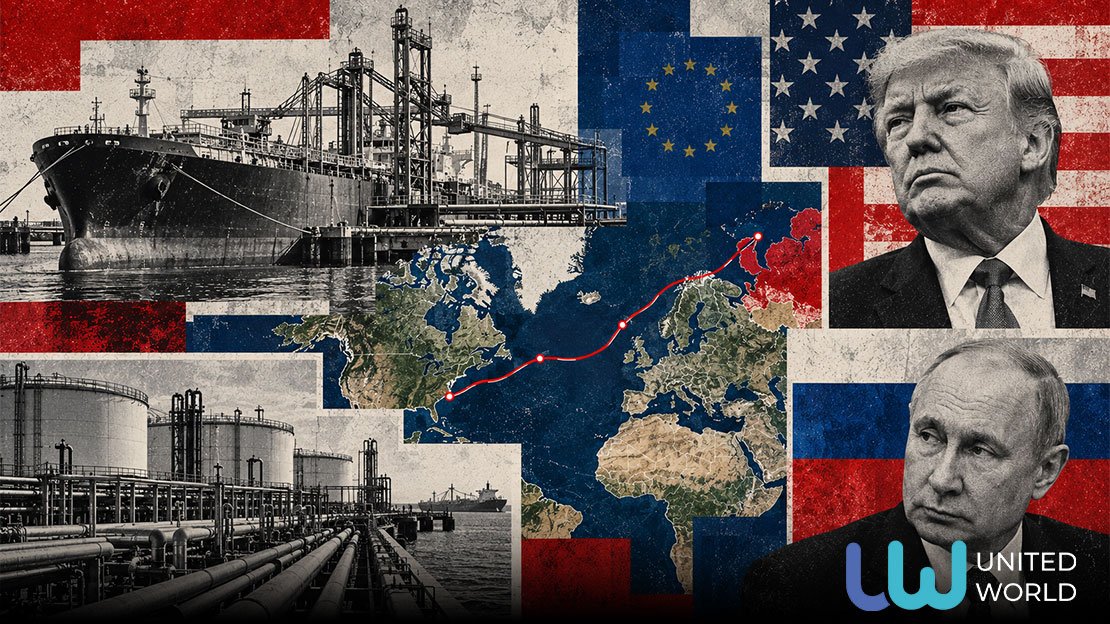
Following this escalation, surprising to many, Trump announced a new diesel deal with Putin on October 9. According to the deal, the two countries agreed to supply more than three hundred thousand tons (2.25 million barrels) of Russian diesel to US and global markets. Shortly after the announcement of the deal, The Treasury Department of the US issued a temporary license suspending sanctions on Russian diesel deliveries until April 2027.
UWI author, historian and political scientist Associate Professor Mehmet Perinçek evaluated the shifting political landscape for our readers.
A new phase of the war: Russia is running out of patience
Is Russia abandoning its controlled stance it has maintained since the beginning of the war?
Until now, Russia has conducted its operations in Ukraine almost like a surgeon performing an operation, as Russian officials themselves have described it. They have repeatedly emphasized that they are not at war with the Ukrainian people. Accordingly, they had an effort to avoid civilian casualties throughout their operations. After all, Russians and Ukrainians are brotherly peoples with deep historical ties. Their populations and languages are closely intertwined. They share a common past, culture and history. Russian officials have stressed this point on numerous occasions. In their disputes with Europe, Russian officials have even said: “A war with Europe would be much shorter than the war in Ukraine because we are exercising great caution and restraint in Ukraine. We would not treat Europe the same way.”
However, despite Russia’s restraint, the Kyiv regime began launching attacks behind Russian lines as it found itself increasingly cornered on the battlefield and unable to make progress. There has been a significant escalation in attacks on civilian infrastructure, residential areas and civilian buildings, with strikes reaching deep into Russian territory.
The Western bloc and Ukraine were seeking to create unrest within Russia through these attacks. Another objective may have been to provoke Russia into responding more forcefully, in a way to escalate the war even further.
Russia’s new tactic
Is Moscow now pursuing a new strategy?
At this stage, Moscow has made it clear that it will no longer tolerate Kyiv’s attacks behind the front lines, deep inside Russian territory and against civilian targets. Russia has effectively begun responding in kind, speaking the same language as Ukraine. This means launching attacks aimed at crippling Kyiv’s infrastructure and bringing everyday life in the city to a standstill.
Ukraine had carried out similar attacks against Russia aiming at bringing everyday life to a standstill,, but they failed to achieve their objectives. Yet, it caused disruptions in life in Moscow and other cities. Now Moscow is adopting a tactic aimed at paralyzing Ukraine behind the front lines, using the very methods employed by the Ukrainian side.
The collapse of Kyiv’s infrastructure, the disruption of its logistical networks, relocation of residents, and severe damages to economic activity would create serious unrest within Ukraine. It could even intensify the power struggle within the Kyiv government, and those who previously supported Zelensky may begin to turn against him. Because Zelensky will be held responsible for the consequences. The whole world has seen figures in Ukraine make statements about attacking civilian targets in Russia in a mocking way. So, If Ukraine continues to lose ground, it would inevitably be Zelensky who is held responsible, even by the anti-Russian forces that support him and the war. Under these circumstances, no one would be able to blame Putin or Russia, since Russia was openly provoked into launching these attacks. Ukraine wanted to exploit the restraint Russia has been showing in its military operations.
Merz’s shaky position
German Chancellor Merz visited Kyiv. How do you assess his Ukraine policy in terms of his own political trajectory?
The fact that the attacks continued during Merz’s visit is significant. It is a sign of his shaky position: He suffered a major failure in the elections. He may even go down in history as Germany’s most unsuccessful chancellor. Under these circumstances, Merz has no option left to save his political position other than to fuel the war in Ukraine, expand its geographical scope and scale, and perhaps even take steps that could lead to a world war. Merz’s position is just as shaky as Zelensky’s. Both have shown that they are prepared to engage in all kinds of provocations to escalate the war and expand it geographically.
Anti-war sentiment growing
Could the election in the future change Europe’s policy toward Ukraine? How do you interpret the rise of anti-war forces?
There are elections in Germany, France and Italy. In all these countries, political forces that oppose the war and favor normalizing relations with Russia are moving closer to power. Meanwhile, the vote of the warmongers is declining.
We can expect leaders such as Merz and Macron, along with British prime ministers and others in the Western camp, to resort to all kinds of provocations to prevent a change of government before these elections. Because by the time the elections take place, it may already be too late for them. They may resort to every conceivable form of political maneuvering, deception, large-scale conflict and even war, seeing these as the only way to preserve their existing system.
And finally the recent diesel deal. Is a new phase beginning?
The diesel deal shows that Russia’s method I’ve mentioned is beginning to yield its first results. After being used against Russia for many years, Ukraine is now seen as having outlived its usefulness. It is now becoming clear, and being acknowledged by the US, that Ukraine cannot reclaim the territories it has lost to Russia in the war. So, the US regards any further aid to Ukraine as wasted money.
The rift between the US and the EU
Russia’s political, economic, military and social resilience in the face of NATO’s attacks and encirclement have forced the opposing side to take a step back. Alongside this retreat, we are also witnessing a growing rift between the US and the EU. This rift once again reveals the dead end into which the US has led Europe. Washington forced Europe to adopt a policy of hostility and sanction towards Russia, severing its ties with potential partners such as Russia and China. Thus the US placed Europe in a difficult economic and energy situation. Deprived it of the opportunity to emerge as an independent pole, making it even more dependent on the US.
Now the US is abandoning this very policy it imposed on Europe and pursuing a path towards reconciliation with Russia. In this respect, the diesel deal signals not only the end of Zelensky’s political life, but also that of the warmongering forces in Europe.