


By Yıldıran Acar, Political Scientist
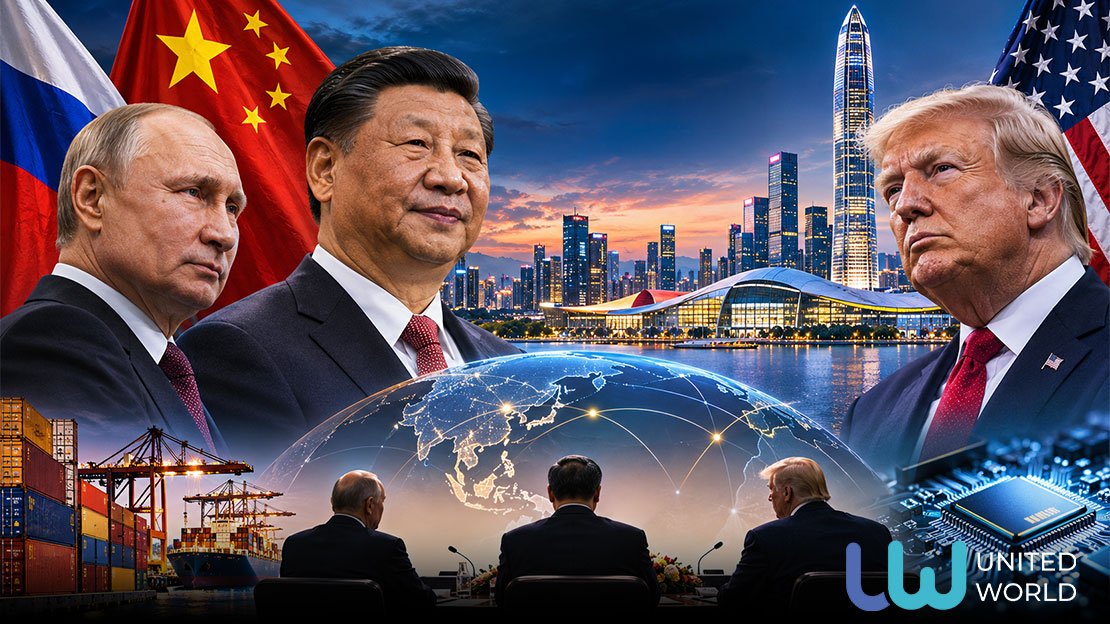
The Asia-Pacific Economic Cooperation (APEC) Summit, held in the Chinese city of Shenzhen on 19 November, made headlines in international politics as Russian President Vladimir Putin, Chinese President Xi Jinping and US President Donald Trump met in a trilateral format for the first time in history. Following talks lasting approximately one and a half hours, the three leaders adopted a four-point joint statement on the preservation of strategic stability and international security.
The summit is significant not only for bringing the leaders of these three countries together around the same table, but also in terms of managing the deepening international competition of recent years. Tensions between Russia and the US, economic and technological competition between Washington and Beijing, the conflict in Ukraine and uncertainties regarding nuclear arms control further reinforced the meeting’s place on the international agenda.
However, following the summit, certain images and commentaries that featured prominently in the Western media overshadowed the meeting’s political substance. In particular, the fact that Xi Jinping did not personally greet Vladimir Putin at the airport, whilst he did greet Donald Trump himself, led to speculation that Russia had been relegated to a secondary position relative to China. Yet assessing the nature of diplomatic relations solely through the lens of protocol is insufficient for understanding the true extent of relations between the two countries.
The airport welcome: A diplomatic message or a matter of protocol?
The manner in which the leaders arriving in Shenzhen were received was one of the issues highlighted by the Western media in the run-up to the summit. The fact that Xi Jinping personally welcomed US President Donald Trump at the airport, whilst Russian President Vladimir Putin was received by Cai Qi – a member of the Standing Committee of the Political Bureau of the CPC Central Committee and one of Xi’s closest colleagues – gave rise to differing interpretations.
Some Western media outlets interpreted these scenes as an indication that Beijing attaches greater importance to Washington than to Moscow. There were even comments suggesting that Putin had been sidelined by China and that Xi Jinping was sending a diplomatic message to the Russian leader.
However, a significant detail was overlooked in these assessments. Following the personal gesture of welcome shown by Donald Trump towards Xi Jinping during his visit to the US, the Chinese leader’s reception in Shenzhen could also be interpreted as a reciprocal expression of diplomatic courtesy. Indeed, analyses in the international press also highlighted this reciprocal nature of the relationship.
In diplomacy, the reception of heads of state at the airport naturally carries symbolic significance. However, it cannot be said that every visit must follow the same protocol. As well as the composition of the welcoming delegation, the purpose of the visit, the history of the relationship between the leaders and the political circumstances in which the meeting takes place must also be taken into account.
The relationship between Putin and Xi Jinping has been shaped in recent years by numerous high-level meetings, strategic partnership agreements and economic cooperation. The number of meetings the two leaders have held in person or online since 2013 has reached 50. Xi’s description of Putin as an ‘old friend’ and his emphasis on the strategic partnership between the two countries serving as a stabilizing factor on the international stage also highlight the political dimension of this relationship.
Moreover, Putin’s reception in China was conducted with a military ceremony, a red carpet and an official delegation. Consequently, there was no instance of the Russian leader being excluded from diplomatic protocol.
What was truly significant, however, was the image that emerged during the meeting where the three leaders came together. Xi Jinping hosted Trump and Putin at the same table and maintained an equal distance from both leaders throughout the meeting.
For this reason, rather than interpreting the airport reception as a rupture in Russia-China relations, it seems more realistic to view it as a reflection of the importance Beijing attaches to diplomatic symbols whilst managing its relations with Washington.
What is APEC and why is it important?
APEC, or the Asia-Pacific Economic Cooperation, the forum at which the trilateral meeting in Shenzhen took place, is a regional economic cooperation platform established in 1989. It brings together 21 member economies, including Australia, China, Japan, Russia, the US, South Korea, Canada, Mexico and Indonesia.
APEC’s primary aim is to promote trade and investment in the Asia-Pacific region, strengthen economic integration and support sustainable growth. However, the organization’s significance is not limited to economic activities alone. By bringing together the region’s leading political and economic actors on a single platform, APEC has also become an important forum for international diplomacy.
It is important to note that APEC is not a military alliance such as NATO or similar organizations. Decisions amongst members are taken on the basis of consensus, and commitments are based on voluntary participation rather than being legally binding.
For China, which is hosting the summit in 2026, APEC presented an opportunity to demonstrate its economic clout and diplomatic influence in the Asia-Pacific. For Russia, meanwhile, at a time when Western sanctions remain in place, it held particular significance in terms of being on the same platform as the region’s key economic players and maintaining high-level contacts.
The fact that the meeting between Putin, Xi and Trump took place within the framework of APEC was also significant in this regard. Thus, the three countries were able to address global issues by utilizing the opportunities offered by a broad international platform brought together for the purpose of economic cooperation, without creating the impression of a separate political alliance.
The outcomes of the trilateral meeting: What is Moscow’s assessment?
One of the most significant aspects of the meeting was the direct exchange of views between the leaders of Russia, China and the US on issues of international security and global governance. At the opening of the meeting, Xi Jinping emphasized that relations between major powers are decisive for world peace. Recalling that the three countries had acted in unison during the Second World War and played a pioneering role in the establishment of the United Nations, he stated that they also bear special responsibilities today regarding the maintenance of global security.
Putin, for his part, drew attention to the need to safeguard and strengthen the international legal system. The Russian leader noted that the three countries share common interests in resolving regional issues, including the conflict in Ukraine. Trump, too, emphasized the importance of communication between the three major nuclear powers and raised the issue of nuclear arms control. Analyses in the Russian media suggest that the meeting was significant for three particular reasons.
Firstly, from Moscow’s perspective, the summit signifies a reaffirmation of Russia’s position within the international system and its influence in negotiations amongst the major powers. Despite the West’s policies aimed at isolating Russia on the international stage, Putin’s presence at the same table as the leaders of the US and China represents a significant diplomatic achievement for Moscow.
Secondly, maintaining direct contact between the three countries is important, particularly in terms of managing nuclear risks. Dmitri Suslov, Deputy Director of the Centre for Comprehensive European and International Studies at the HSE National Research University, argued in his assessment following the meeting that the three leaders’ determination to maintain controlled and constructive relations reduces the risk of a world war. According to Suslov, keeping relations between the world’s three leading military powers at a manageable level is one of the fundamental conditions for global peace.
Thirdly, the meeting established a common platform for discussion regarding the future of international institutions. In particular, the three leaders’ agreement on a joint statement concerning the reform of the United Nations, the structure of the Security Council and the limits of authority of international institutions was noteworthy.
However, Russian experts also point out that the significance of the summit should not be overestimated. Assessments within academic circles in Moscow emphasize that the Shenzhen meeting was not a gathering that redrew the world’s political map, as the 1945 Yalta Conference did. Today’s international system is far more complex. India, European countries, regional powers and other actors from the Global South carry significant weight in international decision-making processes.
Consequently, the meeting of the three leaders does not signify the establishment of a new world order that supersedes the political will of other countries. Rather, it demonstrates that a new platform for dialogue has been established to manage competition amongst the principal centers of power within the current international system and to identify areas of common interest.
An overlooked dimension of Russia-China relations: universities, science and technology
In reports on the Shenzhen summit, the political interactions between Putin, Xi and Trump, energy policies and nuclear security issues have generally taken center stage. However, there is another area that is at least as important for the future of relations between Russia and China: cooperation in education, science and technology. This topic is one of the issues that has not received sufficient attention in the Turkish media either. The Sino-Russian university, established as a joint venture between Moscow State University and the Beijing Institute of Technology and brought to the fore during Putin’s visit to China, is one of the key examples illustrating the current state of academic relations between the two countries.
Based in Shenzhen, this joint university is celebrating its 10th anniversary. It has over 5,000 students and offers more than 60 core degree programs. The fact that 51 per cent of the teaching staff come from Moscow State University highlights the significance of Russian academic expertise within this joint institution. Moreover, the cooperation is not limited to the continuation of existing programs. Russian Deputy Prime Minister Tatyana Golikova stated that discussions are underway regarding the expansion of the university into new fields. In particular, the development of new educational programs in the fields of artificial intelligence and basic medical sciences is on the agenda.
Valeri Falkov, Russia’s Minister of Science and Higher Education, also announced that joint projects between universities in the two countries are developing rapidly. The work being carried out by St Petersburg Mining University with a Chinese university, and the collaboration between Bauman University and Tsinghua University, are among other examples of this process. Furthermore, the Russia–China Years of Education, to be held in the 2026–2027 period, stand out as a significant step towards the development of academic relations.
According to Putin’s remarks, mutual interest in learning Russian and Chinese is also growing between the two countries. This interaction in the fields of education and culture is not limited solely to academic links established between universities; it also contributes to the development of mutual understanding and long-term trust between the two societies. The key point to note here is this: strategic partnerships between states do not become permanent merely through documents signed by leaders. Universities, scientific research, joint technology projects and cultural exchanges form the social and institutional foundation of these relationships.
The educational cooperation being developed between Russia and China should also be assessed from this perspective. Relations between the two countries are not solely dependent on the current political climate; they take on a dimension that extends to the education of future generations, scientific output and technological capacity. For this reason, the university projects discussed in Shenzhen are among the significant developments that should not be overshadowed by the political spectacle of the summit.
Who emerged as the winner of the trilateral summit?
One of the most debated questions following the meeting between Putin, Xi and Trump was which country emerged as the winner of the summit. However, given the three leaders’ differing political and economic priorities, it is not easy to identify a single winner.
From Moscow’s perspective, the most significant gain was the reaffirmation of its position within the international system. Despite serious disagreements with the US, Russia remains one of the key players with whom Washington conducts direct negotiations. Putin’s presence at the same table as Xi and Trump sends a strong diplomatic message that Russia cannot be excluded from international decision-making processes. Another gain for Russia is its ability to sign a joint statement with the US and China on strategic issues such as nuclear security, energy and the future of the United Nations. In particular, the wording in the declaration regarding the jurisdiction of the International Criminal Court carries political significance for Moscow.
Beijing’s gain, meanwhile, lies in enhancing its international visibility as the summit’s host and diplomatic facilitator. Xi Jinping demonstrated that he could manage his relations with both Moscow and Washington on the same platform. From China’s perspective, maintaining its strategic partnership with Russia is just as important as keeping its economic and political relations with the US on a manageable footing.
US President Trump, meanwhile, secured the launch of the trilateral dialogue on nuclear arms control that he has long been advocating. Furthermore, by establishing direct contact with the leaders of Russia and China, he reinforced the image of playing an active role in resolving international issues.
The assessment by Russian expert Vasily Kashin is significant in this regard. According to Kashin, one of the summit’s most important outcomes is that the strategic dialogue on nuclear security is now being addressed not only between Moscow and Washington, but on a trilateral basis that includes Beijing. However, the power asymmetry in these relations must not be overlooked. China’s economic and technological capacity far exceeds that of Russia. Whilst maintaining its strategic partnership with Moscow, Beijing is also seeking to manage its relations with the US in line with its own interests. Russia, for its part, emphasizes energy, resources, geographical location and military-technical capacity in its relations with China.
Consequently, whilst the partnership between the two countries is strong, it does not constitute a military alliance in the traditional sense. The parties seek to offer each other opportunities for mutually beneficial cooperation whilst also striving to safeguard their own strategic maneuvering space. In this context, rather than identifying a single country as the winner of the Shenzhen summit, it would be more accurate to view the meeting as one in which all three countries achieved diplomatic gains in different areas. However, from Moscow’s perspective, maintaining its place at the negotiating table amongst the major powers—despite discussions of international isolation—is one of the summit’s most significant political outcomes.
What does the four-point declaration mean?
The joint peace declaration adopted following the trilateral meeting was the summit’s most tangible diplomatic outcome. Although the four-point declaration may appear at first glance to contain general statements, it is significant in that it highlights the areas where the parties were able to find common ground. The first point concerns the reform of the United Nations and ensuring it has a structure capable of responding more effectively to global issues. The three leaders drew particular attention to the special responsibility of the permanent members of the UN Security Council in maintaining international peace and security.
This clause is particularly significant for Russia. This is because Moscow advocates for the preservation of the United Nations’ central role in discussions on the reorganisation of the international system, as well as the continuation of its current position on the Security Council. According to Kirill Babaev, Director of the Institute of China and Contemporary Asia at the Russian Academy of Sciences, the current structure of the UN system does not adequately reflect today’s international realities and is in need of reform. The fact that the US, alongside Russia and China, has endorsed this joint statement on the matter is politically noteworthy.
The second clause is devoted to energy security. The three countries emphasized the importance of a stable energy supply in global markets and announced their intention to increase the production and supply of petroleum products. This clause holds economic and strategic significance for Moscow. As one of the world’s leading energy producers, Russia is seeking to maintain its position in global energy markets. The shared commitment to increasing energy supply brings the importance of Russia’s energy resources to international markets back into focus. However, it cannot be said that this agreement lifts Western sanctions or removes all restrictions on Russian energy exports. The statement contains no concrete details regarding production and supply volumes, the mechanisms to be implemented or a timetable. Consequently, this clause currently constitutes a declaration of political intent.
The third clause concerns the immunity of state officials and the limits of the International Criminal Court’s jurisdiction. The three leaders emphasized the importance of upholding the principle of inter-state agreement and safeguarding the immunity of public officials. They also adopted a common stance on the need to prevent the International Criminal Court and similar institutions from abusing their powers. This section carries particular political significance for Moscow. Russia does not recognize the jurisdiction of the International Criminal Court and opposes its rulings. The fact that neither Washington nor Beijing are parties to the Rome Statute has facilitated the three countries’ ability to establish a common diplomatic ground on this issue.
The fourth article concerns nuclear security and the prevention of the proliferation of nuclear weapons. The leaders reaffirmed that there would be no winner in a nuclear war and that such a war must never be started. They also decided to engage in dialogue on reducing nuclear risks and preventing the proliferation of nuclear weapons. The significance of this article is particularly evident following the expiry of the New START Treaty on 5 February 2026. Given the current circumstances, where there is no agreement in force between Russia and the US on the limitation of nuclear weapons, the establishment of a trilateral dialogue framework involving China represents a significant development. However, caution is required here as well. The declaration does not imply that the three countries have reached an agreement on reducing their nuclear arsenals. On the contrary, the issue agreed upon at this stage is the reduction of nuclear risks and the maintenance of open channels of communication.
An assessment by Vladimir Orlov, Director of the PIR Centre, highlights this distinction. According to Orlov, the leaders are not yet ready for a new binding agreement on the reduction of nuclear weapons. The management of nuclear risks is currently seen as a higher priority than the reduction of arsenals. Moreover, significant challenges lie ahead for the trilateral nuclear negotiations. Although China’s nuclear capacity lags behind that of the US and Russia, it is growing rapidly. Russia, meanwhile, argues that the nuclear arsenals of the UK and France must also be included in any future arms control mechanism. The approaches of Washington and Beijing on this issue do not yet align.
Another notable feature of the declaration is its omission of the issues of Ukraine and Iran. Putin and Trump discussed the conflict in Ukraine in detail during their bilateral talks. However, this issue was not included in the trilateral statement. Consequently, it is not possible to say that the Shenzhen meeting produced a joint plan or a ceasefire decision regarding the end of the conflict in Ukraine.
When assessing the outcomes of the talks between Russia, China and the US, these limitations must be borne in mind. It cannot be said that the three countries have set aside all their fundamental disagreements or reached a definitive consensus on a new international order.
Nevertheless, it would be incorrect to dismiss the diplomatic picture that emerged in Shenzhen as insignificant. This is because the leaders of these three major powers—which have been engaged in serious political, economic and military competition with one another in recent years—demonstrated a willingness to address common issues directly and to keep channels of communication open.
From Moscow’s perspective, the summit’s most significant outcome was the reaffirmation of Russia’s influence in global politics and its inclusion in the strategic negotiating arena alongside the US and China. Whilst Beijing demonstrated its role as a hub capable of managing diplomatic relations amongst the major powers, Washington continued its pursuit of dialogue on nuclear security and global issues.
The meeting in Shenzhen was recorded not so much as a summit proclaiming the establishment of a new world order, but rather as an important diplomatic engagement in which principles regarding how major powers would interact with one another amidst shifting balances of power were discussed.
The meeting in Shenzhen did not resolve all the disputes between the three countries. However, it demonstrated that Moscow, Beijing and Washington remain open to dialogue on issues of direct mutual interest – particularly nuclear security – despite the political and economic competition between them. What will be of primary importance going forward is whether the consensus set out in the four-point declaration will be translated into concrete steps. In particular, the establishment of a new dialogue mechanism in the field of nuclear safety and the implementation of the statements regarding energy cooperation will reveal the true outcomes of the Shenzhen meeting.